
Description
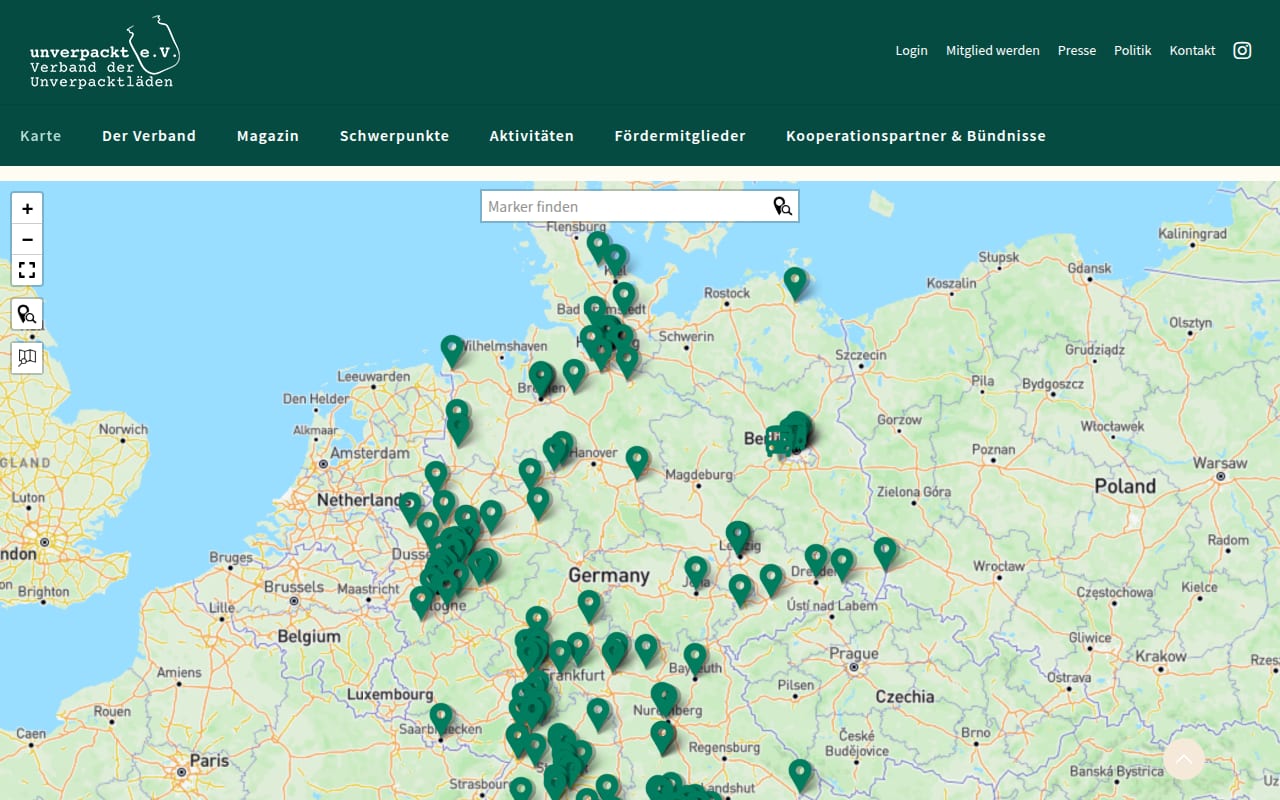
The Unverpackt Verband (Unverpackt e.V.) is the association of German zero-packaging shops, where customers fill their own jars, bags and bottles with dry goods, oils, cleaning products and cosmetics, buying exactly the amount they need. Its website has a map of its member shops. These shops are an alternative to supermarket groceries wrapped in plastic.
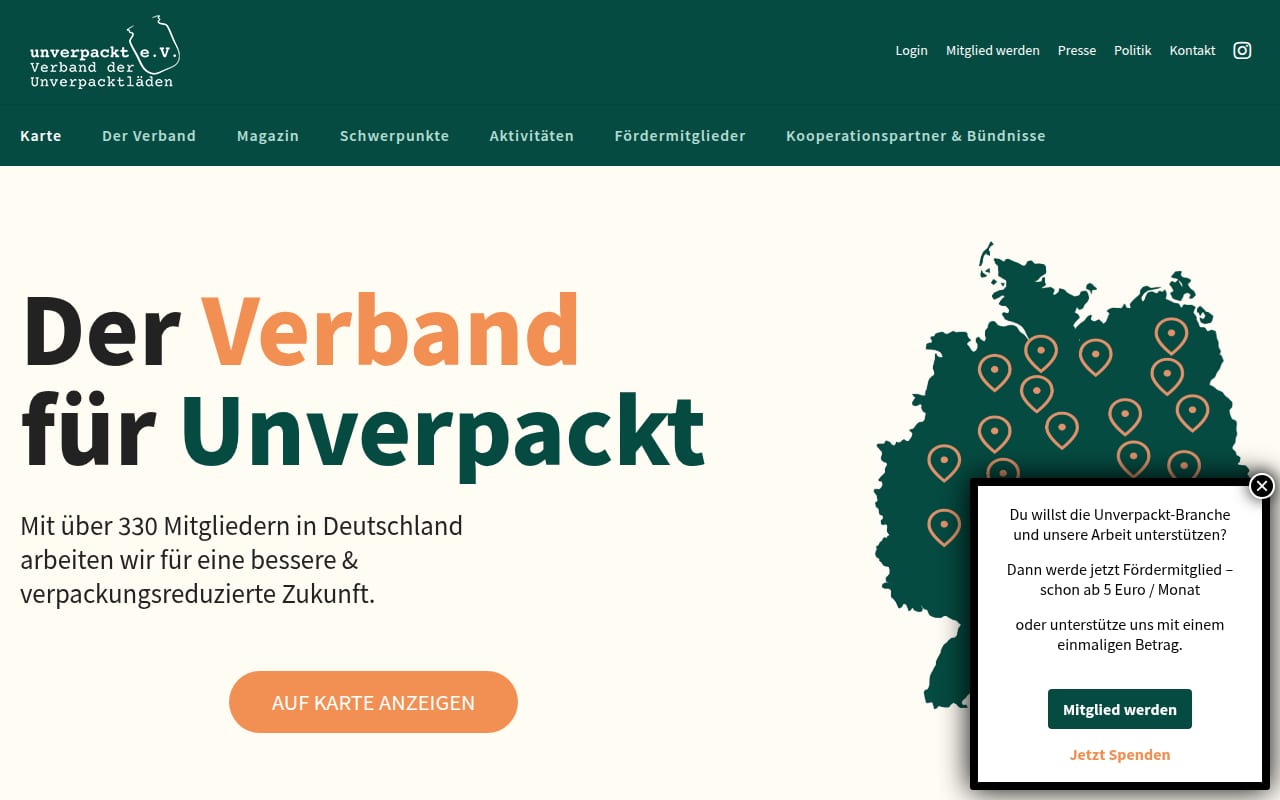
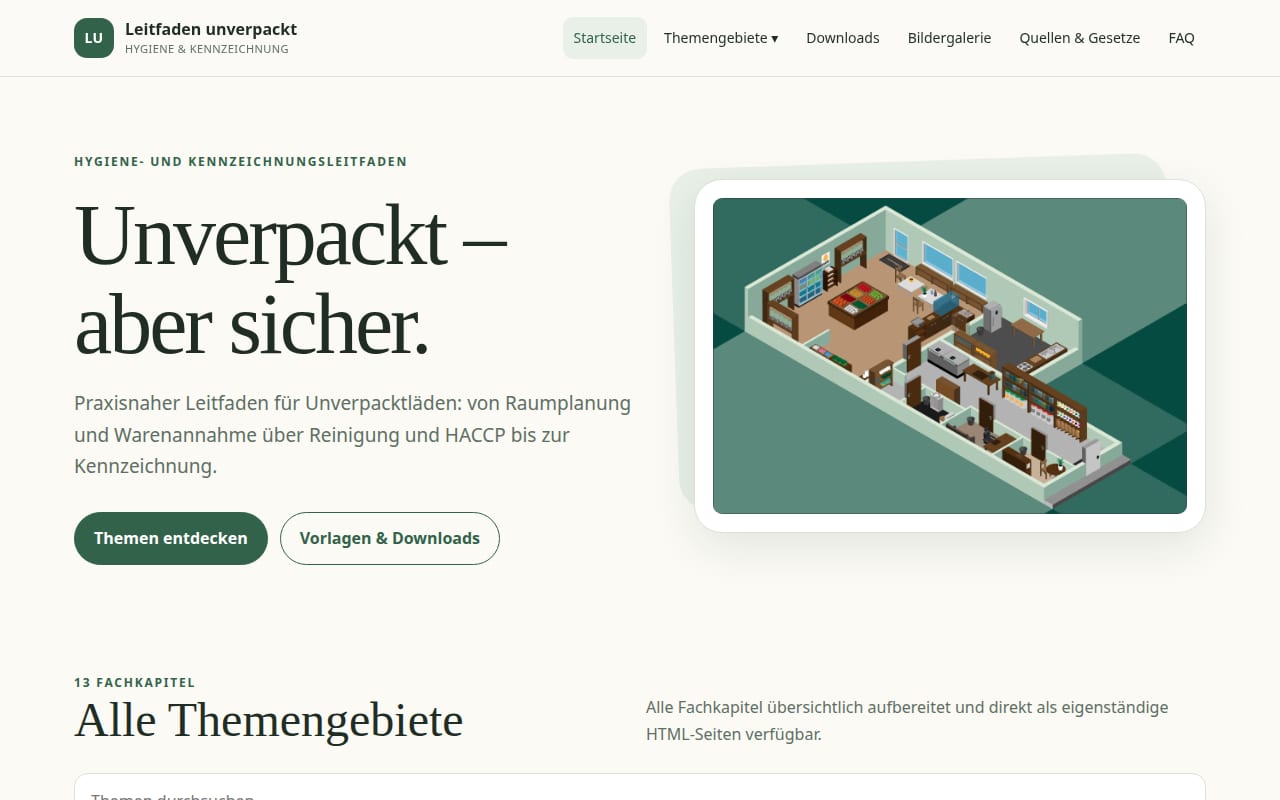
Since 2018 the association has represented the interests of its member shops and of the zero-packaging trade. It says it has more than 330 members, shops and mobile market stalls, and more than 100 supporting members, who can join from €5 a month. It produces guidance with research projects on hygiene and labelling for bulk sales and on cutting plastic packaging, and in July 2026 the trade founded a buying cooperative to get better prices from suppliers.
The trade has shrunk sharply. According to the association’s figures reported in the press, Germany had more than 330 zero-packaging shops at the end of 2020, and the number peaked at about 340 in early 2022; by April 2025 only 169 were left. In 2022 alone, 70 shops closed and 44 opened. Even the association’s managing director closed his own shop in Dresden in 2023.
Strengths
- No packaging, and less food waste: customers buy exactly what they need.
- Mostly organic and regional products, from small local shops rather than chains.
- A buying cooperative, founded in 2026, to help the remaining shops survive.
Weaknesses
- Often more expensive than supermarkets, and customers need to bring their own containers.
- About half the shops have closed since 2022, so the map may show shops that no longer exist.
Who it is for
Households in German towns with a zero-packaging shop who want to cut their packaging waste and can plan their shopping with jars and bags.
Sources
- Unverpackt e.V.: home, Mitglied werden, Karte, checked November 2026
- Lebensmittel Praxis: Unverpackt-Läden, Talsohle durchschritten
- Hessenschau: Unverpackt-Branche in der Krise
- Lebensmittel Praxis: Unverpackt, ein Markt in der Krise