
Description
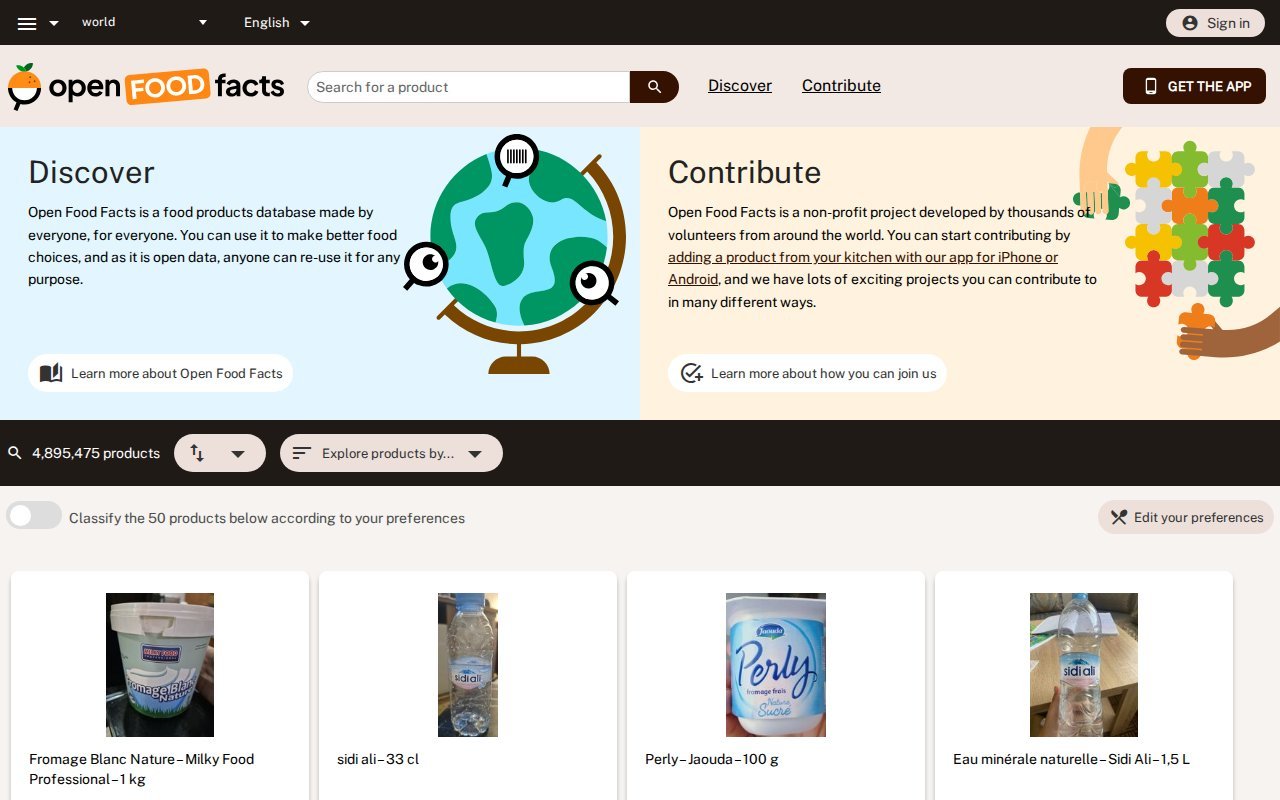
Open Food Facts is a free, collaborative database of food products run by a French non-profit association: volunteers scan barcodes and photograph packaging, and the app and website then show the ingredients, the Nutri-Score, the NOVA processing group and an environmental score. It is an alternative to trusting the marketing on the packet, and to commercial food-scanning apps.
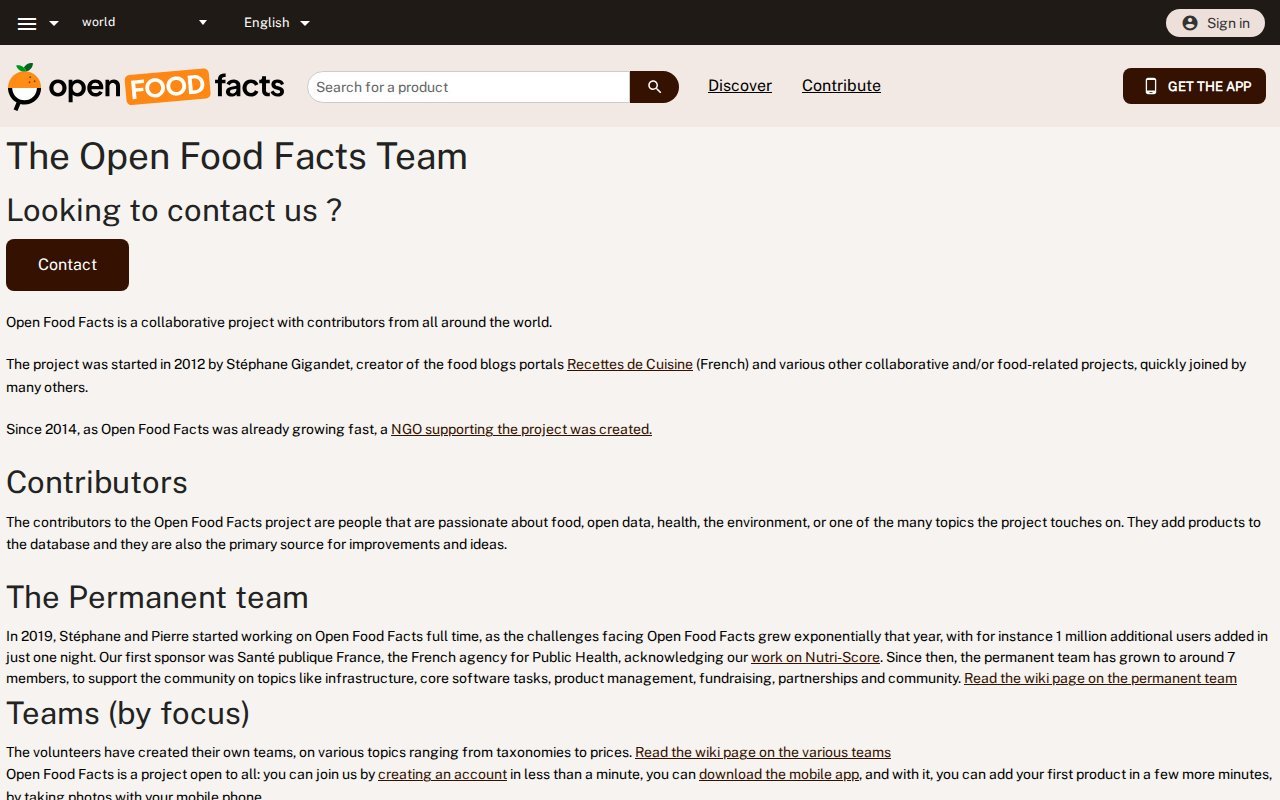
Stéphane Gigandet launched it in May 2012, with Pierre Slamich; the association, based in Saint-Maur-des-Fossés, has a permanent team of about seven. More than 100,000 contributors have added over 4 million products from 150 countries. The data are published under the Open Database License: anyone can reuse them if they credit the source and share their improvements. More than 300 apps rely on them, Yuka among them, and the French health agency Santé publique France used them to check the Nutri-Score formula.
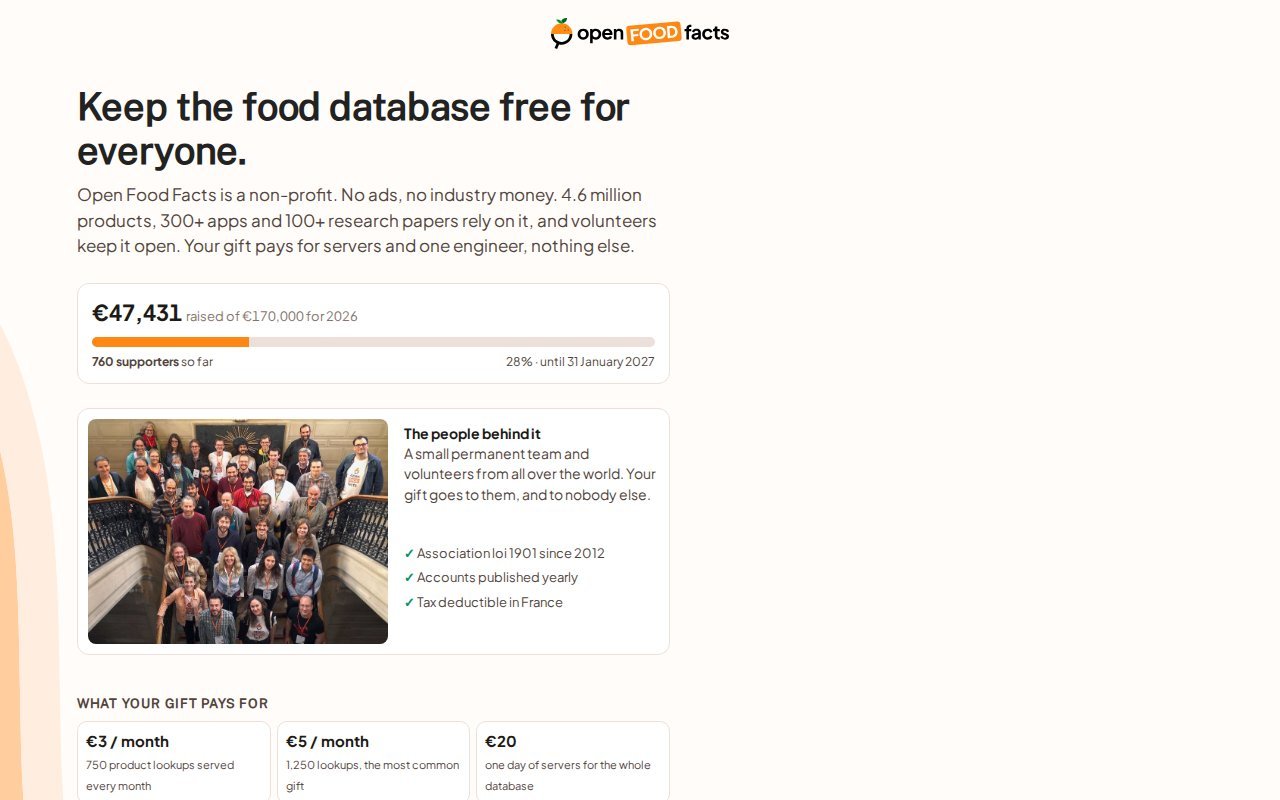
It is funded by donations, grants and sponsorship from public and non-profit bodies such as Santé publique France, the European Commission through NLnet, and Google.org, which gave €1.1 million in 2021. It takes no advertising and no money from the food industry. Its 2026 appeal asks for €170,000 for servers and one engineer, and had raised €47,431 by November. Sister projects cover cosmetics (Open Beauty Facts), pet food, other products and shop prices (Open Prices).
Strengths
- Free, without advertising or food-industry money, and anyone may reuse the data.
- Shows the degree of processing and an environmental score as well as the Nutri-Score.
- Anyone can add a missing product, or correct one, from the app in a few minutes.
Weaknesses
- Data entered by volunteers can be incomplete, wrong or out of date.
- Scores only cover packaged products with a barcode, so fresh, unpackaged food is missing.
- The association depends on donations and grants: by November its 2026 appeal had raised under a third of its target.
Who it is for
Shoppers who want to compare packaged food in the shop by ingredients and degree of processing, and developers and researchers who need open food data.
Sources
- Open Food Facts: discover, who we are, donate, checked November 2026
- Wikipedia: Open Food Facts (en), Wikipédia: Open Food Facts (fr)