
Description
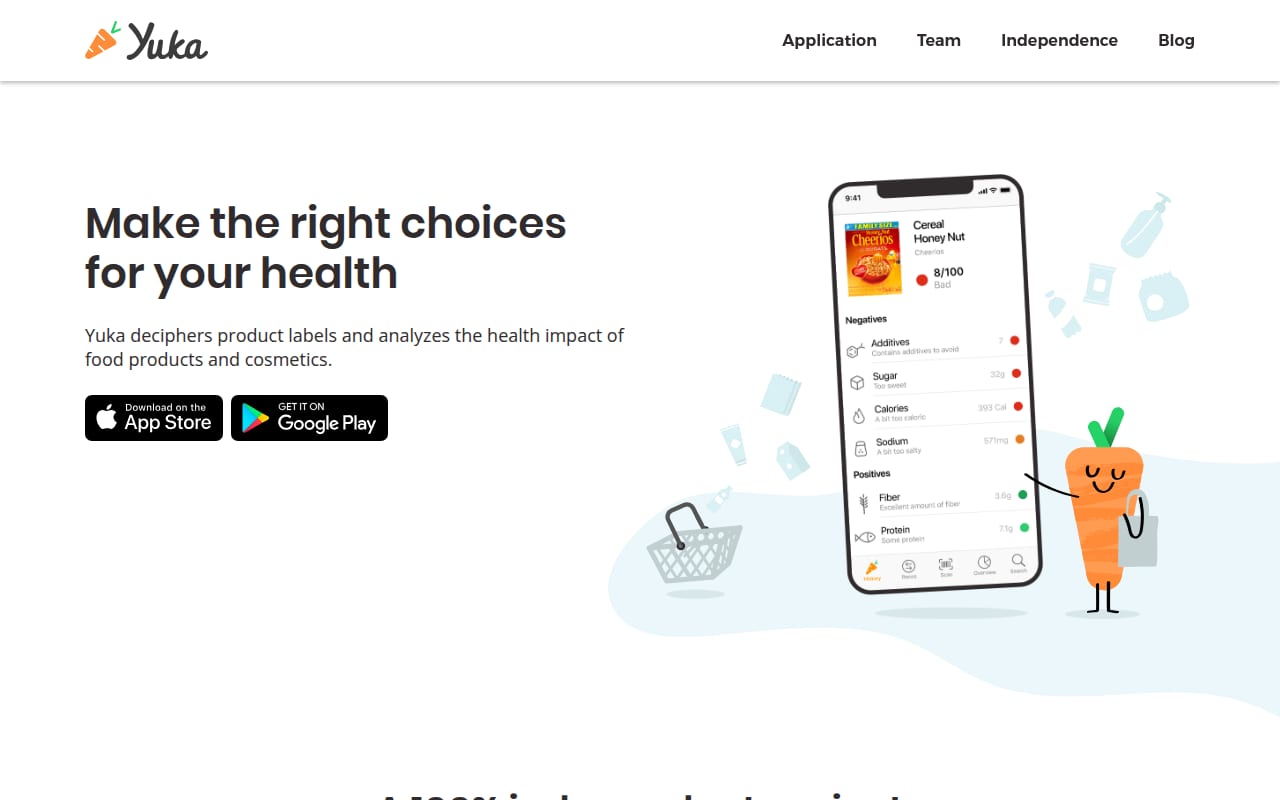
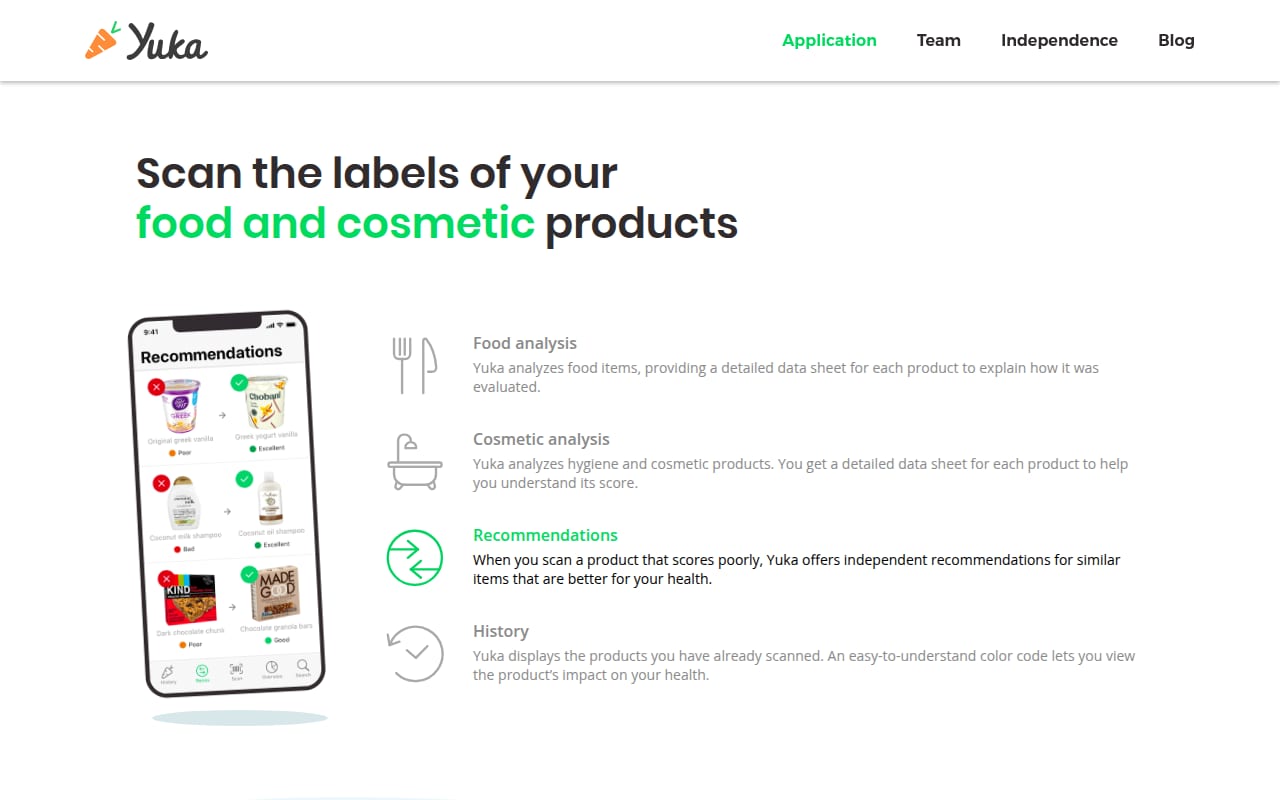
Yuka is a free French app that scans the barcode of a food or cosmetic product and gives it a score out of 100, with healthier products suggested in its place. It takes no advertising and no money from brands, and lives on voluntary premium subscriptions.
For food, the score is 60 % nutrition, taken from the Nutri-Score, 30 % additives and 10 % organic certification. A single additive rated high-risk caps the product at 49. Cosmetics are scored on their ingredient list (endocrine disruptors, irritants, allergens). The premium membership is “prix libre”, shown at 15 € a year (checked November 2026), and adds offline scanning, search and diet alerts such as palm oil or gluten.
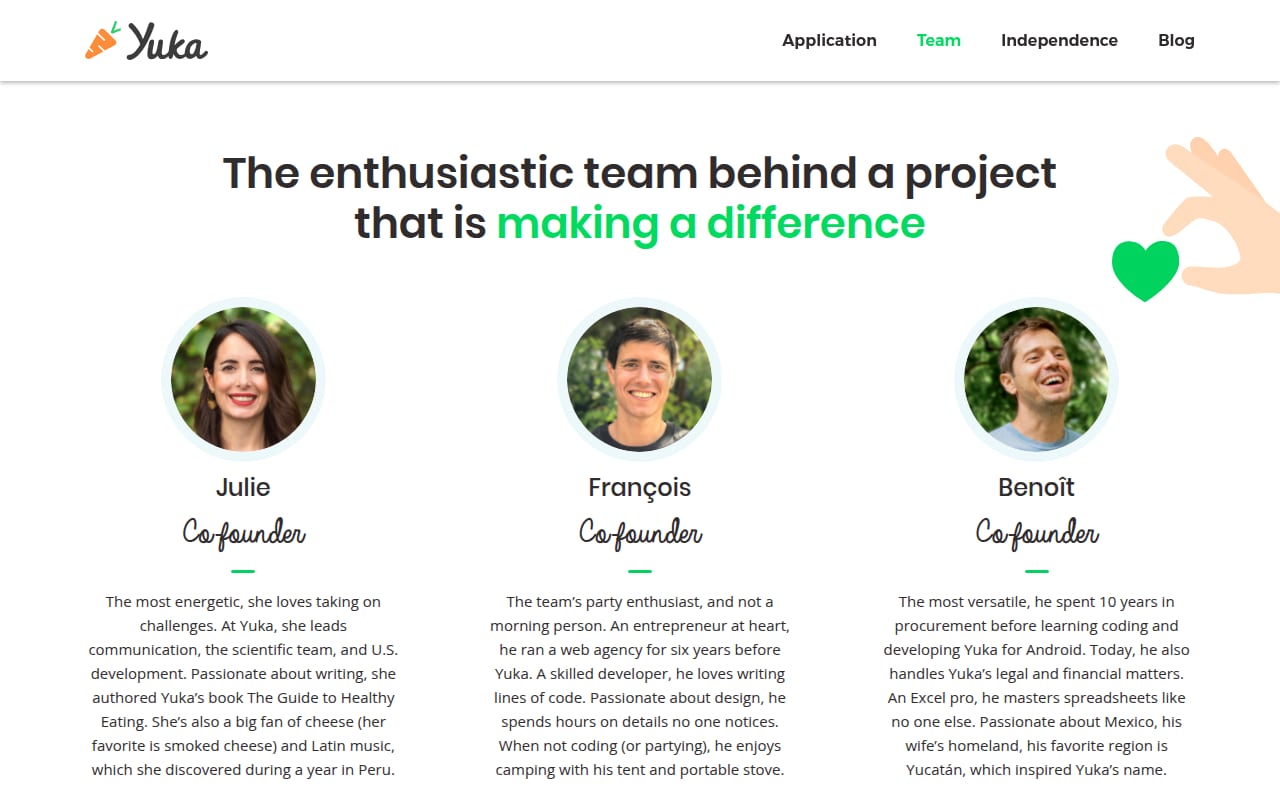
Yuka was founded in 2017 by Julie Chapon and the brothers Benoît and François Martin, is a société à mission and has raised money only once, 800,000 € in 2019. It says 10.2 M€ of its 2025 income came from subscriptions. It is used in 12 countries; user numbers differ between sources. Charcuterie makers sued it over its nitrite warnings: Yuka lost at first instance in 2021, then won on appeal in Aix-en-Provence in 2022 and in Paris in 2023, where the court recognised a right to inform and warn.
Strengths
- No ads, no brand payments and income almost entirely from users, as its published accounts show.
- The appeal courts upheld its right to warn about nitrites in processed meat after the industry sued it.
- It reads the label in seconds in the shop and points to a better-rated product in the same aisle.
Weaknesses
- The additive scoring is Yuka’s own: an Inserm researcher called it unreliable, and the think tank Terra Nova asked for an independent scientific review.
- Ingredient lists can be out of date: Test Achats found sunscreen scores that disagreed sharply with its lab results.
- The score covers health only: it says nothing about where a product comes from, packaging or working conditions.
Who it is for
Shoppers in supermarkets who want a quick, ad-free second opinion on processed food and cosmetics, and who keep in mind that a score is a simplification.
Sources
- Yuka: homepage, indépendance, membre premium and how food products are scored (checked November 2026)
- Maddyness: rentabilité, impact, expansion américaine, la recette de Yuka
- Réussir: nitrites dans la charcuterie, la justice donne raison à Yuka
- L’ADN: Fan de Yuka ? Son système de notation vous carotte !
- Maddyness: Terra Nova alerte sur Yuka
- Test Achats: crème solaire et Yuka