
Description
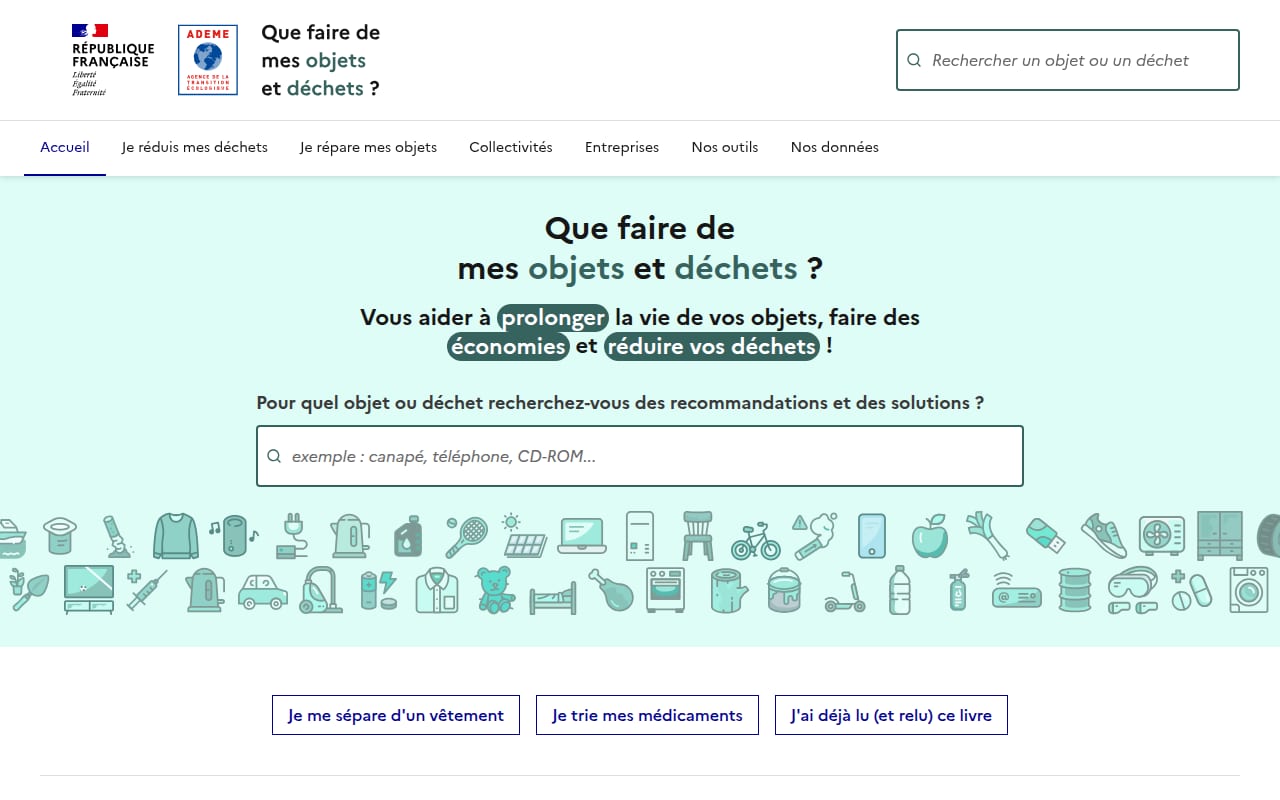
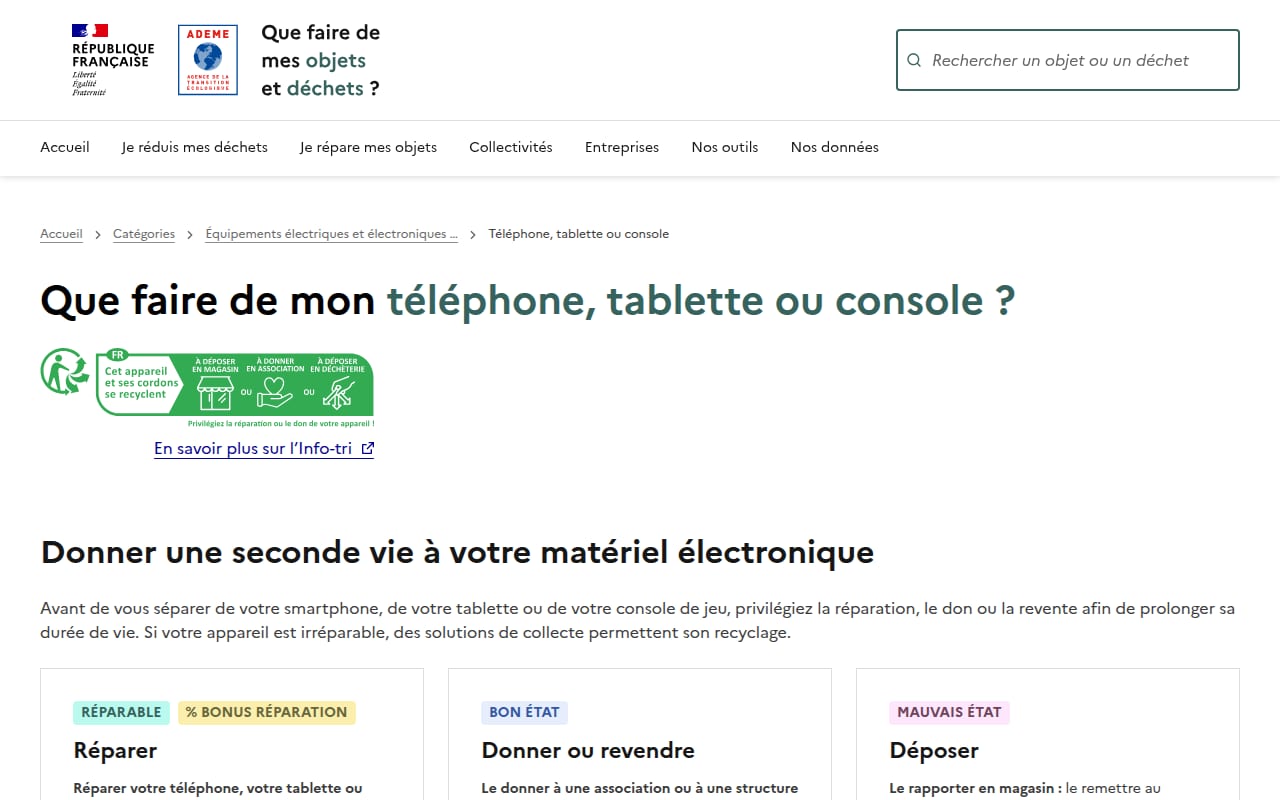
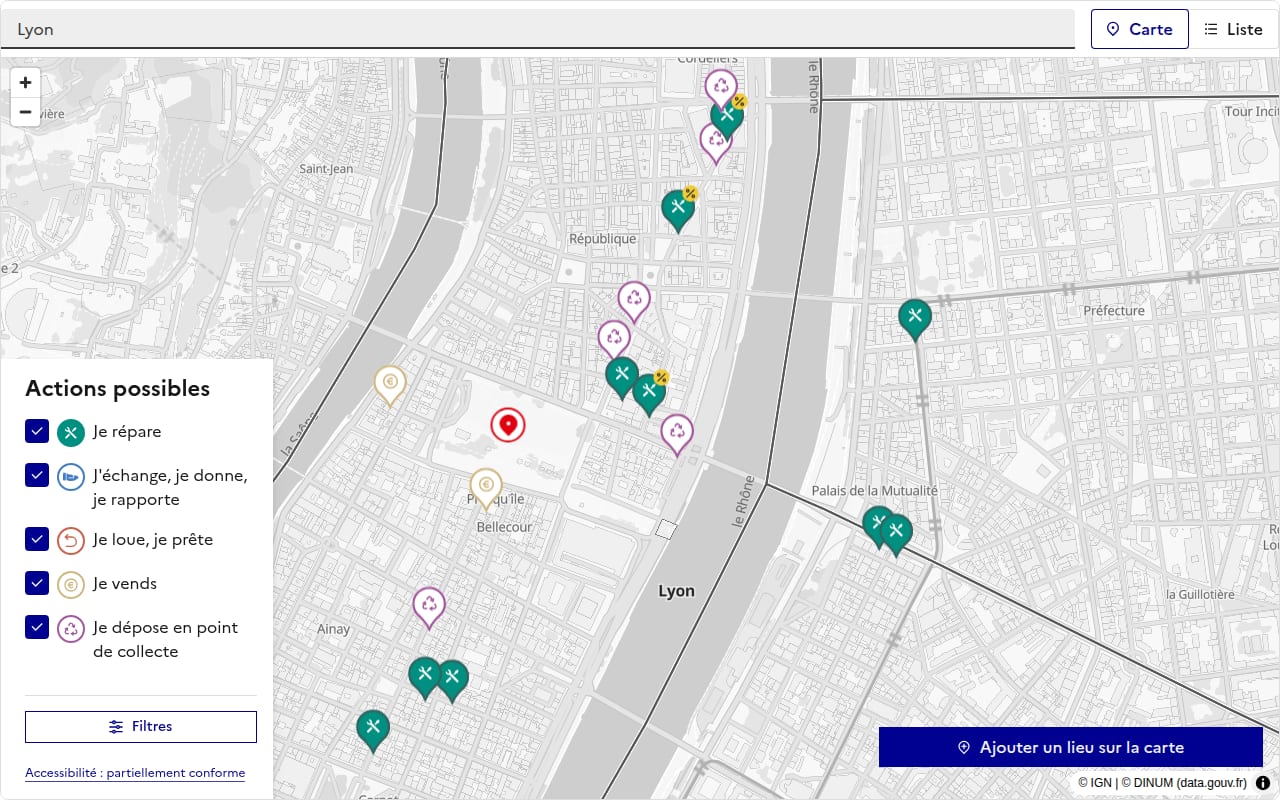
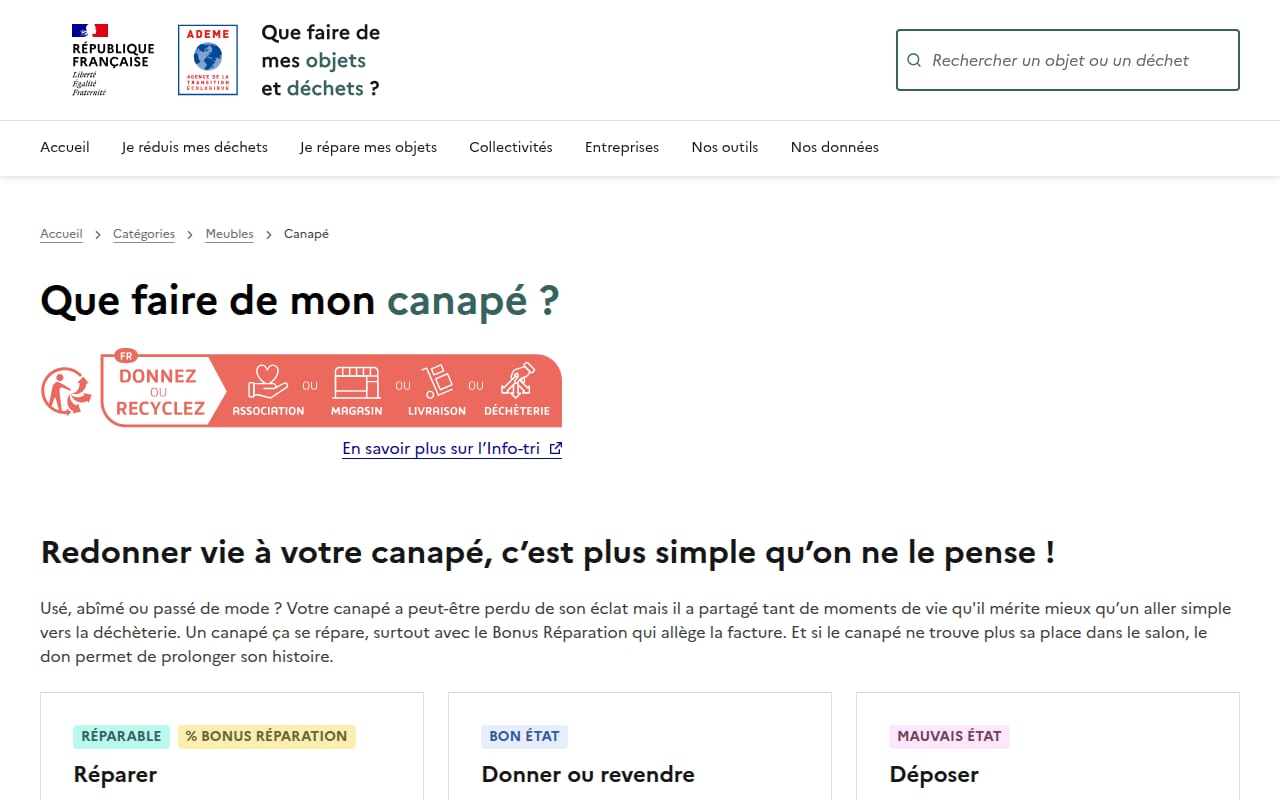
“Que faire de mes objets et déchets ?” is a free website of ADEME, the French agency for ecological transition: typing the name of an object or a type of waste shows how to repair, give away, resell or sort it, with a map of places nearby. It is an alternative to throwing everything in the bin for want of knowing who repairs, takes back or recycles it.
ADEME launched it in 2014 as “Que faire de mes déchets”, and in 2023 it grew to cover objects as well. A small beta.gouv team develops it in the open: the code is on GitHub and the content is under the Etalab open licence. The map lists more than 384,000 places, including repairers, repair cafés, second-hand shops, ressourceries, associations, collection points in shops and recycling centres, with data from ADEME, the producer-responsibility organisations (éco-organismes), councils and users. In 2025 more than 1.8 million people looked up a sorting rule or a place on it.
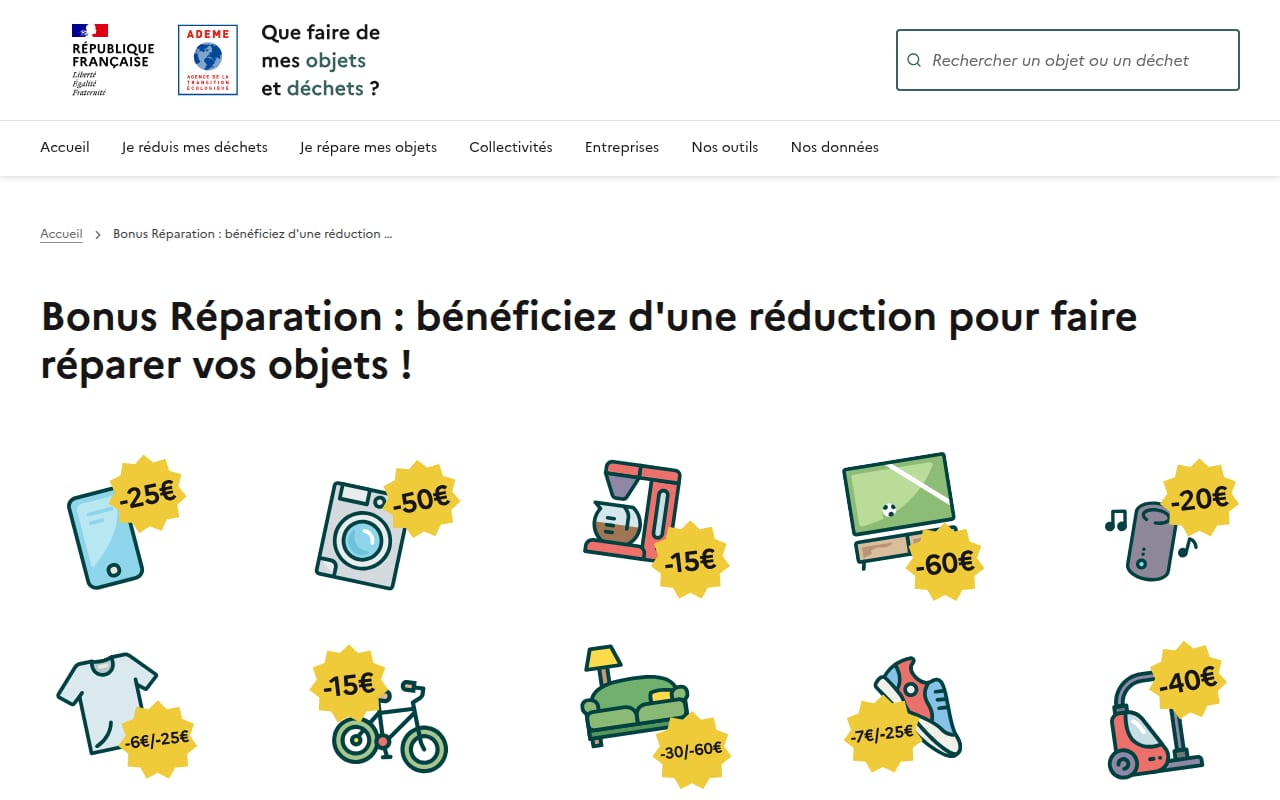
The site also explains the repair bonus (bonus réparation), set up under the 2020 anti-waste law and in place since December 2022: a labelled repairer deducts a fixed amount, from €10 to €65, straight from the bill, for example €25 for a smartphone, €50 for a washing machine or €60 for a television. Manufacturers and retailers pay for it through the éco-organismes, not taxpayers. More than 6,500 repair points were labelled in 2025. Councils can embed the tool on their own website for free.
Strengths
- One search gives the sorting rule, tips to keep the object going and the nearest places to take it.
- The full list of repair bonus amounts, object by object, and a map filter for the repairers that apply it.
- A free public service without advertising, with open data and open-source code.
Weaknesses
- The map is only as good as its sources, and some places are missing or out of date.
- The repair bonus only applies at labelled repairers, and not to products still under the two-year legal warranty.
- Opening hours and access rules of recycling centres often have to be checked with the council.
Who it is for
Households in France with a broken appliance, old clothes or a piece of furniture to get rid of, who want to know who can repair it, who takes it back or where to drop it.
Sources
- ADEME, Que faire de mes objets et déchets: home, qui sommes-nous, nos données, bonus réparation, checked November 2026
- GitHub: incubateur-ademe/quefairedemesobjets