
Description
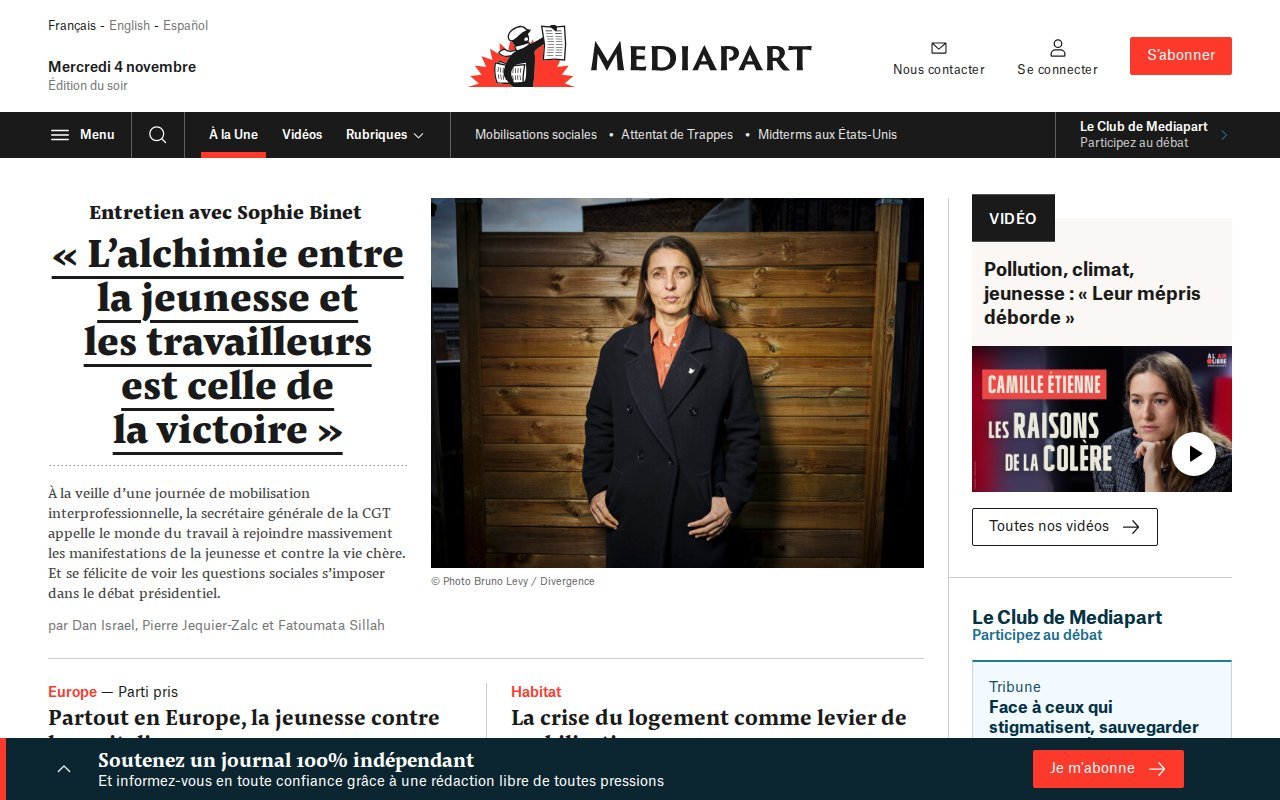
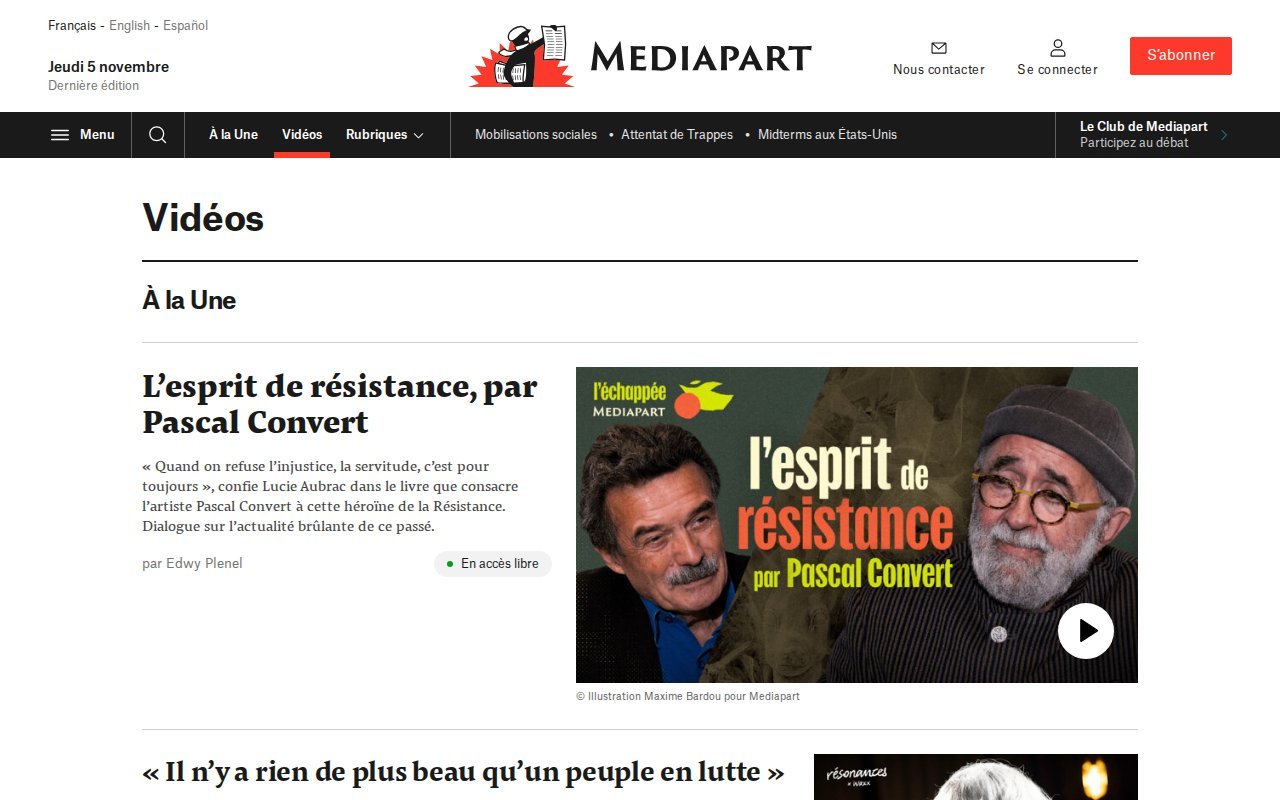
Mediapart is a French online newspaper known for its investigations, funded only by its subscribers, with no advertising. It is an alternative to free news sites that live on ads, and to media owned by industrial groups or billionaires.
Five journalists, among them Edwy Plenel, a former editor of Le Monde, founded it in 2007–2008. In 2019 they sold their shares, and the capital passed through a holding company to the Fonds pour une presse libre, a non-profit endowment fund; the shares can no longer be sold or traded. Carine Fouteau has been publishing director since 2024. At the end of 2025 Mediapart had 257,383 subscribers and 135 full-time staff. Its turnover was €24.9 million in 2024, and its net profit of €4.4 million in 2025 was the highest since it began; it has made a profit every year since 2011.
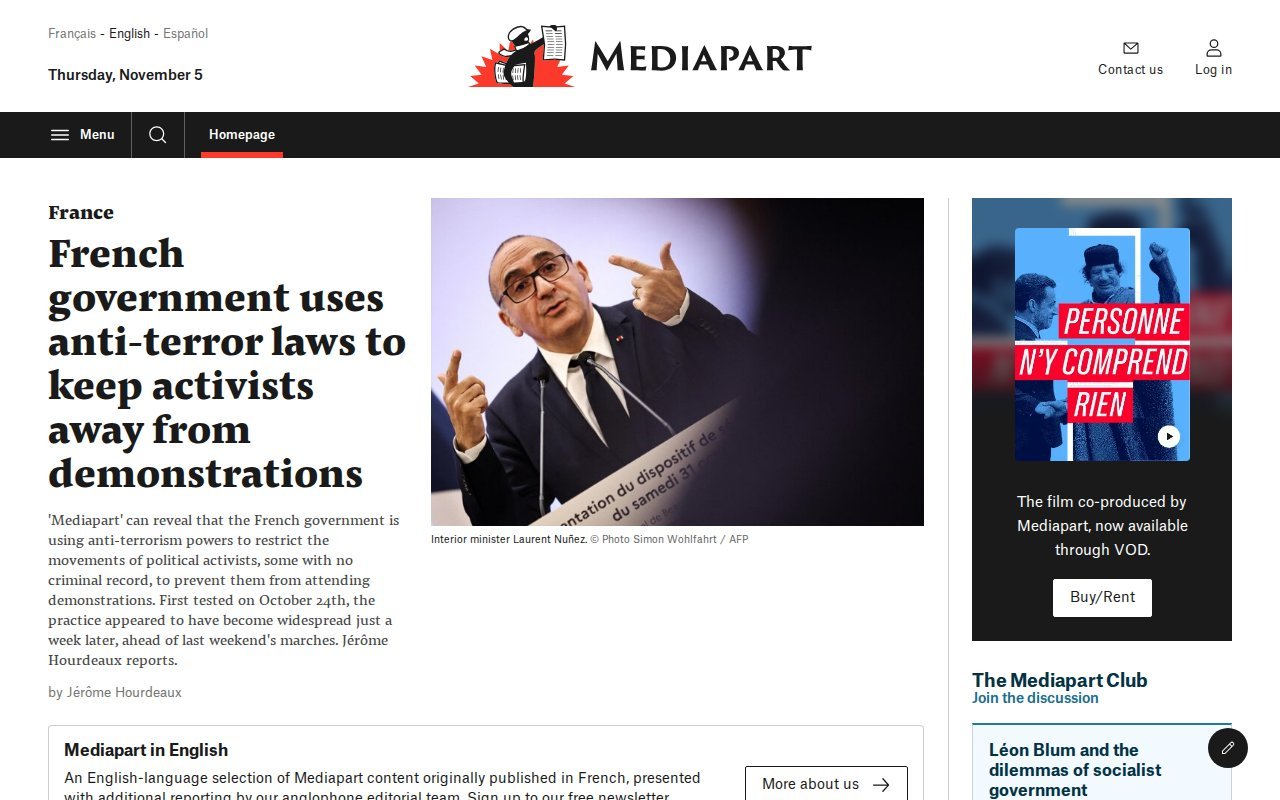
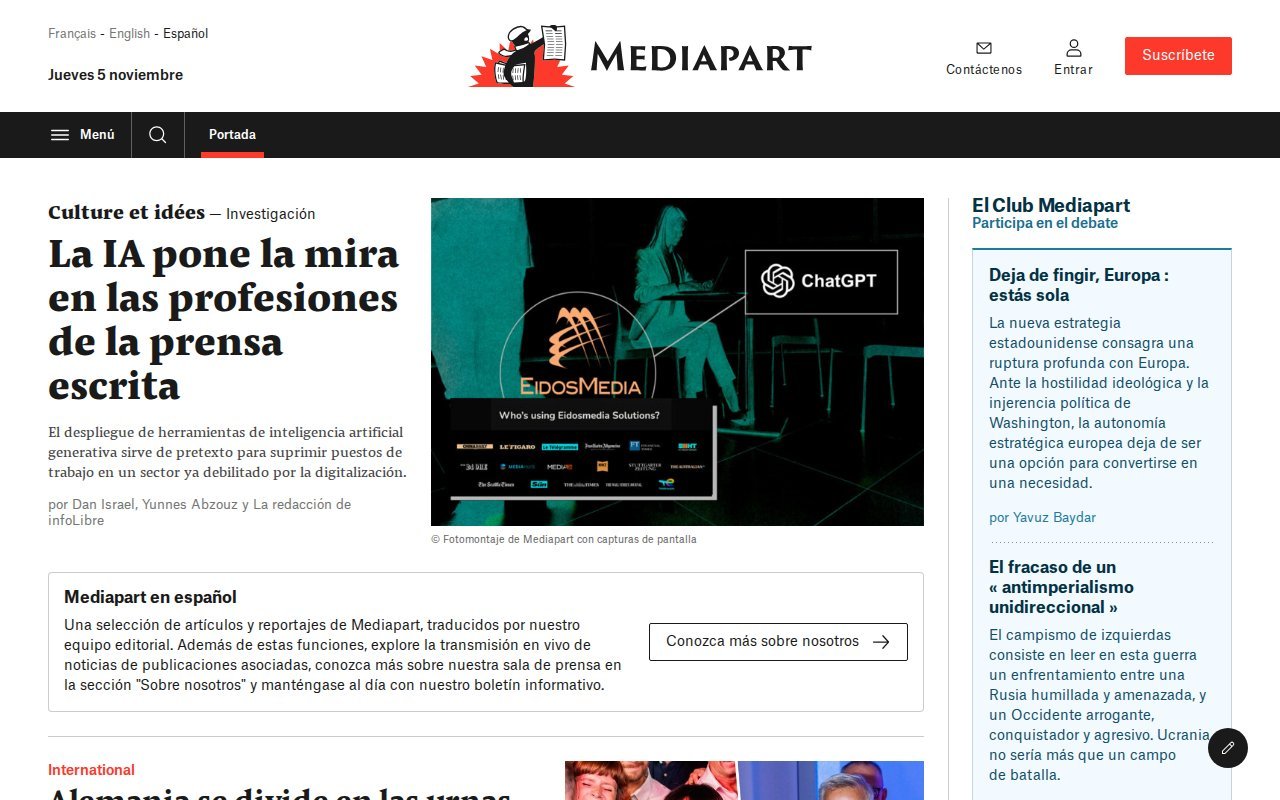
Its investigations include the Bettencourt affair (2010), the alleged Libyan financing of Nicolas Sarkozy’s 2007 campaign, and the Cahuzac affair (2012–2013), after which France created its national financial prosecutor’s office (PNF) and its public-life transparency authority (HATVP). Most articles are behind a paywall, with a reduced rate for young people, the unemployed and people on low incomes. The home page and the Club, where subscribers write blogs, are free, and some articles are translated into English and Spanish.
Strengths
- Funded only by readers, with no advertising, no commercial partnerships and no owner who could sell it.
- Investigations that have led to court cases and to new institutions, such as the PNF after the Cahuzac affair.
- Profitable every year since 2011, with yearly results and an activity report made public.
Weaknesses
- Most articles need a paid subscription, and the reduced rate is only for certain groups.
- Its editorial line is left-wing, and critics such as L’Express found its serialised publication of investigations drawn out.
- It is mainly in French: only a selection of articles appears in English and Spanish.
Who it is for
Readers in France who want independent investigative journalism and are ready to pay for it. Readers after a neutral overview of the day’s news may prefer a general daily as well.
Sources
- The official site mediapart.fr could not be read automatically.
- Fonds pour une presse libre: le fonds, checked November 2026
- Wikipédia: Mediapart
- Wikipedia: Mediapart
- CB News: 257 383 abonnés pour Mediapart