

Description
The taz is a national daily newspaper from Berlin, founded in 1978, that belongs to a cooperative of more than 26,000 readers, so no publisher or investor can buy it. Its website has no paywall: readers pay what they want so that the articles stay free for everyone. It is an alternative to news sites that live on clicks and advertising, and to newspapers owned by billionaires and media groups.
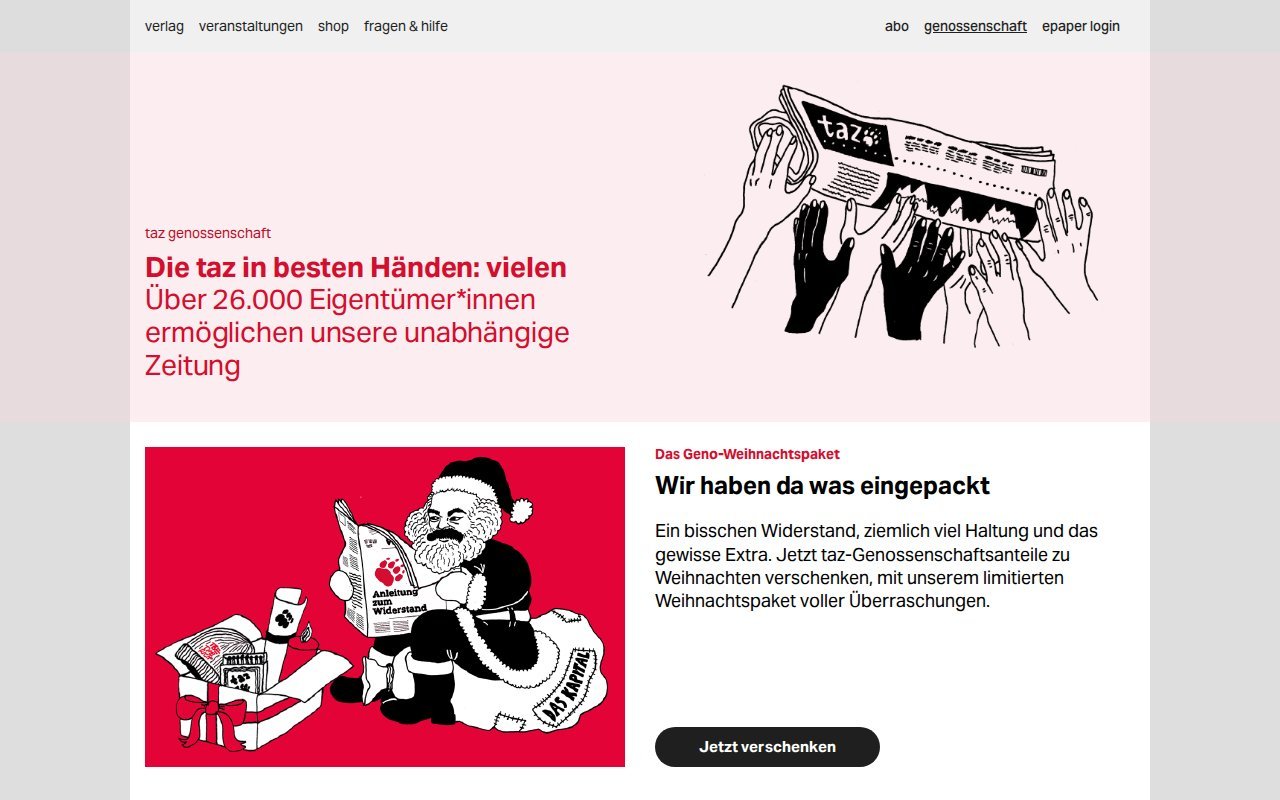
The taz grew out of West Berlin’s alternative scene, and its line is generally described as left-wing and green. Since a financial crisis in 1992 it has been published by a cooperative: members pay at least €500 once, or in 20 instalments of €25, have one vote each, and receive no interest. The cooperative gains about 1,000 members and €1 million in capital a year. About 250 people work in the newsroom and publishing house, paid below the industry average.
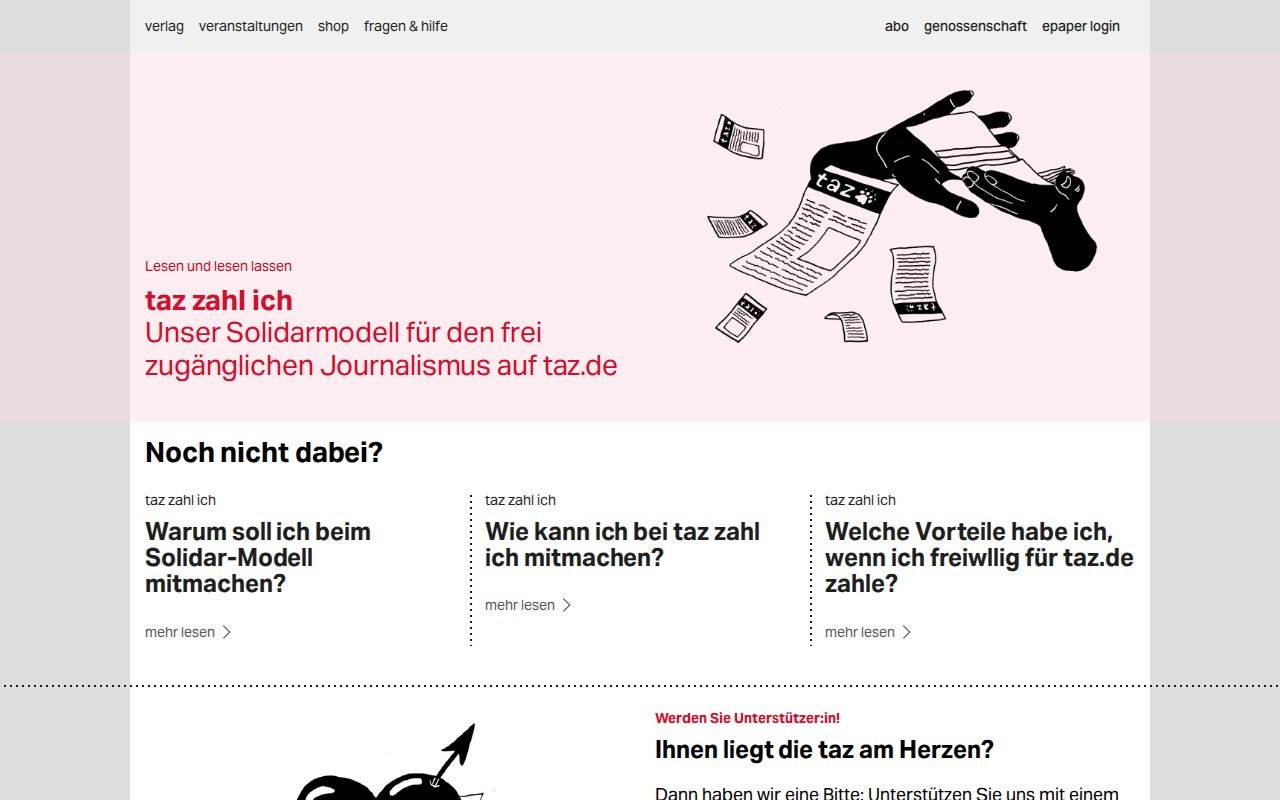
Under the “taz zahl ich” model, launched in 2011, readers support the website voluntarily, from €5 a month; in August 2026 more than 51,000 did so regularly. Since 17 October 2025 the taz has been the first national German daily to stop printing on weekdays: from Monday to Friday it appears only online and as an e-paper, while the weekly wochentaz is still printed on Saturdays, with a paid circulation of 43,696 copies in 2026.
Strengths
- Owned by more than 26,000 readers in a cooperative, so no media group or investor can take it over.
- A free website without paywall, funded by voluntary contributions from €5 a month.
- Strong coverage of ecology, social issues and international news.
Weaknesses
- A clearly left-leaning line, and some of its columns have caused controversy.
- No printed paper on weekdays since October 2025, only on Saturdays.
- In German only, and staff are paid less than in most of the industry.
Who it is for
German-speaking readers who want independent news, read online, and are ready to pay for it voluntarily or become co-owners.
Sources
- taz: Genossenschaft, taz zahl ich, checked November 2026
- Wikipedia: Die Tageszeitung