
Description
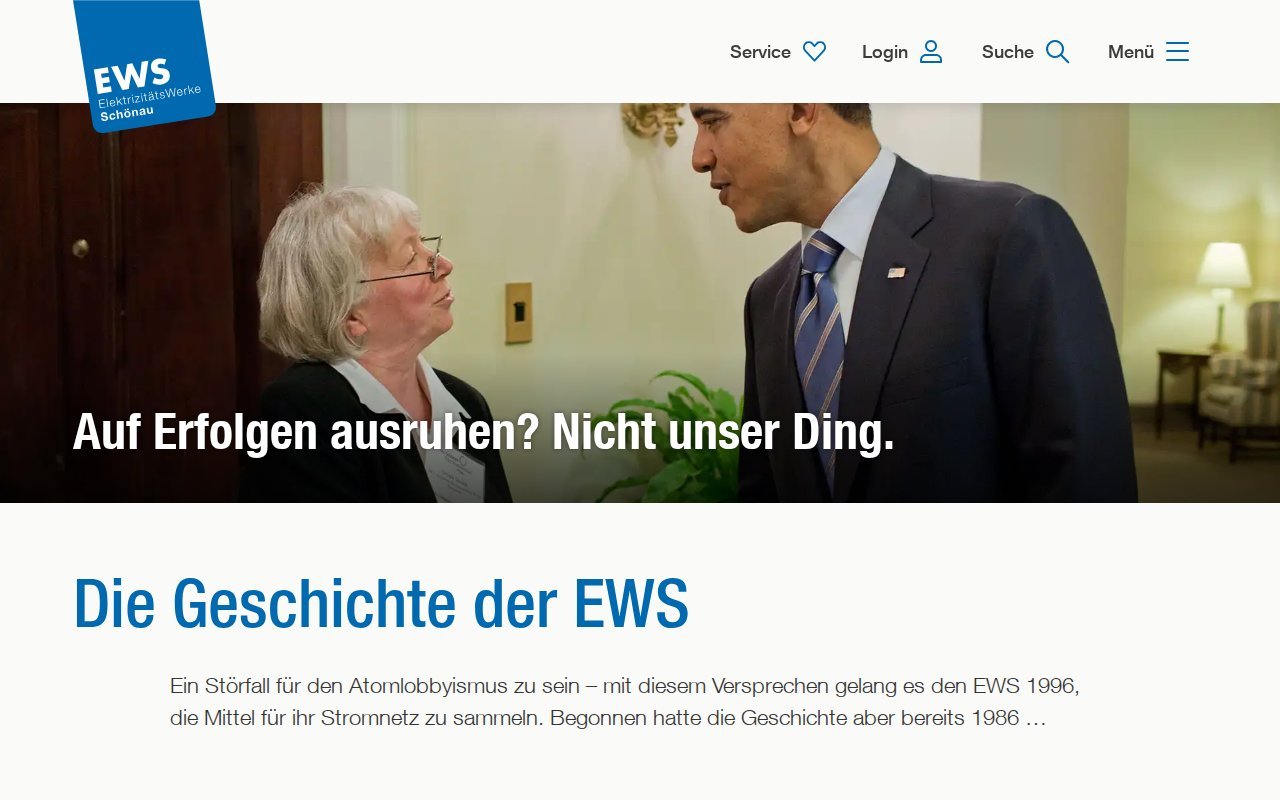
EWS Schönau is a German energy cooperative from a small town in the Black Forest that supplies green electricity, and gas with a share of biogas, across Germany. It grew out of a parents’ group formed in Schönau after the Chernobyl disaster of 1986, which won two local referendums and, in July 1997, bought the town’s power grid with the help of a nationwide donation campaign. The press called them the “power rebels”, and co-founder Ursula Sladek received the Goldman Environmental Prize in 2011.
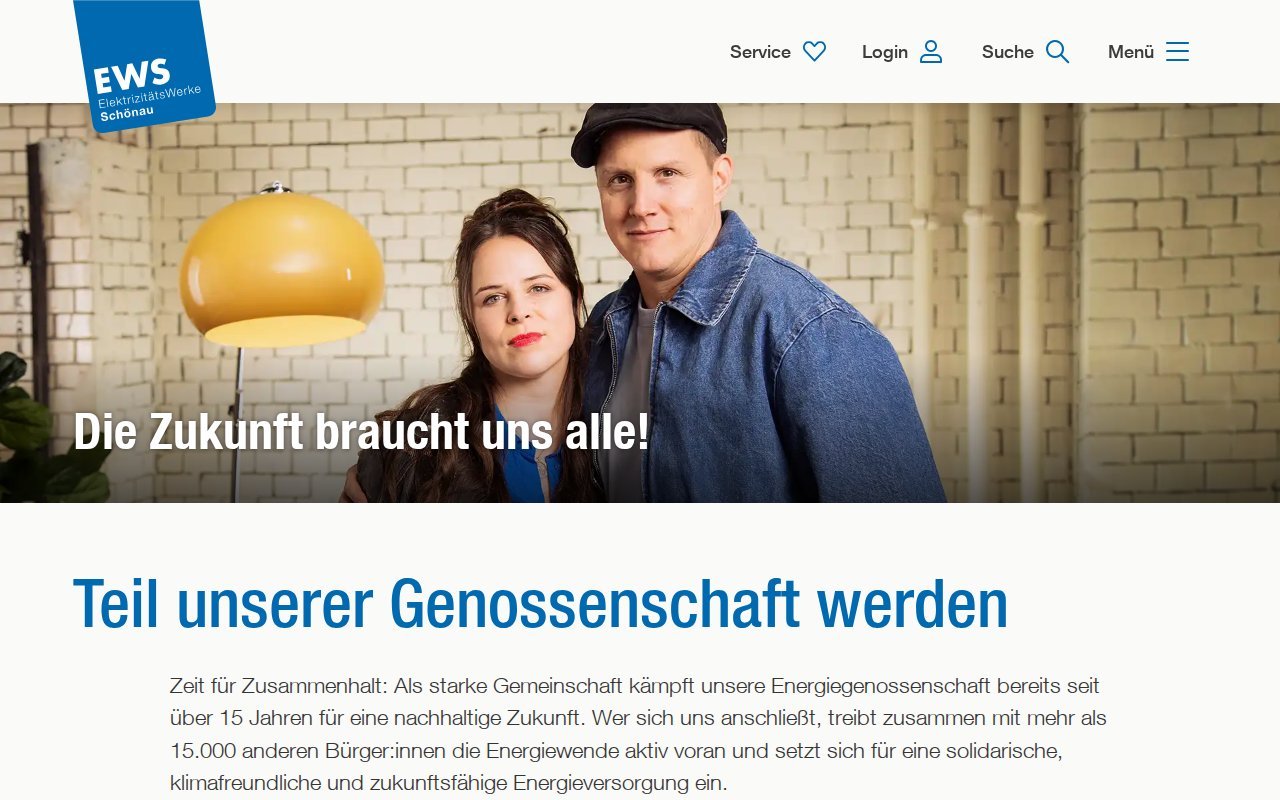
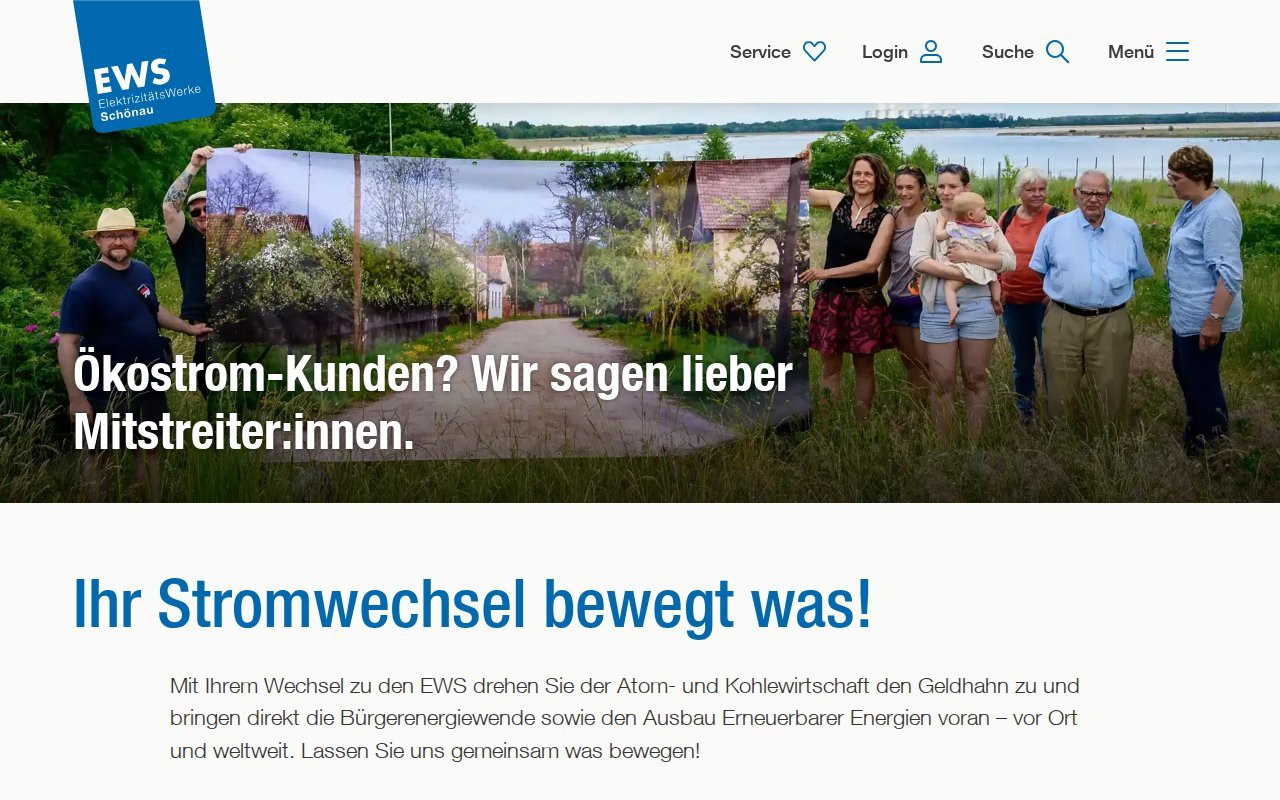
The company has belonged to a cooperative, EWS eG, since 2009, which had 15,014 members at the end of 2025 and 192,742 electricity, gas and heat customers. Its electricity is 100 % renewable on balance, at least 70 % of it from newer plants, with guarantees of origin from independent producers, and the label rules exclude stakes in nuclear or coal. The tariffs include a “Sonnencent” of 0.5 ct per kWh, which customers can raise to 1 or 2 ct, and it has funded about 8,400 small citizen-owned plants since 1999. Members with five shares of €100 pay a lower standing charge.
Öko-Test rated its electricity “very good” in 2021, and BUND, Robin Wood and urgewald recommend it. Utopia points out that most of the electricity comes from abroad, mainly Norwegian hydro power (42 % in 2024), and that the gas tariffs still contain 35 to 60 % fossil gas unless the 100 % biogas tariff is chosen.
Strengths
- Owned by more than 15,000 member citizens, with no ties to nuclear or coal companies.
- Labelled green electricity, and a surcharge that has funded thousands of small citizen-owned plants.
- Gas tariffs with 40, 65 or 100 % biogas.
Weaknesses
- Often a little more expensive than the cheapest offers.
- Most of the electricity comes from hydro plants abroad, while the communication stresses German projects (Utopia).
- The cheaper gas tariffs are still 35 to 60 % fossil gas.
Who it is for
Households in Germany who want a supplier that is truly independent of fossil and nuclear power.
Sources
- EWS Schönau: Home, Geschichte, Genossenschaft, Ökostrom, Biogas, checked November 2026
- Utopia: EWS Schönau
- Wikipedia: Elektrizitätswerke Schönau