
Description
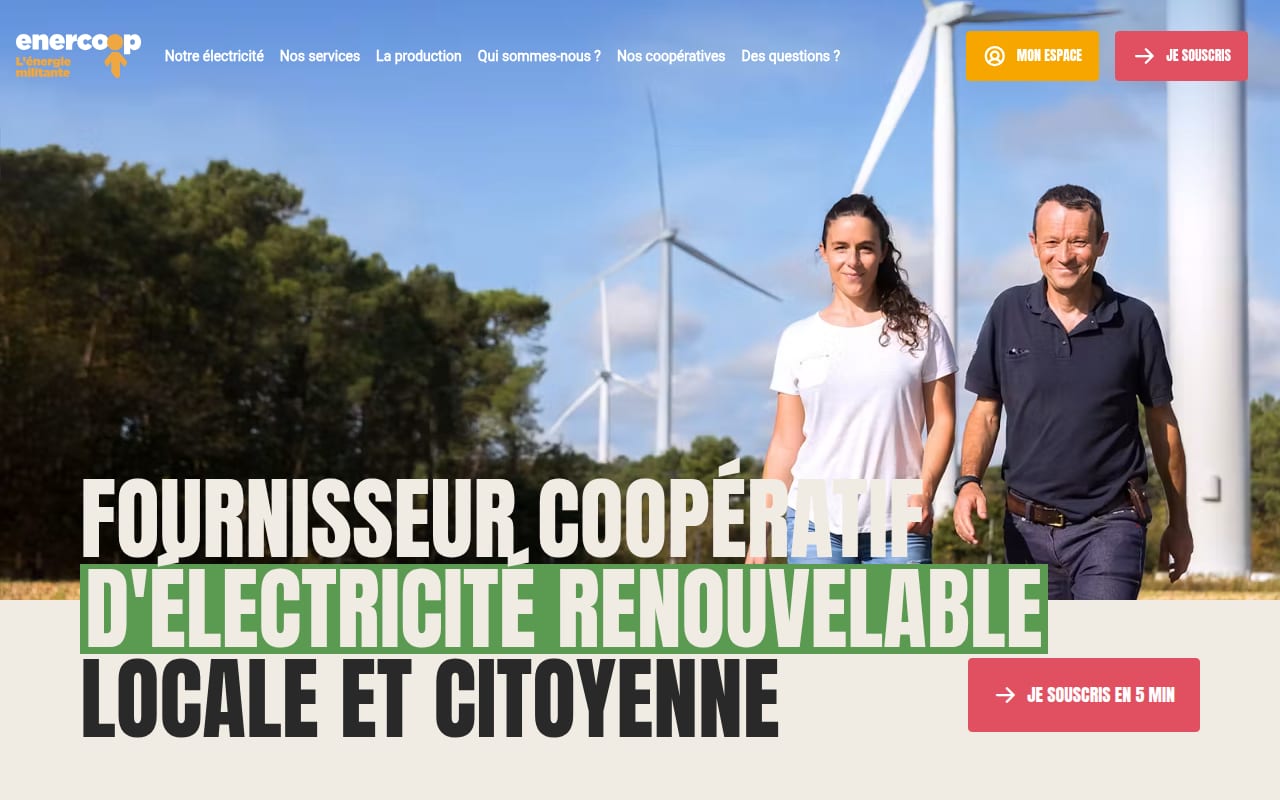
Enercoop is a French network of cooperatives that supplies renewable electricity bought directly from independent producers of wind, hydro, solar and biomass power, rather than through certificates bought separately. Founded in 2005, it was among the first suppliers in France to work this way.
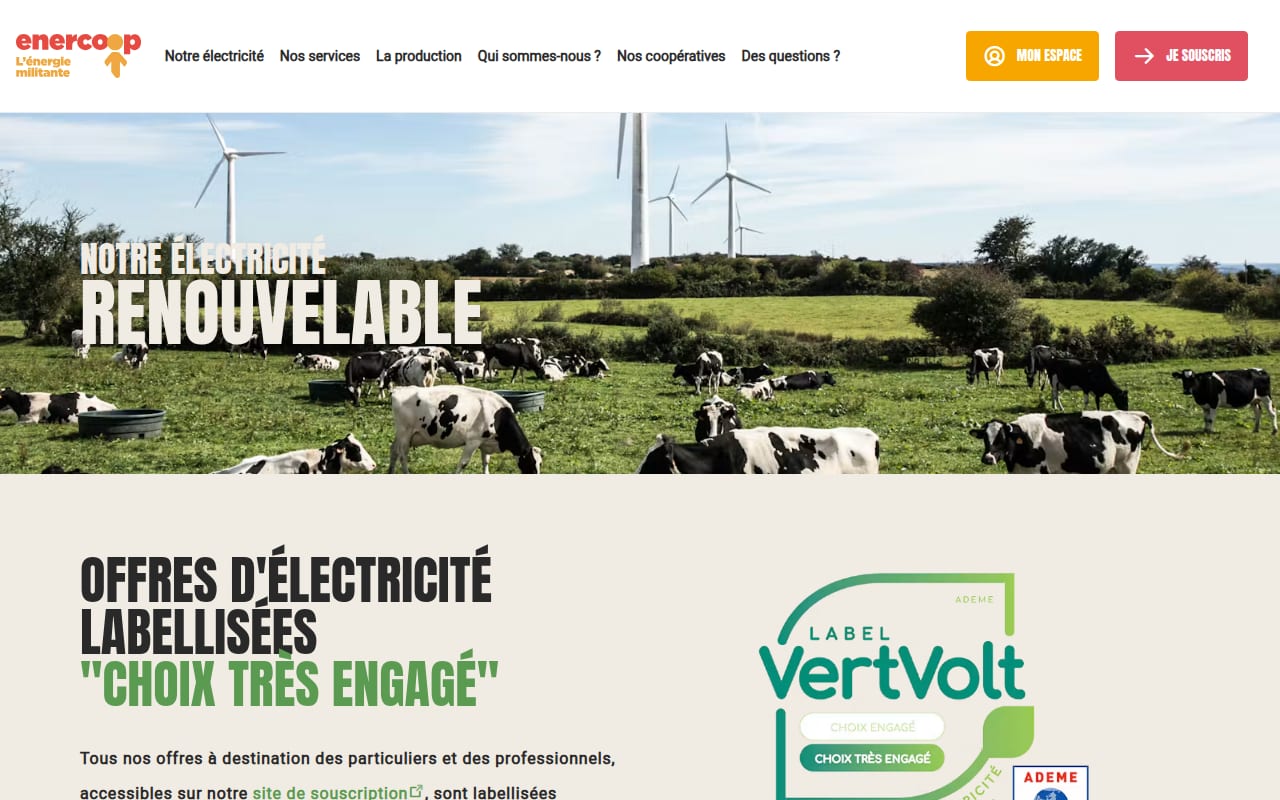
The network has 13 collective-interest cooperatives (SCIC): Enercoop Nationale, which holds the supply licence, and 12 local ones. Customers can become members by buying shares, and the website counts 112,000 customers and 68,000 members (2026). Enercoop buys the electricity and its guarantees of origin together from more than 570 producers, about half of whose sites belong to citizens or local councils, under direct contracts for 86 % of its supply; wind makes up 63 % of the mix. All its offers carry the VertVolt label at its highest level, “very committed”.
This costs more. In November 2026 its basic offer cost €0.2571 per kWh, about 30 % above the regulated tariff, or some €320 a year more for an electrically heated 70 m² flat, according to Selectra, which ranks it 18th of 21 on price. Enercoop sells electricity only, with four offers, none at a fixed price.
Strengths
- Electricity bought directly from more than 570 independent producers, together with its guarantees of origin.
- Cooperatives owned by their members, with about half of the producing sites owned by citizens or councils.
- Every offer carries the VertVolt label at its highest level.
Weaknesses
- About 30 % more per kWh than the regulated tariff in November 2026.
- Electricity only, no gas, and no fixed-price offer.
Who it is for
Households in France who want their bill to pay independent renewable producers directly, and who can afford a higher price for it.
Sources
- Enercoop: Home, Notre projet, Être sociétaire, Nos producteurs, Une électricité vraiment verte, checked November 2026
- Selectra: Tarifs Enercoop (November 2026)