
Description
The DZI Spendensiegel is a German seal for charities that collect donations. The DZI (Deutsches Zentralinstitut für soziale Fragen), a foundation in Berlin, awards it each year after checking the organisation’s governance, accounts, fundraising and use of money.
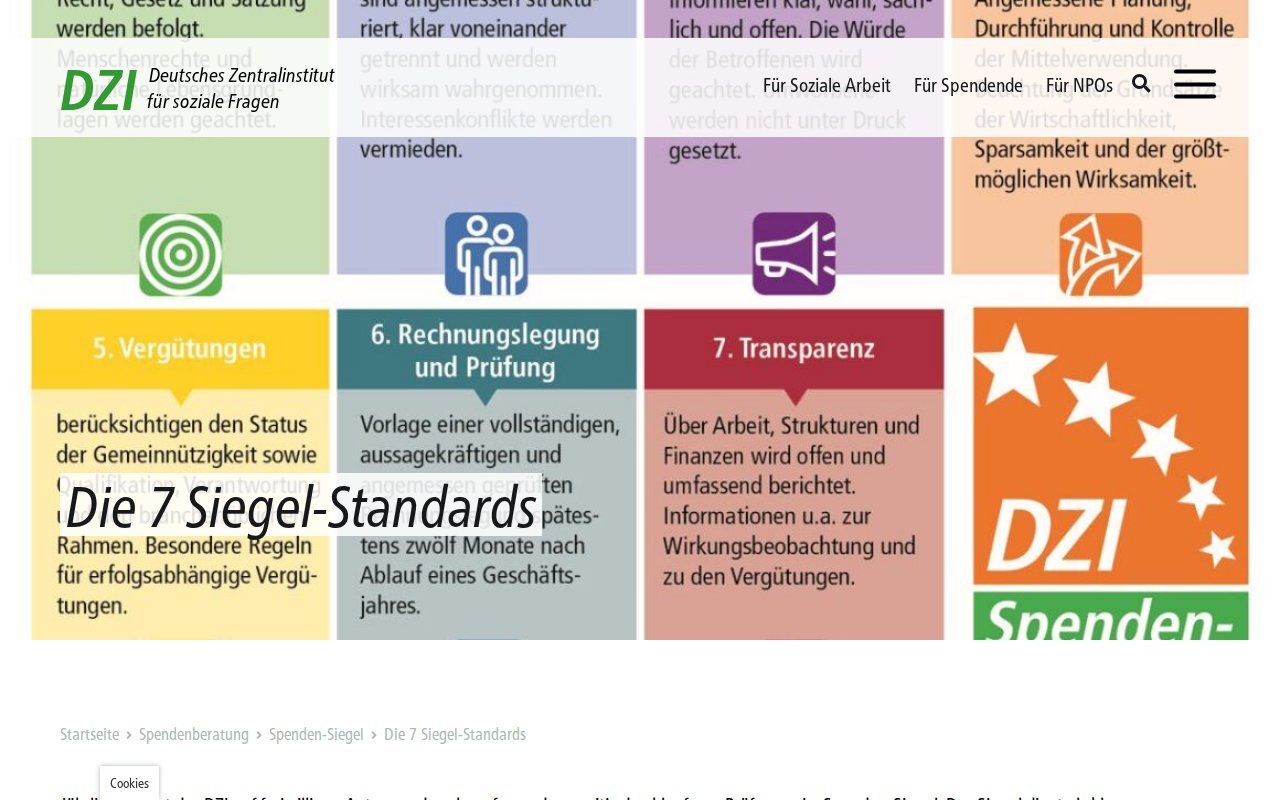
The DZI goes back to 1893 and has been a foundation under civil law since 1957. According to Stiftung Warentest, about 45 % of its funding comes from public grants and 55 % from its own income; the Berlin Land and federal ministries are among its supporters. It has awarded the seal since 1992, and about 229 organisations held it in February 2025. Its seven standards require, among other things, that advertising and administration take no more than 30 % of total spending (12.7 % on average among seal holders, says the DZI), that donors are not pressured or shown overly emotional images, and that organisations check and publish the effects of their work. About 30 % of first-time applicants fail.
Organisations pay for the check: €500 a year plus 0.04 % of total income, capped at €14,500 before VAT, and a one-off fee of €250 to €1,000 for the first review. The DZI also gives donors free information on other charities and publishes lists of organisations it advises against or warns about. Stiftung Warentest calls the seal the most meaningful in Germany, because it rests on a thorough outside check.
Strengths
- A yearly outside check of governance, accounts and fundraising, which Stiftung Warentest rates as the most meaningful seal.
- A clear limit: no more than 30 % of spending on advertising and administration.
- Free advice for donors, including warnings about dubious organisations.
Weaknesses
- Organisations pay up to €14,500 a year for the check, and some smaller ones say they can’t afford the fee or the paperwork.
- A missing seal doesn’t mean a charity is bad, since many never apply.
- It says little about how cost-effective the work is, a criticism made by Effektiv Spenden.
Who it is for
Donors in Germany who want to know, before giving, that an organisation’s accounts and fundraising have been checked from outside.