
Description
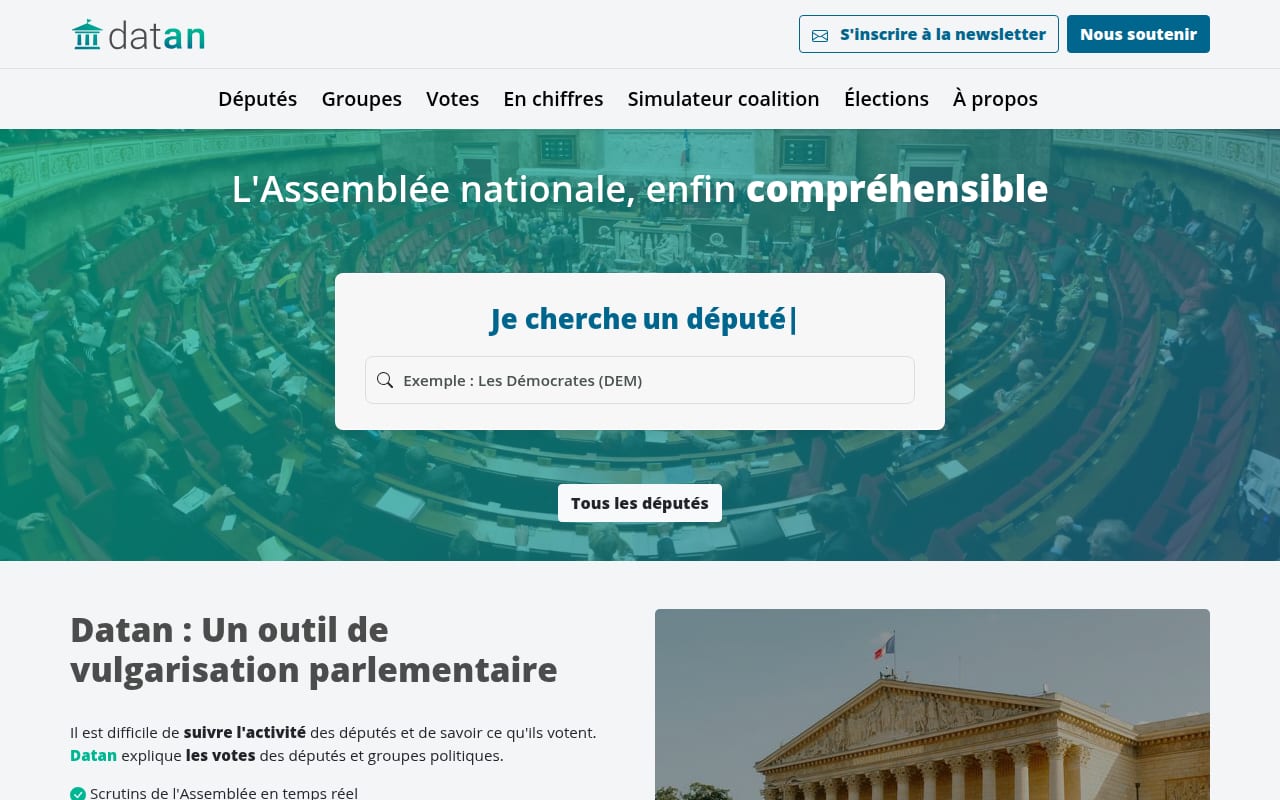
Datan is a free website that shows how each member of the French National Assembly and each parliamentary group votes, from the Assembly’s own open data. A reader can check an MP’s actual votes on the budget or a bill instead of relying on what the MP or the party says about them.
Awenig Marié, a political science researcher who had worked for VoteWatch Europe, put it online in July 2020; volunteers help run it. It carries no advertising and takes no money from parties, companies or local authorities; donations cover a budget of about €400 a year. A scientific council of six academics, chaired by Olivier Costa of Sciences Po’s CEVIPOF, has watched over its methods and its neutrality since November 2020.
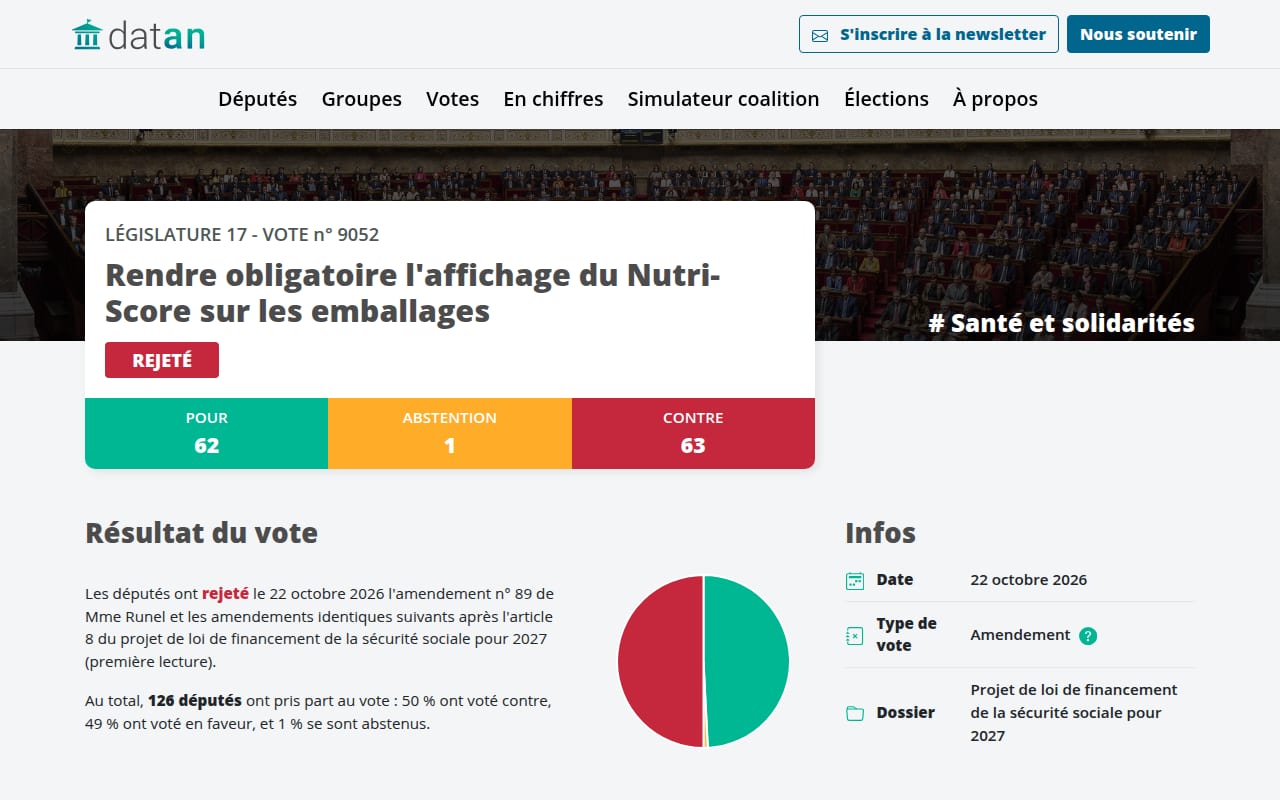
Every public vote of the current legislature is listed, the latest from 4 November 2026 on the 2027 budget, and a few hundred are explained in plain words with their context. Each MP has a page with three participation rates (solemn votes, votes on texts from their own committee, all votes), loyalty to their group and closeness to the other groups. The figures go back to 2002 and are published under an open licence on data.gouv.fr, updated weekly. Since the 2024 dissolution, the site has had 30,000 to 50,000 visitors a day, according to its founder.
Strengths
- Every public vote, with a few hundred explained in context, and each MP’s votes, participation and loyalty to the group on one page.
- No advertising and no money from parties, companies or public bodies, with a scientific council checking its neutrality.
- Its statistics are open data on data.gouv.fr, updated every week and reusable by anyone.
Weaknesses
- Amendments, written questions and committee work aren’t counted, and the Senate isn’t covered.
- The publisher is a private person, and some help pages are out of date, still announcing the “next elections in 2022”.
- Google audience measurement is offered alongside its own Matomo, though only with the visitor’s consent.
Who it is for
Voters who want to check how their MP voted before an election, and journalists, students and teachers who need reliable figures on the votes of the National Assembly.