
Description
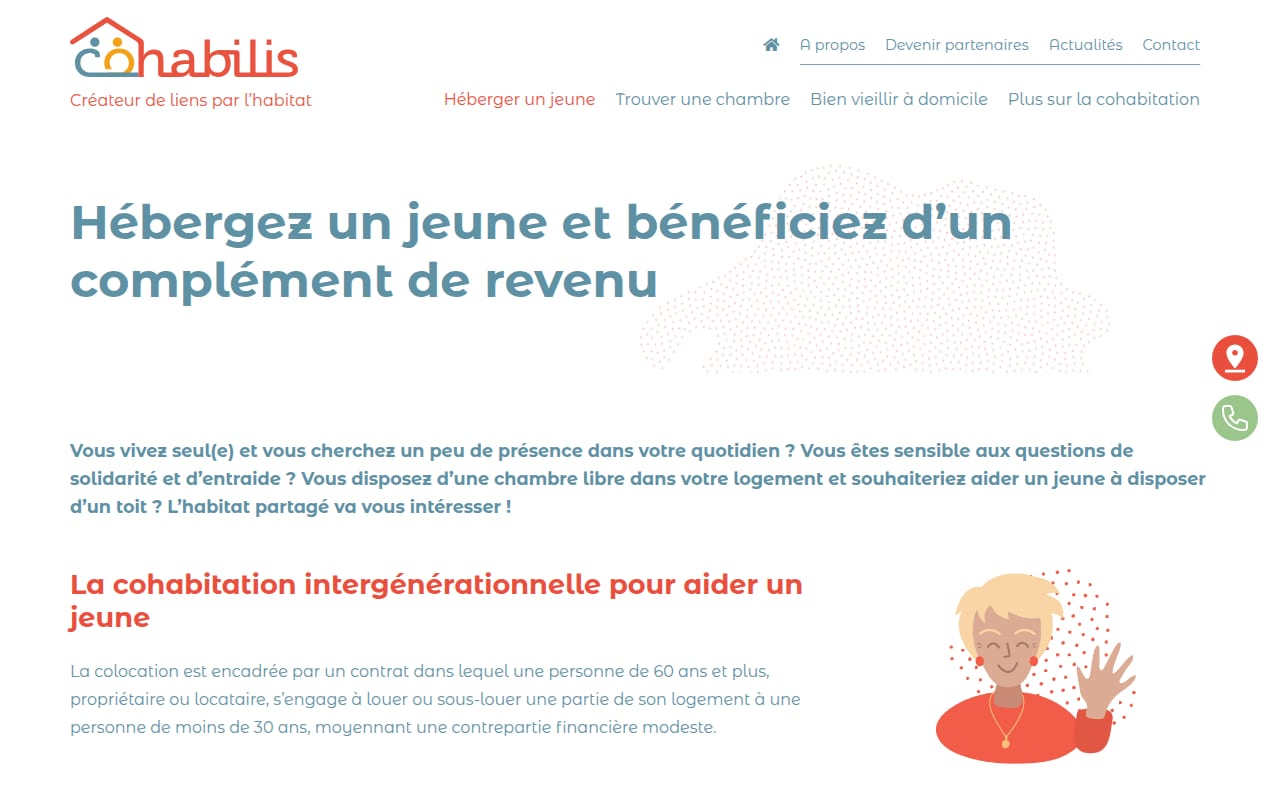
Cohabilis is the French network of intergenerational home-sharing associations: a person aged 60 or over rents a room in their home to someone under 30, a student, apprentice, trainee or young worker, for a modest sum.
The first such association was founded in Paris in 2004, after the 2003 heatwave, and a national network followed in 2005. Cohabilis was formed in 2020 by merging two networks, CoSI and LIS. In 2025 it had 70 member structures, mostly associations but also municipal social services and cooperatives, covering 17,000 municipalities and arranging about 1,700 pairs a year. Its funders include the Assurance retraite, the CNAF and Agirc-Arrco.
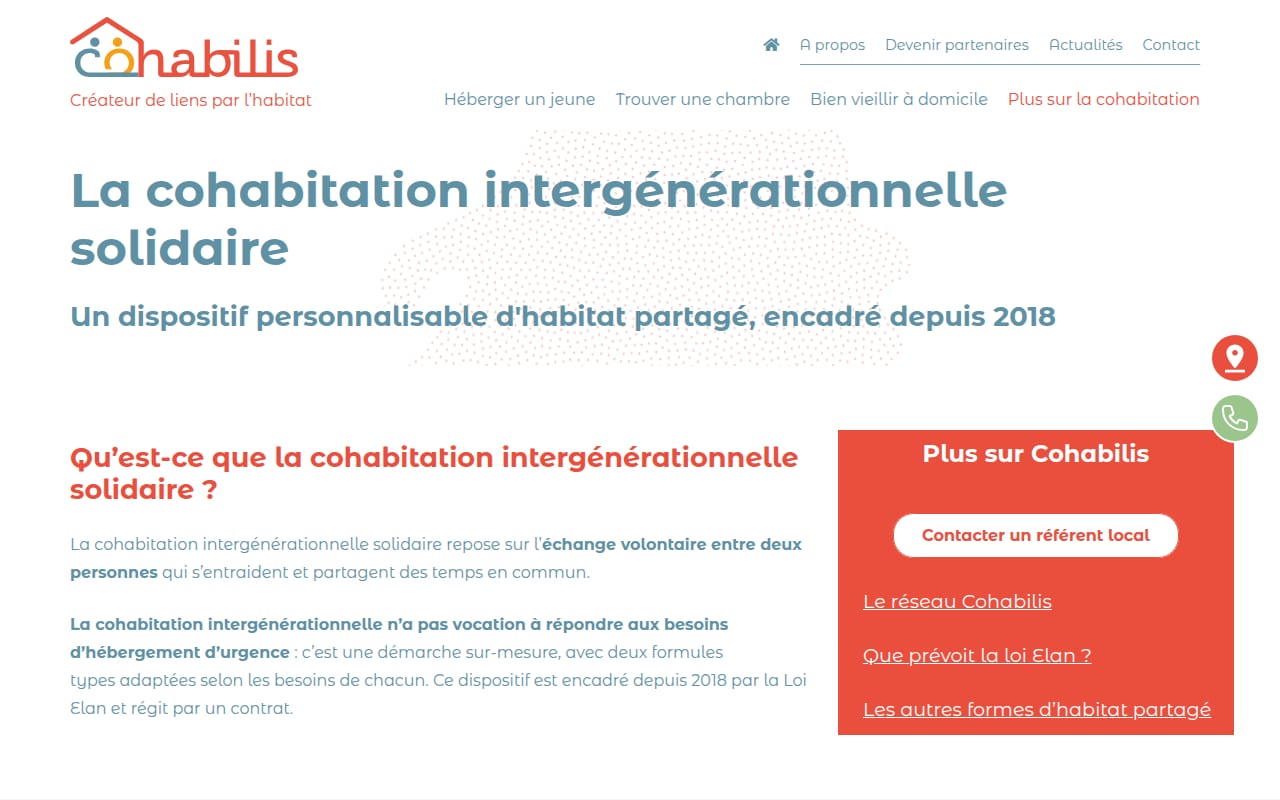
The local association meets both sides, visits the home, matches the pair, draws up the contract and keeps in touch. Since the ELAN law of 2018 the arrangement has its own legal framework: it is not a lease, lasts at most a year, renewable, and ends with a month’s notice. In the “friendly” formula the young person pays €150 to €350 a month, depending on the area; in the “solidarity” formula they are at home some evenings or help with small tasks and pay at most €60 a month. On top come a file fee of about €30 and follow-up fees that vary from one association to the next (checked November 2026). Finding a match takes one or two months on average.
Strengths
- A room for at most €60 a month in the solidarity formula, in cities where student rooms cost far more.
- A local association chooses the pair, writes the contract and stays in touch throughout.
- Older people get company and someone in the house at night, without it replacing care services.
Weaknesses
- A file fee of about €30, plus follow-up fees that vary and are not published nationally.
- Finding a host takes one or two months on average, and demand peaks from June to September.
- Daily life is shared with an older person, with some evenings at home in the solidarity formula, and meals are not included.
Who it is for
Students, apprentices and young workers moving to an expensive city who are happy to share a home with an older person, and people over 60 with a spare room who would like someone around.
Sources
- Cohabilis: Tout savoir sur la cohabitation intergénérationnelle, Le cadre juridique, Présentation du réseau, Jeunes, Rapport d’activité 2025, checked November 2026