
Description
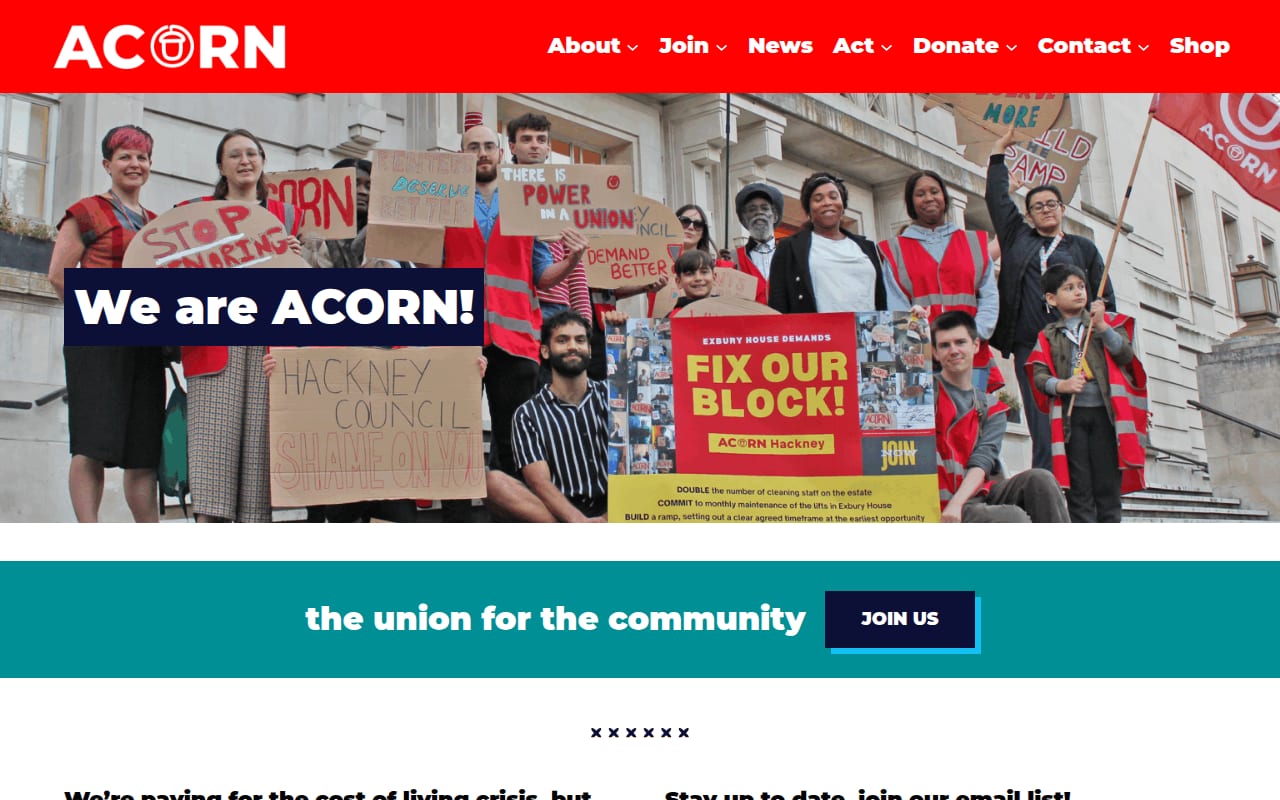
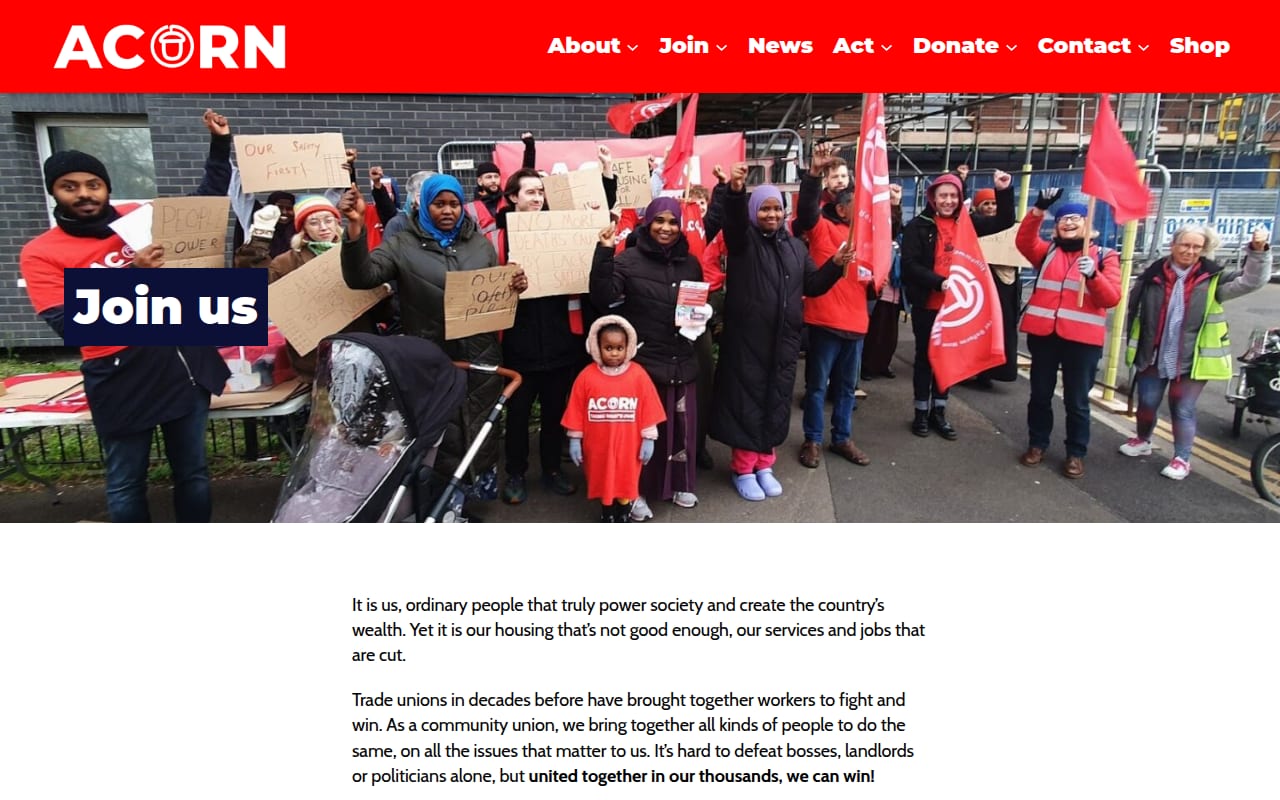
ACORN is a community and tenants’ union in England and Wales whose members act together against bad landlords, to get repairs done, deposits returned and evictions stopped, for a membership fee based on income.
It was formed in Bristol in 2014, in an area with rogue landlords and rising rents, and now has nearly 30 branches across England and Wales. Members pay by direct debit: £10, £12 or £15 a month depending on hourly pay, £4 for the unemployed, £6 for part-time workers and £8 for retired people, and up to £25 for high earners; they can cancel at any time. Policies are decided by elected leaders.
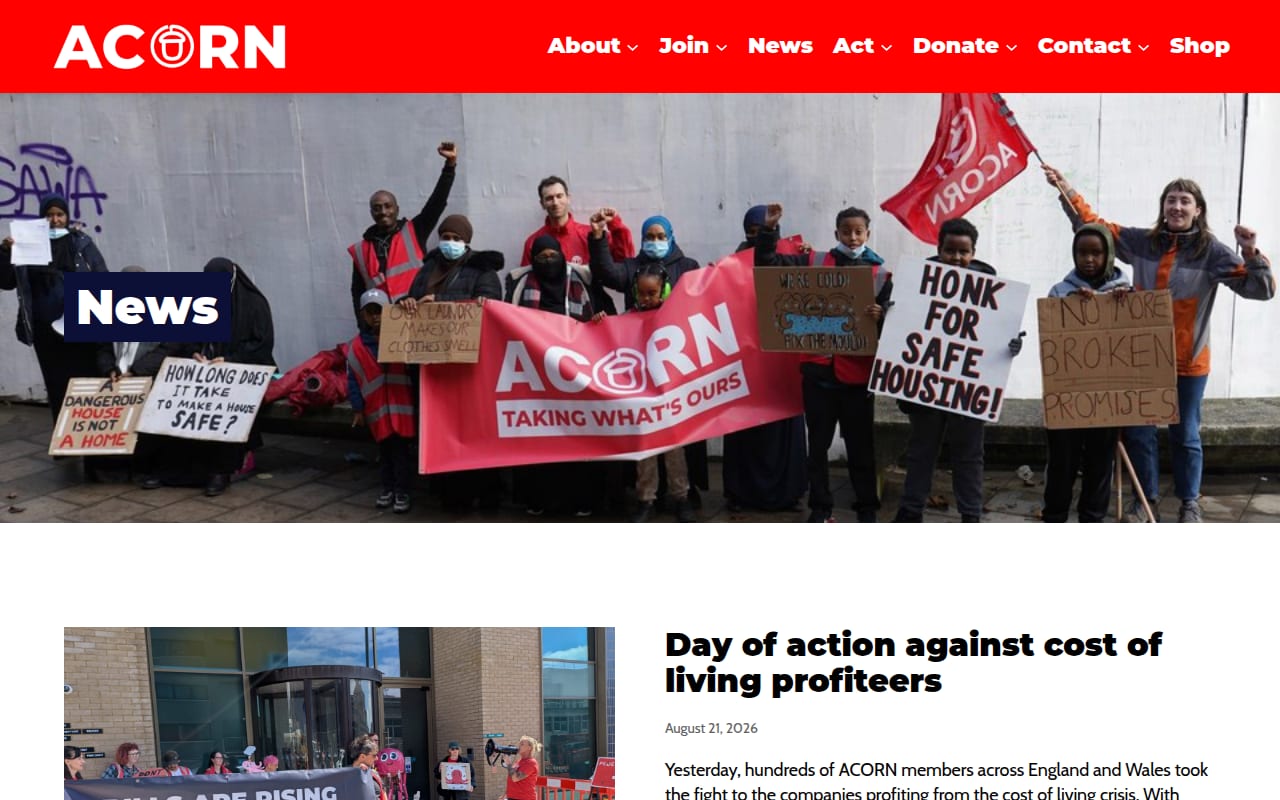
ACORN’s method is collective action. Members march on landlords and letting agents to get repairs done and stolen deposits returned, and have blocked bailiffs to stop evictions. It lists campaign wins such as landlord licensing schemes in Brighton, Bristol, Oxford, Leeds, Manchester, Newcastle and Sheffield, keeping a council tax reduction in Bristol, £100 million of fire and safety works for Bristol tower blocks, and TSB dropping a 12-month tenancy clause in May 2024. In July 2026 it reported that 25,000 people on council tax support in Newcastle had been protected from bailiffs.
Strengths
- Members aren’t alone against a landlord: neighbours and the branch take action together.
- Fees are scaled to income, from £4 a month for the unemployed.
- It has a record of concrete local wins, from landlord licensing to repairs and halted evictions.
Weaknesses
- Membership costs at least £4 a month, and help depends on an active branch nearby.
- Direct action, such as blocking bailiffs, isn’t for everyone and can bring conflict with the landlord.
- The site gives no member numbers, and its footer still read 2025 when checked.
Who it is for
Private and social renters in England and Wales who have trouble with a landlord or agent and would rather organise with neighbours than face them alone.
Sources
- ACORN: home, about, join, current campaigns, policies and positions (checked November 2026)