
Description
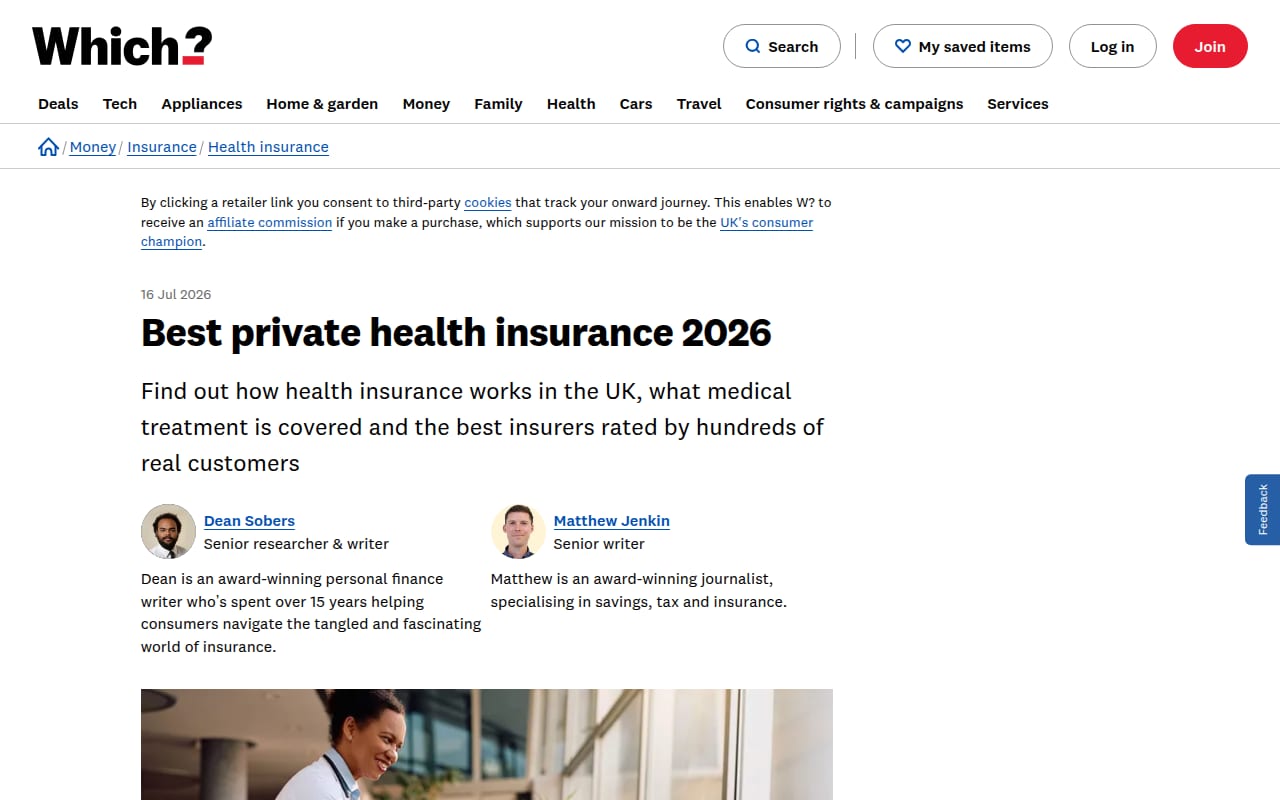
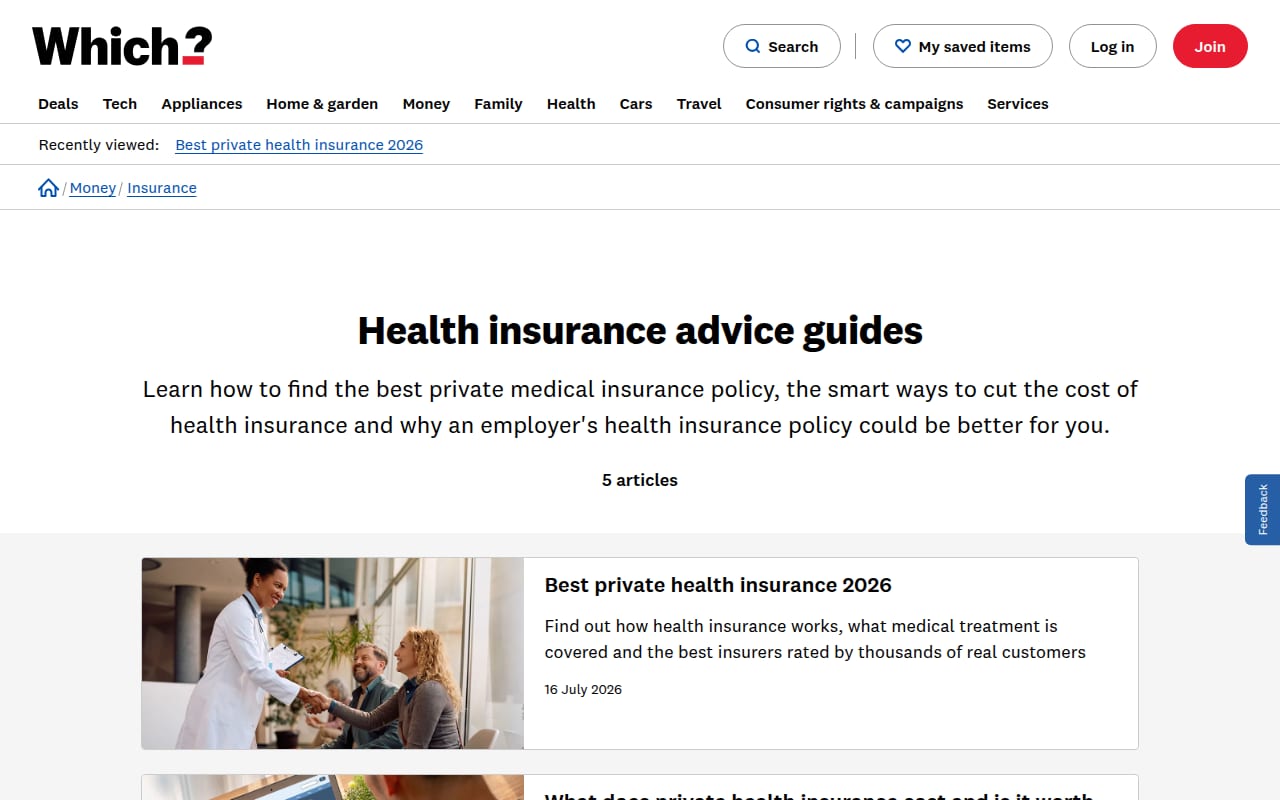
Which?, the UK consumer association, rates private medical insurers by what their customers say after making a claim. Price comparison sites rank policies by price and are paid by the insurers they list; this yearly guide scores insurers on how they handled claims.
Which? is made of a charity, the Consumers’ Association, and its trading subsidiary Which? Limited, whose profits fund the charity. Most of the money comes from members’ subscriptions; it takes no government funding or grants. In April 2026 it surveyed 931 people who had claimed in the past year. The 2026 table ranks seven insurers by customer score: WPA 86 %, Westfield Health 80 %, Bupa 77 %, Axa Health 76 %, Aviva 74 %, Saga and Vitality 72 %. WPA is the only Which? Recommended Provider. Twelve aspects, from the clarity of the terms to waiting times, get star ratings.
The guide also lists example premiums collected in July 2026, from £444 a year at 35 for Westfield’s Level 2 policy, which excludes heart and cancer treatment, to £4,719 at 75 for Bupa Comprehensive. It explains the usual exclusions (pre-existing and chronic conditions, pregnancy), moratorium against full medical underwriting, and says cover may not be worth it for someone unlikely to claim or content to use the NHS. Membership starts at £79 a year (checked November 2026).
Strengths
- Insurers ranked by how claimants were treated, with star ratings for ease of claiming, speed and waiting times.
- Example premiums at 35, 55 and 75 for seven insurers, with what each policy leaves out.
- States plainly when private cover isn’t worth it, given free NHS treatment.
Weaknesses
- The “Get a quote” buttons lead to LifeSearch, a broker that pays Which? a commission and doesn’t offer every insurer.
- Samples are small and unweighted: WPA’s top score rests on 34 answers, close to the minimum of 30.
- Companies can pay a fee to use the Which? endorsement logo, and part of the site is for members only.
Who it is for
People in the UK thinking about private medical insurance for themselves or their family, who want to know how insurers behave at claim time before speaking to a broker.