
Description
VRAC organises group buying of organic, fair-trade and local food in low-income neighbourhoods of France and sells it at cost price. Members order and collect their goods, in their own containers, at regular distributions in their neighbourhood. It is an alternative to discount supermarkets as the only option where money is short.
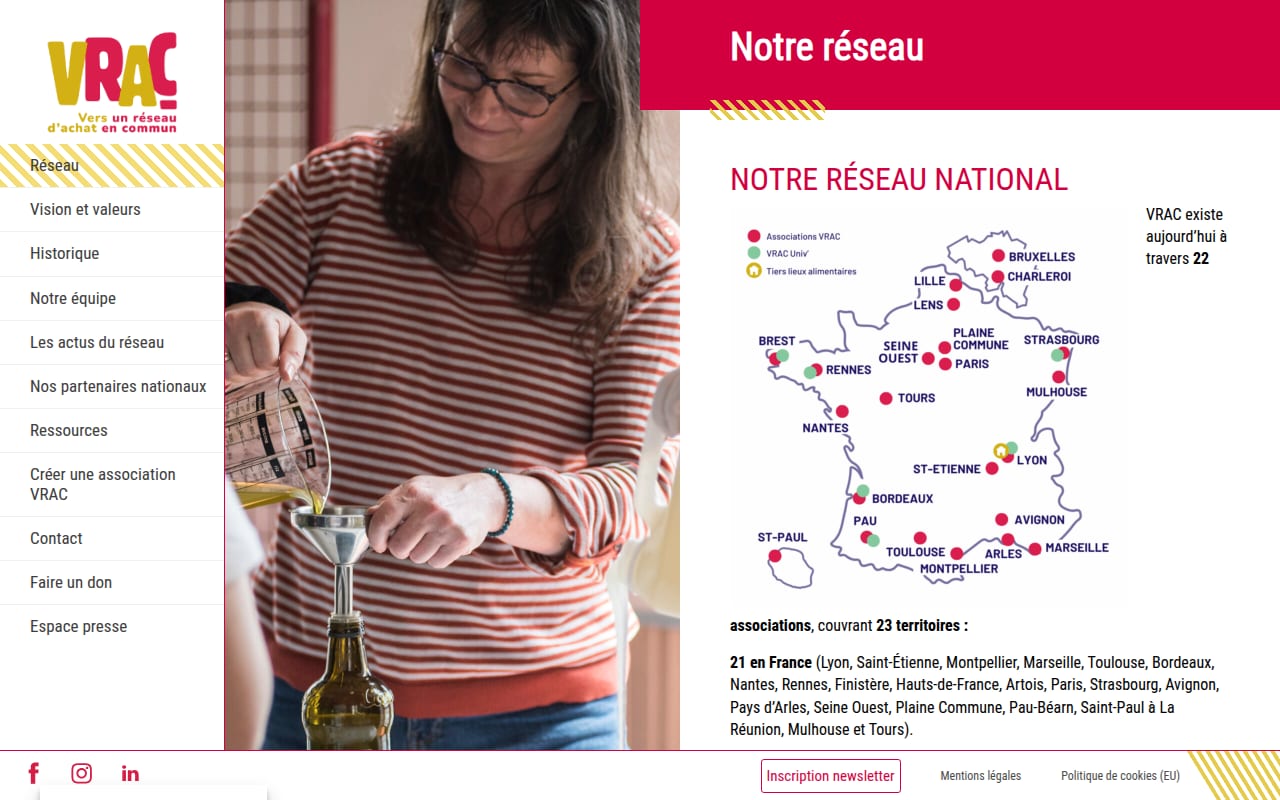
The social landlord Est Métropole Habitat and the Fondation Abbé-Pierre set it up in the Lyon area in December 2013, with Boris Tavernier as project leader and co-founder. In the second half of 2025 the network had 22 local associations covering 23 areas, 21 in France and two in Belgium, with 143 buying groups, 12,300 member households, about 2,500 volunteers and 90 employees. VRAC France, based in Villeurbanne, federates the local associations, and a fund collects private money for the whole network. Supporters include the Fondation Daniel et Nina Carasso, the Fondation de France, ADEME and national food-policy programmes.
VRAC buys at the price the producers ask, without negotiating, and keeps costs down through short supply chains and little packaging. Residents of the state’s priority neighbourhoods pay cost price; other members pay a higher margin and a higher yearly membership, which helps fund the system and mixes social backgrounds. The groups also run cooking workshops and social events, and in Lyon a third place with a solidarity canteen and grocery.
Strengths
- Organic and local food at the price paid to the producer, with no shop margin for residents of priority neighbourhoods.
- Producers are paid the price they ask, without haggling.
- Mostly sold in bulk, without packaging, and run with residents in the governance.
Weaknesses
- Distributions are periodic, so it doesn’t replace weekly shopping for fresh products.
- Places go first to residents of priority neighbourhoods; others pay more.
- Only in about 20 cities, and orders have to be planned ahead.
Who it is for
Families in a neighbourhood with a VRAC group who want their pasta, flour, oil and other staples organic and cheap, and can plan their orders ahead.
Sources
- VRAC: home, historique, notre réseau, vision et valeurs, partenaires, checked November 2026