

Description
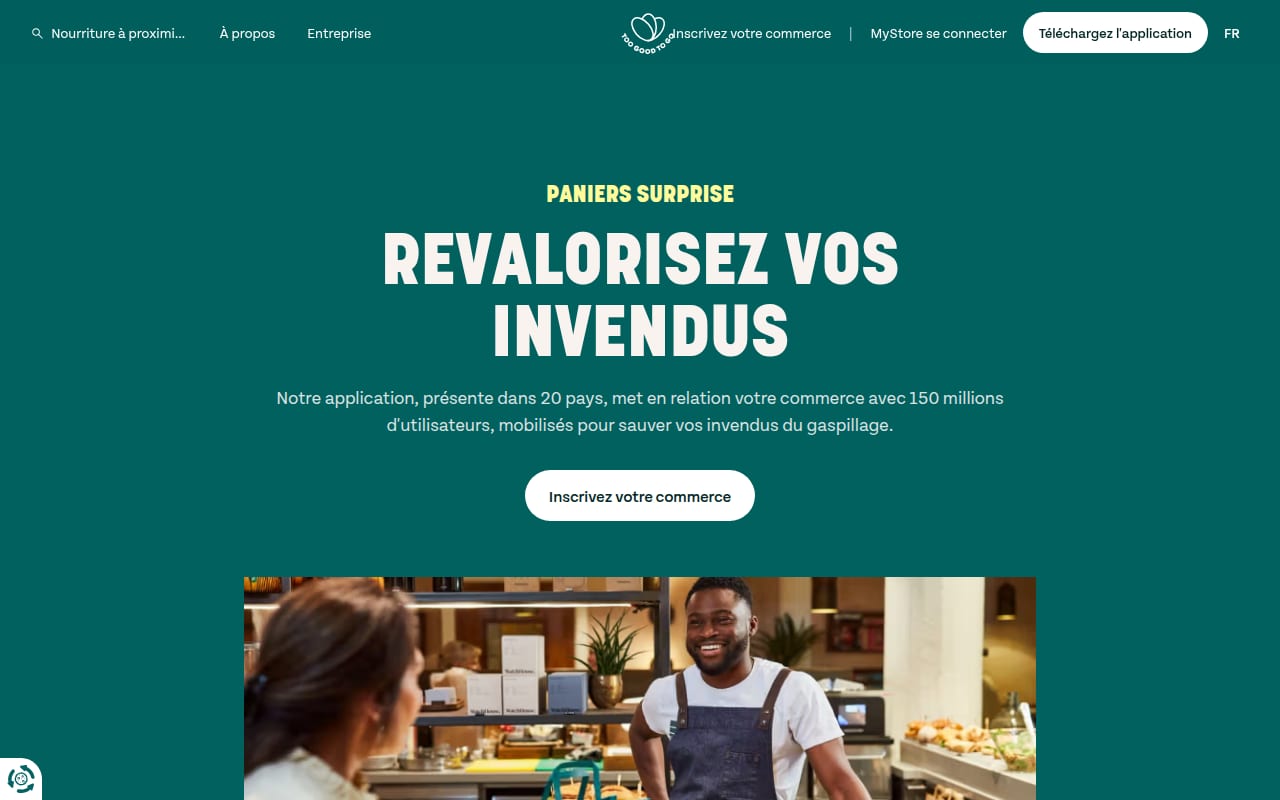
Too Good To Go is a free app that sells the day’s unsold food from bakeries, supermarkets, restaurants and caterers as “surprise bags”, at about a third of their stated value. Customers book and pay in the app, then collect the bag at a set time, often in a 30- or 60-minute window in the evening. It is an alternative to shops throwing away food that is still good.
Founded in Copenhagen in 2015, the Danish company is led by Mette Lykke and certified as a B Corp. It works in 17 European countries and in Australia, Canada, Japan, New Zealand and the United States, and says it sold 135 million meals in 2024. Too Good To Go ApS had revenue of DKK 725 million (about €97 million) in 2024 and a small profit, after years of losses. In France alone it had about 45,000 partner shops at the end of 2024.
The shop decides what goes in the bag and sets the price; customers can’t choose. The app takes a commission on each bag, 25 % with a minimum of €1.09 according to a 2026 guide, plus an annual fee for the shop. A bag sold for €5 can leave the shop less than €4, which co-founder Lucie Basch has said only just covers its costs. Shops can cancel a bag if there is less surplus than expected, and customers can cancel up to two hours before pick-up. Press articles have asked whether some shops end up planning surplus to sell through the app.
Strengths
- A bag costs about a third of the value of what is inside, according to the shop’s own estimate.
- A wide choice in cities, from supermarket chains to local bakeries and restaurants.
- Customers can cancel up to two hours before collection, and shops can cancel if nothing is left.
Weaknesses
- The contents are a surprise, which makes it hard with allergies or a strict diet.
- Fixed pick-up windows, and popular bags sell out within hours.
- A commercial company that takes about a quarter of each sale; an app and online payment are required.
Who it is for
City dwellers near several partner shops who can drop by in the evening for bread, dishes or groceries at a low price and don’t mind a surprise.
Sources
- The official site toogoodtogo.com refused automated reading in November 2026.
- Wikipedia: Too Good To Go
- Combak: avis Too Good To Go (2026)
- Journal du Net: interview with Lucie Basch
- DH: On a testé les paniers surprises Too Good To Go (June 2026)