
Description
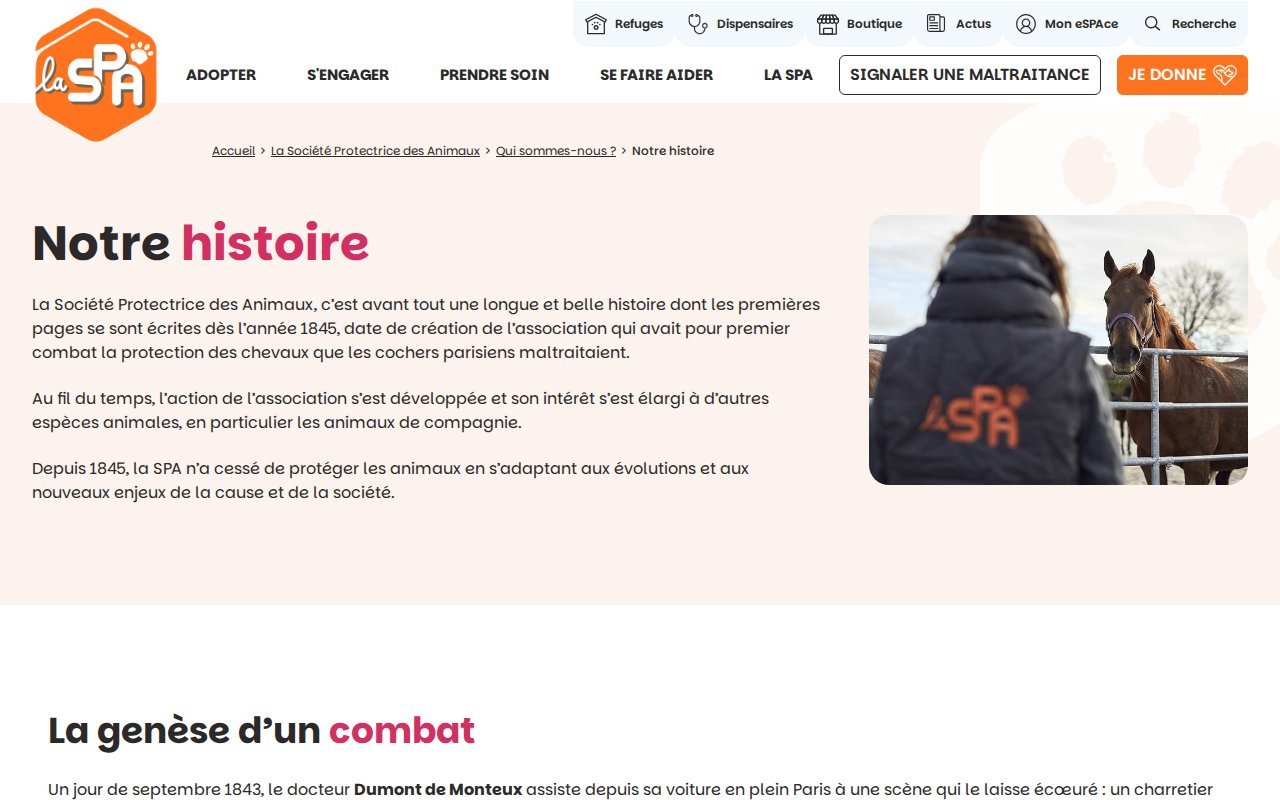
The SPA (Société Protectrice des Animaux), founded in 1845 and recognised as a public-interest association since 1860, is France’s oldest animal protection association. It runs 64 shelters and “Maisons SPA”, where in 2025 it took in 42,300 animals and found new homes for 39,500. Adopting there is an alternative to buying a pet from a pet shop, a breeder or a classified ad.
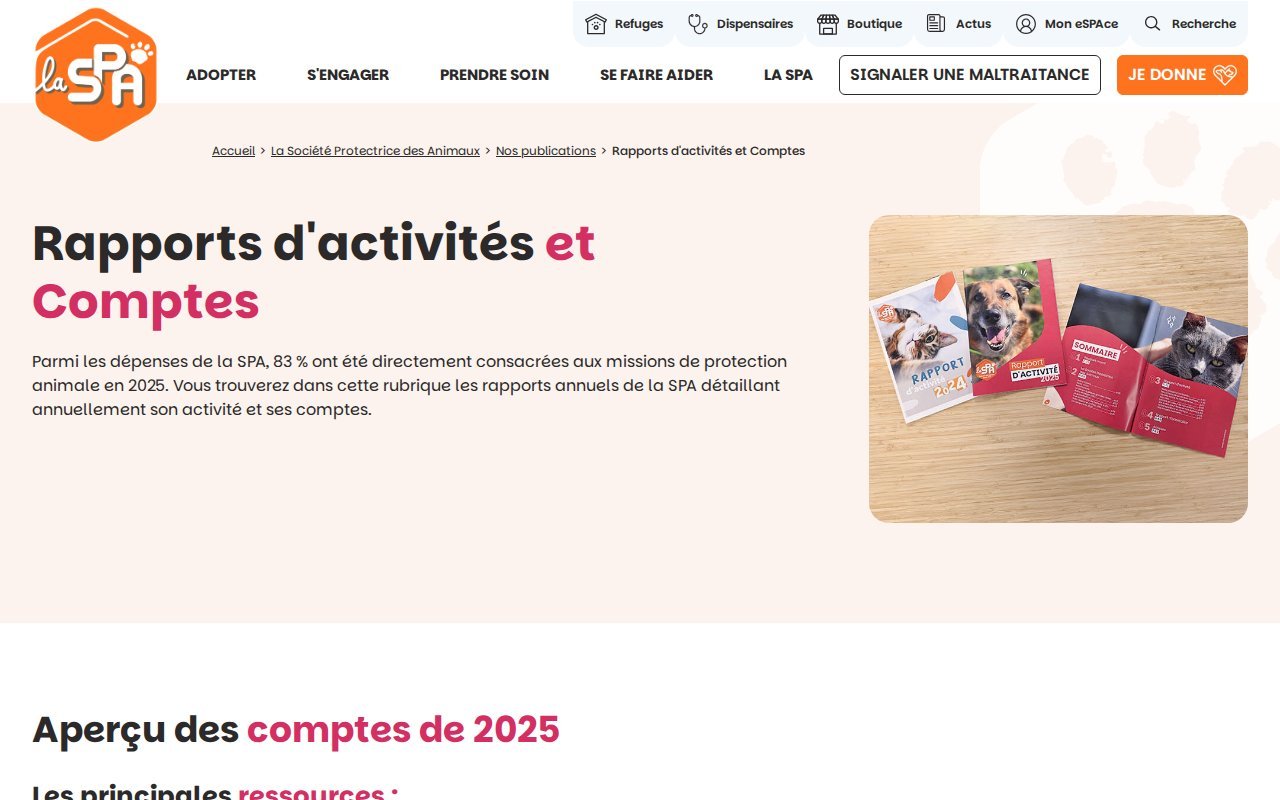
The SPA also runs 13 veterinary clinics for the pets of people on low incomes, 29 municipal pounds and 12,600 investigations into animal cruelty a year. About 800 employees and 7,000 volunteers work for it, and it has 19,000 members who elect its board. In 2025 its resources reached €118.3 million, 85 % of it from donations and legacies; 83 % of spending went to its social missions and 13 % to fundraising. Its accounts are audited by EY, and it holds the Don en Confiance label. Between 2002 and 2017 the Cour des comptes repeatedly criticised its management, and a court-appointed administrator ran it from 2009 to 2013 before new statutes and internal controls were introduced.
Adopters visit the shelter in person, without an appointment booked online, and must sign a certificate of commitment to the animal’s needs at least seven days before taking it home, as the law has required since 2022. The adoption fee is €275 for a dog, €365 for a puppy, €175 for a cat and €195 for a kitten, and covers the vet costs: identification, vaccination and sterilisation. A visit after adoption is part of every contract.
Strengths
- Gives a home to one of tens of thousands of animals taken in every year.
- Animals are identified, vaccinated and sterilised, and the fee covers those vet costs.
- Accounts audited by EY, the Don en Confiance label, and 83 % of spending on its missions.
Weaknesses
- Adoption takes time: a visit, an interview and a seven-day wait after signing the commitment certificate.
- Shelters are often full, and some animals need patience after a difficult past.
- Its past governance problems led to a court-appointed administrator from 2009 to 2013.
Who it is for
Households in France ready to welcome a dog, a cat or another animal for many years, who prefer to adopt rather than buy.
Sources
- SPA: qui sommes-nous, notre histoire, rapports et comptes, étapes de l’adoption, participation financière, checked November 2026
- Wikipédia: Société protectrice des animaux