
Description
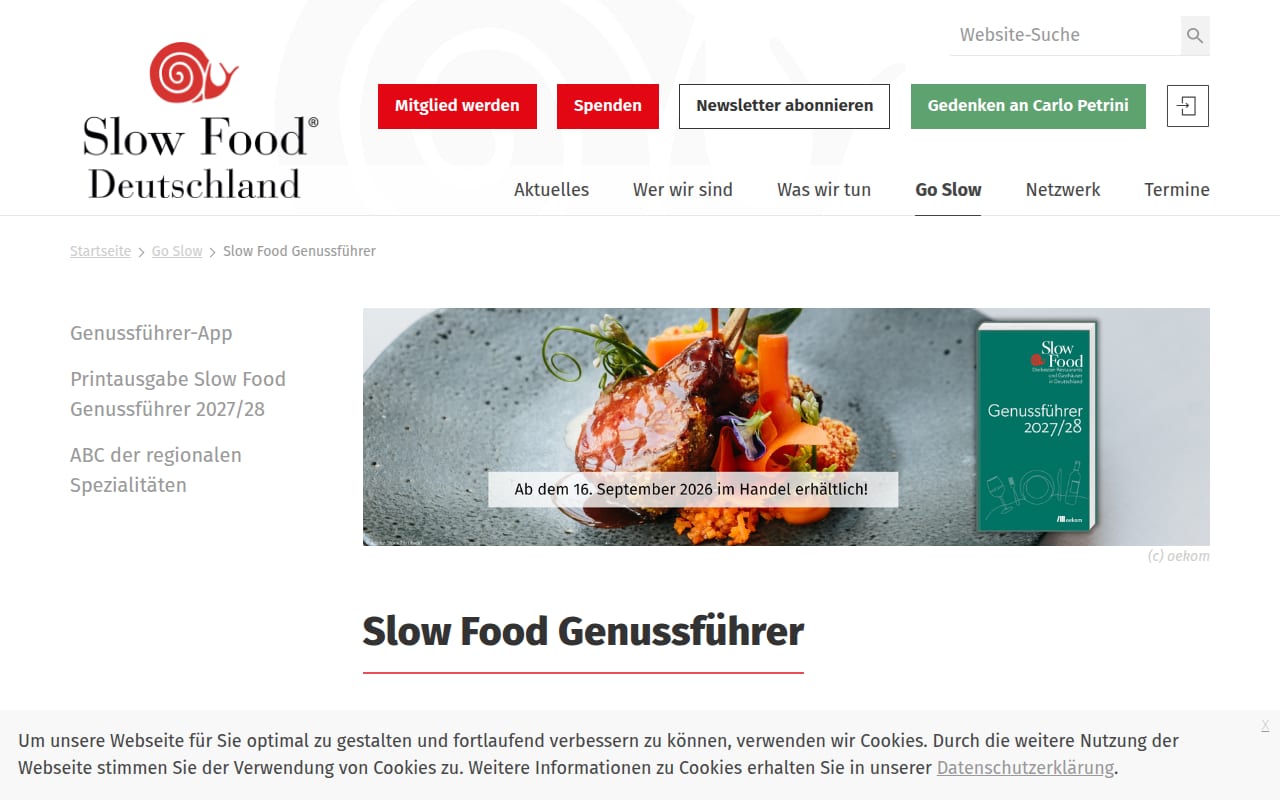
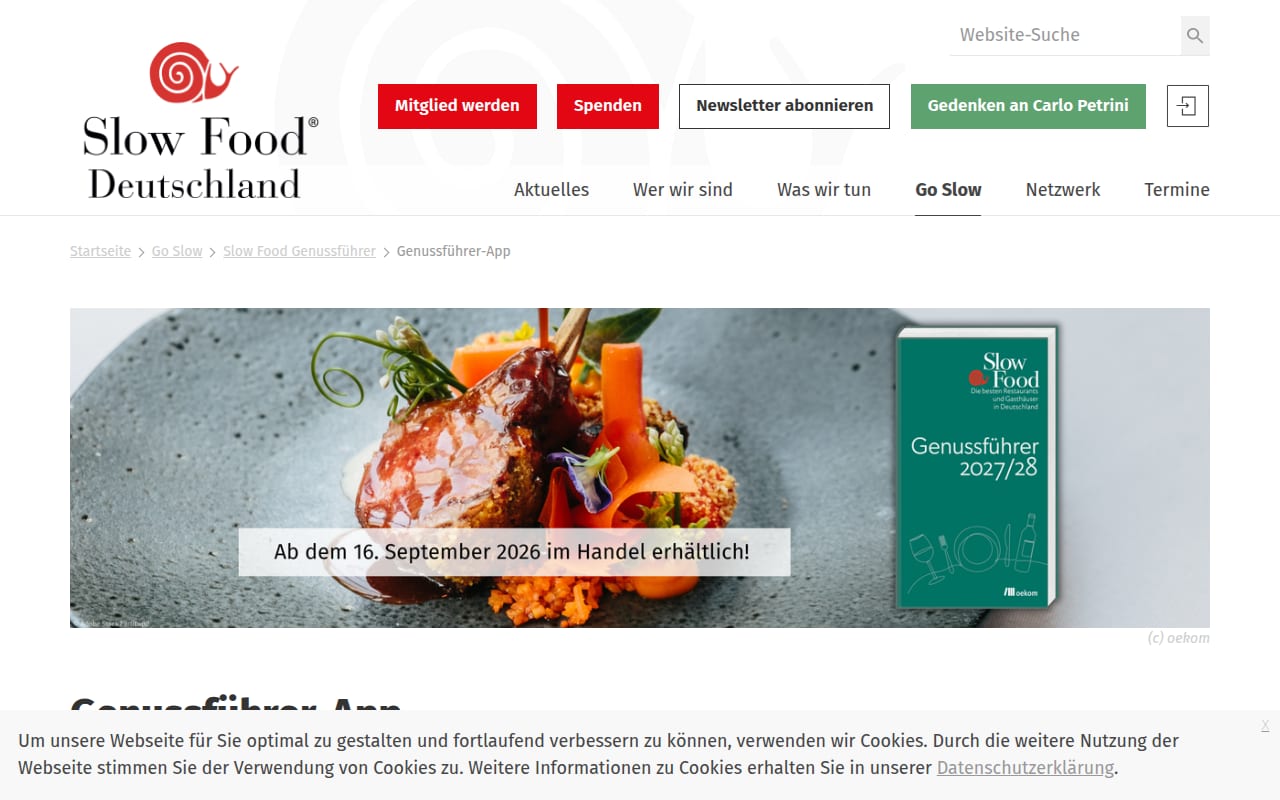
The Slow Food Genussführer is a German restaurant guide of about 450 places chosen by Slow Food volunteers for regional, seasonal cooking without convenience products, published as a book and an app; the 2027/28 edition came out in September 2026.
It has been published since 2013 by Slow Food Deutschland e.V., the Berlin association founded in 1992 as the first national branch outside Italy, with about 12,700 members in more than 85 local groups. Seventy local test groups with over 500 testers visit and choose the restaurants, strictly as volunteers and without an expense budget, coordinated by a Genussführer commission. The criteria are “good, clean, fair” and “regional, seasonal, authentic, transparent”; star and luxury cuisine is left out, and so are kitchens that use flavour enhancers or convenience products. Listed restaurants get a red snail sign, and the groups check them again every year.
The print edition is published by oekom Verlag, and there is a subscription app for Android and iPhone with monthly, quarterly or yearly plans. The page read gives no prices for either.
Strengths
- Restaurants are chosen by unpaid local volunteers without an expense budget, not paid for by the restaurants.
- The criteria favour regional and seasonal cooking and rule out convenience products and flavour enhancers.
- Each listed restaurant is checked again every year by its local group.
Weaknesses
- The book and the app cost money, and the prices aren’t shown on the Slow Food page.
- With about 450 addresses for all of Germany, many towns have no listed restaurant.
- Slow Food’s criteria rely on the testers’ judgement, and the detailed checklist isn’t published on the page.
Who it is for
People in Germany who eat out or travel and want restaurants that cook from regional produce without convenience food, chosen by people who don’t earn from the choice.
Sources
- Slow Food Deutschland: Genussführer, Slow Food Deutschland, Slow Food at a glance (checked November 2026)
- oekom: Slow Food Genussführer 2027/28