
Description
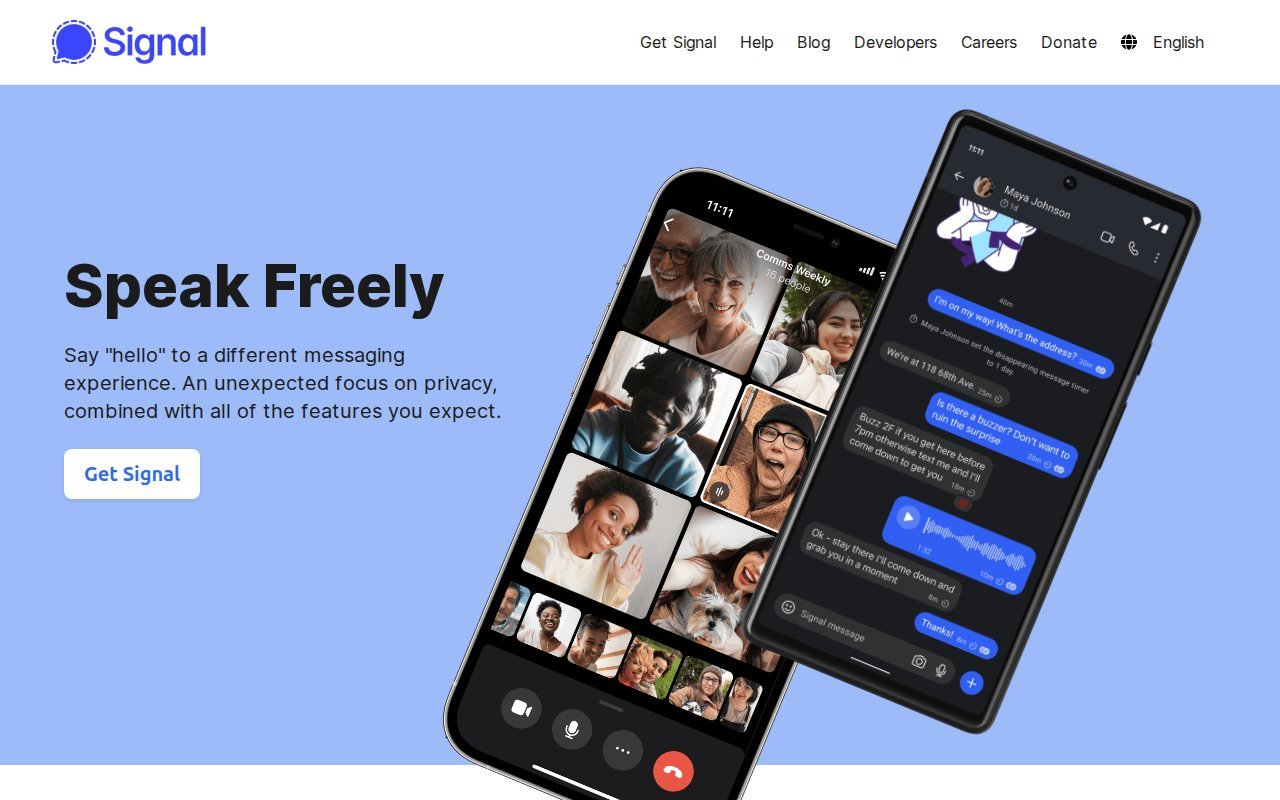
Signal is a free messenger for texts, voice and video calls, groups and file sharing, with end-to-end encryption for everything by default, run by a non-profit foundation. It is an alternative to WhatsApp, Facebook Messenger and other messengers owned by advertising groups.
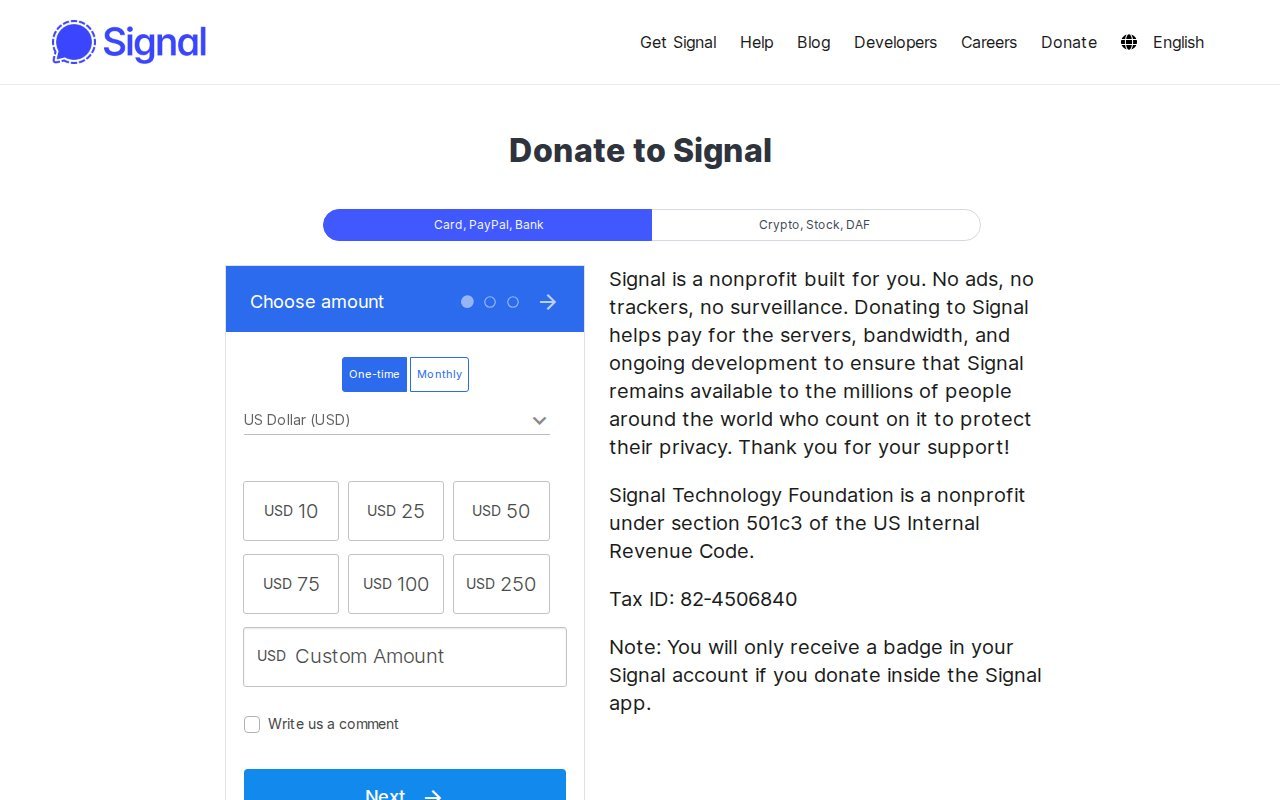
Moxie Marlinspike and Brian Acton, a co-founder of WhatsApp, set up the Signal Technology Foundation in 2018, a US non-profit under section 501(c)(3). Acton lent it $50 million at no interest, to be repaid in 2068; today it lives on donations and grants, with no advertising and no investors, and says it can never be acquired. In 2024 it took in $29.4 million and spent $38.0 million. Meredith Whittaker has been its president since 2022. The apps and the server code are open source under the AGPL licence, and the Signal Protocol it developed is a reference for encrypted messaging. In January 2025 Signal had about 70 million monthly users.
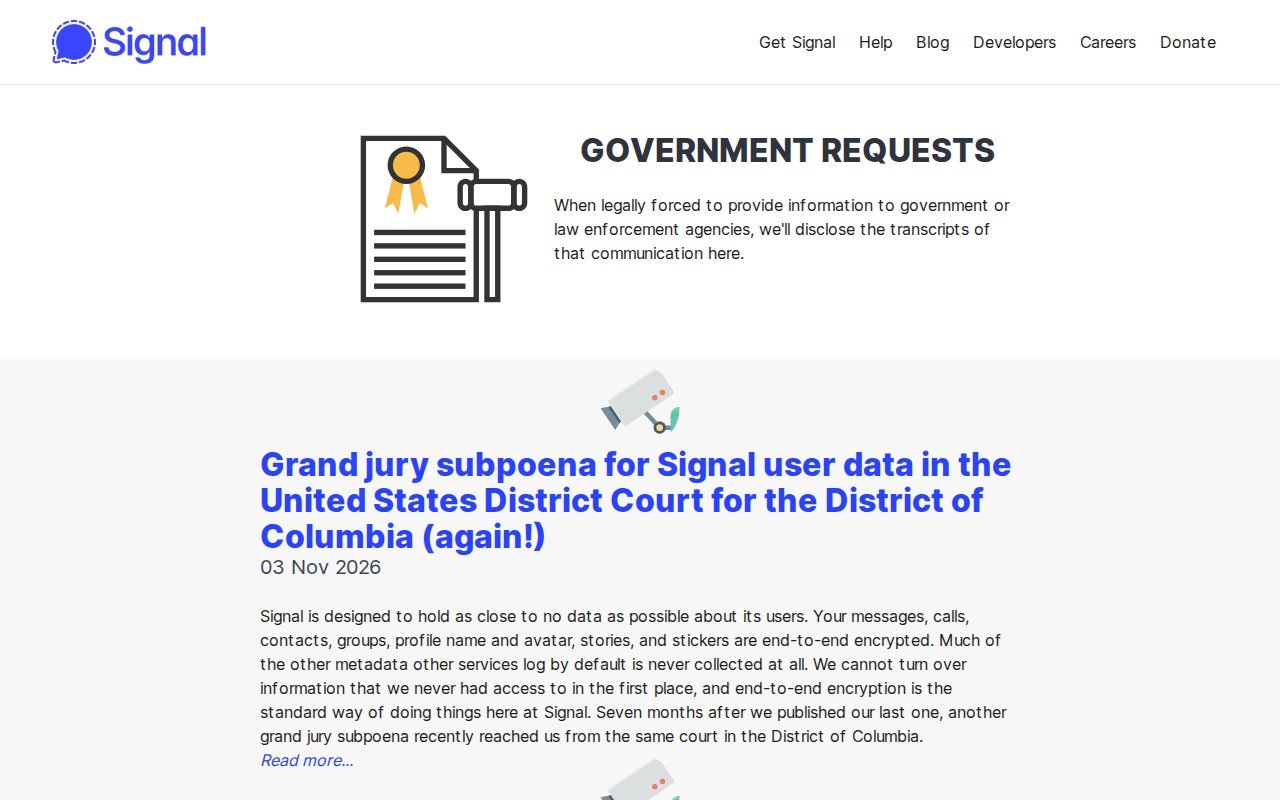
Signal is built to keep as little data as possible. When US courts send it subpoenas, which it publishes, the only data it can hand over are the date an account was created and the date it last connected. Registration still needs a phone number, but since March 2024 users can set a username and hide their number from others. The servers are central and run by the foundation, so it remains subject to US law.
Strengths
- Messages, calls and groups are end-to-end encrypted by default, with an open-source protocol reviewed by security experts.
- It keeps almost no metadata: in court cases it could only give the account creation and last connection dates.
- Free, without advertising or investors, run by a non-profit foundation funded by donations.
Weaknesses
- Contacts have to install Signal too, and most people still use WhatsApp.
- A phone number is needed to register, even if a username can hide it from others.
- A central US service: it depends on one foundation, its donors and US court orders.
Who it is for
Everyone who wants to chat and call without an advertising group reading the metadata, and especially journalists, activists, doctors and lawyers who exchange sensitive information.
Sources
- Signal: home, donate, government requests, checked November 2026
- Wikipedia: Signal (software), Wikipedia: Signal Foundation