
Description
Pl@ntNet is a free app and website that names a plant from a photo of its flower, leaf, fruit or bark. It was built by French public research institutes, and every confirmed photo feeds a public database of plant observations.
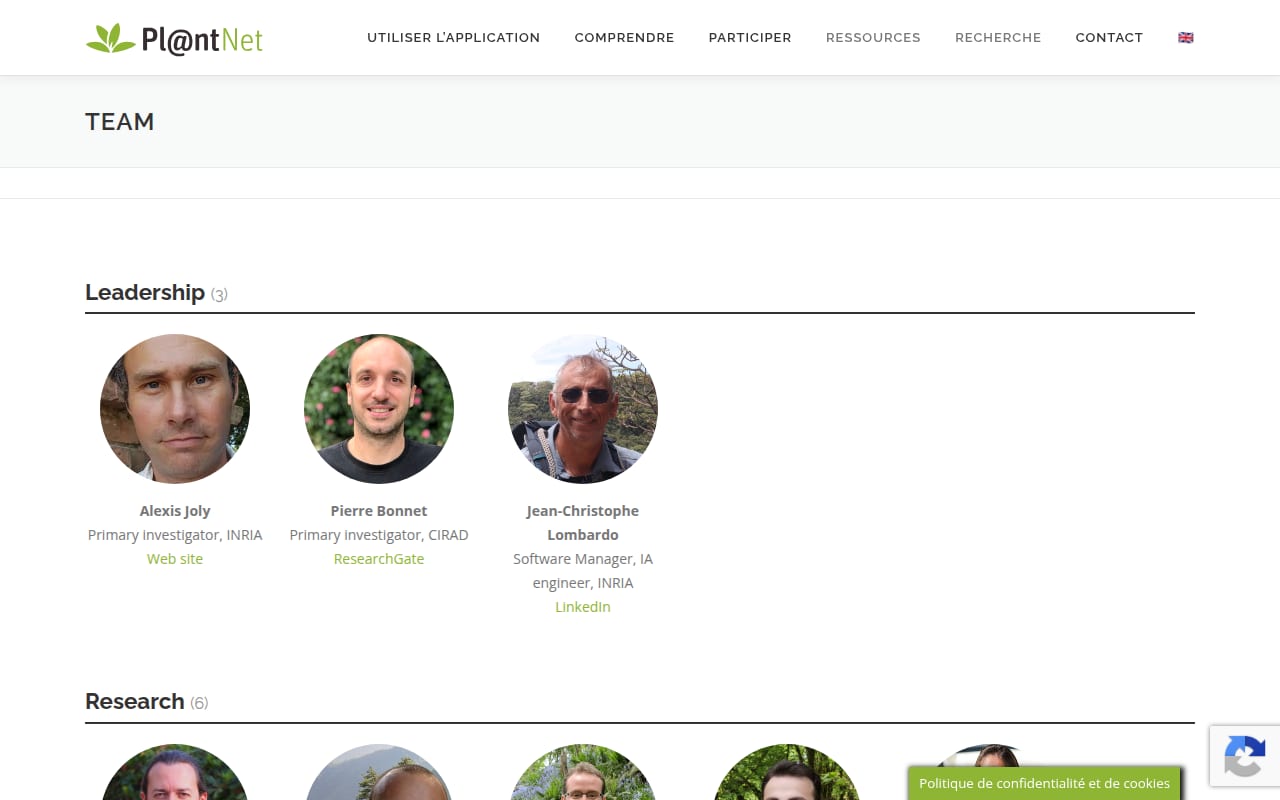
It is run by a consortium of four French research bodies, CIRAD, INRAE, Inria and IRD, which own the name, with support from the Fondation Inria since January 2026. Other members such as CNRS and the Université de Montréal have joined since the consortium opened in 2021. The app is free and asks users for donations to keep it that way.
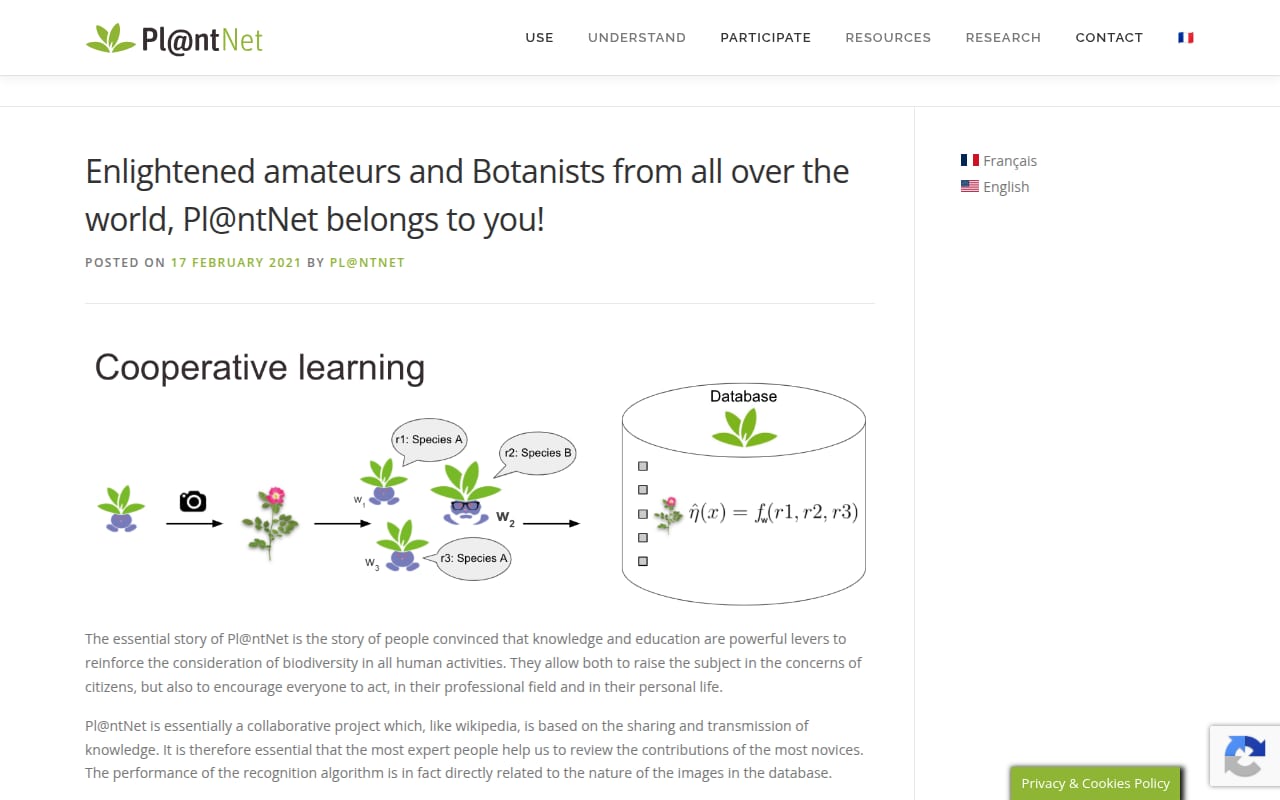
It covers 84,710 species in 77 regional floras and has collected more than 1.4 billion images from several million contributors in over 200 countries. Only observations that the community confirms, with experts’ votes weighing up to 100 times more, go into the public database and the training of the recognition model, which is retrained every month. Tens of millions of observations have been shared with GBIF, the global biodiversity database. In a 2023 test of six apps on 38 plants by Irish botanists, Pl@ntNet was among the two most accurate, though neither reached 90 %.
Strengths
- It is free and run by public research institutes, not by a company selling a subscription.
- The observations users share go into open scientific data through GBIF.
- In independent tests it is among the more accurate plant identification apps.
Weaknesses
- No app reached 90 % accuracy in the 2023 test, so a result is a suggestion, not a certainty.
- In a test of toxic plants, PictureThis identified 10 of 17 species correctly against 8 for Pl@ntNet.
- Results vary a lot between species, and leaves alone are harder to identify than flowers.
Who it is for
Gardeners, walkers, teachers and pupils who want to put a name to a plant, and people who want their photos to help botanists map plants.