
Description
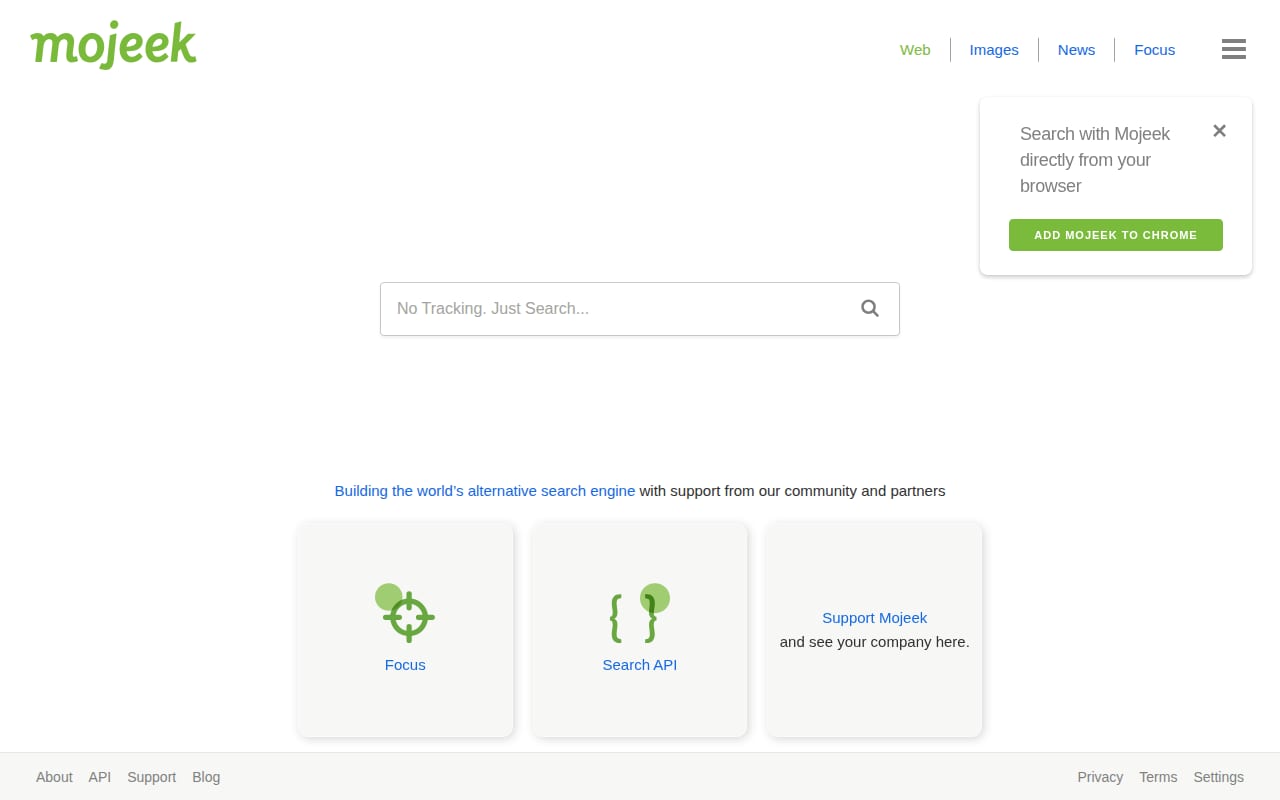
Mojeek is a British search engine with its own crawler and its own index of more than 9 billion pages, so its results don’t come from Google or Bing, and it follows a strict no-tracking policy.
Founder Marc Smith has been developing search technology since 2004; the project took its first outside investment in 2009 and was funded by private investors in 2013, 2016 and 2018. Mojeek Limited is registered in England and based at the Sussex Innovation Centre in Brighton. Its crawler, MojeekBot, respects the robots exclusion protocol, and the index passed 9 billion pages in 2025.
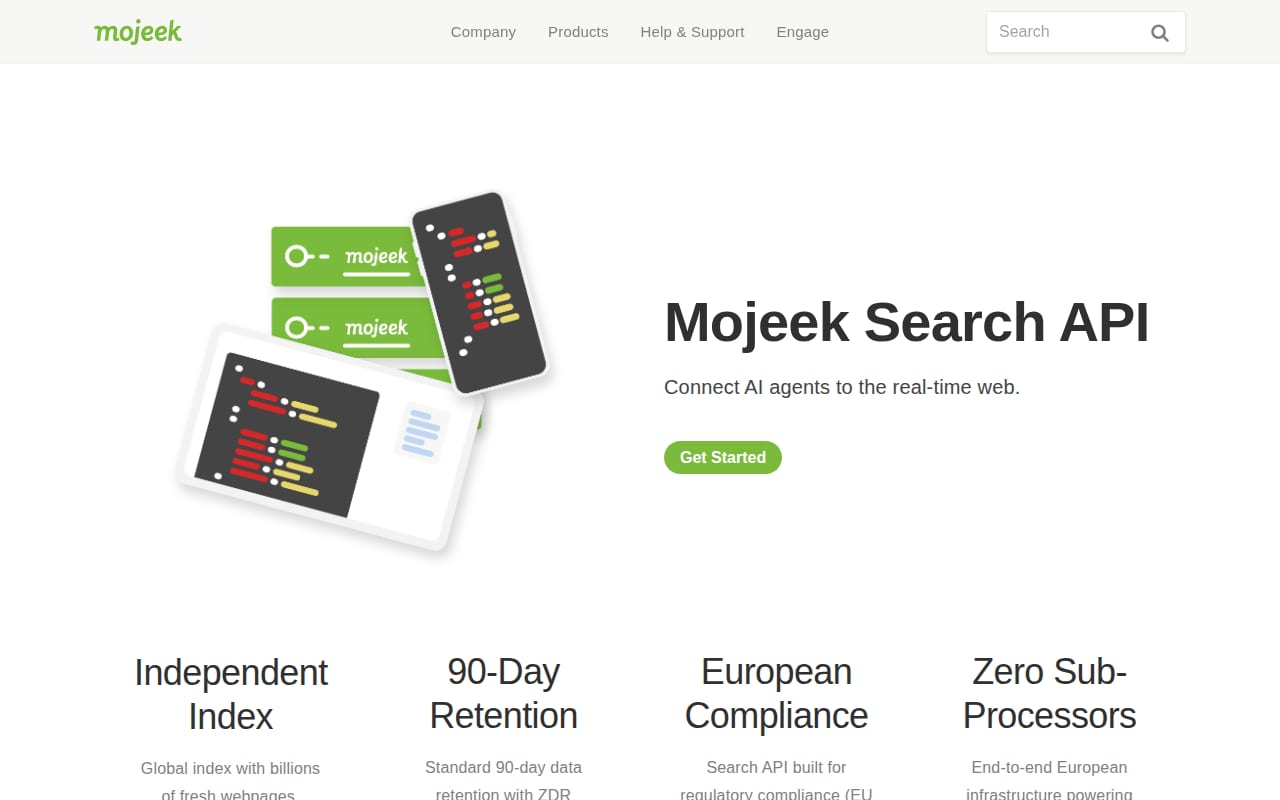
The privacy policy, updated in February 2022, says Mojeek sets no cookies by default; standard logs are kept, but IP addresses are replaced by a two-letter country code and the logs are not sold or shared. Mojeek is free to use. It earns money through Mojeek Ads and a paid search API: in November 2026 the Startup plan cost £2 per 1,000 requests and the Business plan £3, before VAT. Its data centre runs on 100 % green energy, according to the API page. The blog is active, with a post on 5 November 2026.
Strengths
- Its index is its own, built by its own crawler, so it gives a genuinely different set of results rather than a reskin of Google or Bing.
- It sets no cookies by default and strips IP addresses from its logs, keeping only a country code.
- It is a small independent British company, and other services can build on its index through a paid API.
Weaknesses
- With about 9 billion pages, its index is far smaller than Google’s, so niche or very recent pages may be missing.
- Its logs are kept indefinitely, even without IP addresses.
- The pages read don’t say who owns the company beyond private investors, and its privacy policy dates from 2022.
Who it is for
People who want search results that don’t come from Google or Bing, without tracking, and who don’t mind trying a second search engine when a result is missing.
Sources
- Mojeek: home, about, privacy, web search API, blog (checked November 2026)