
Description
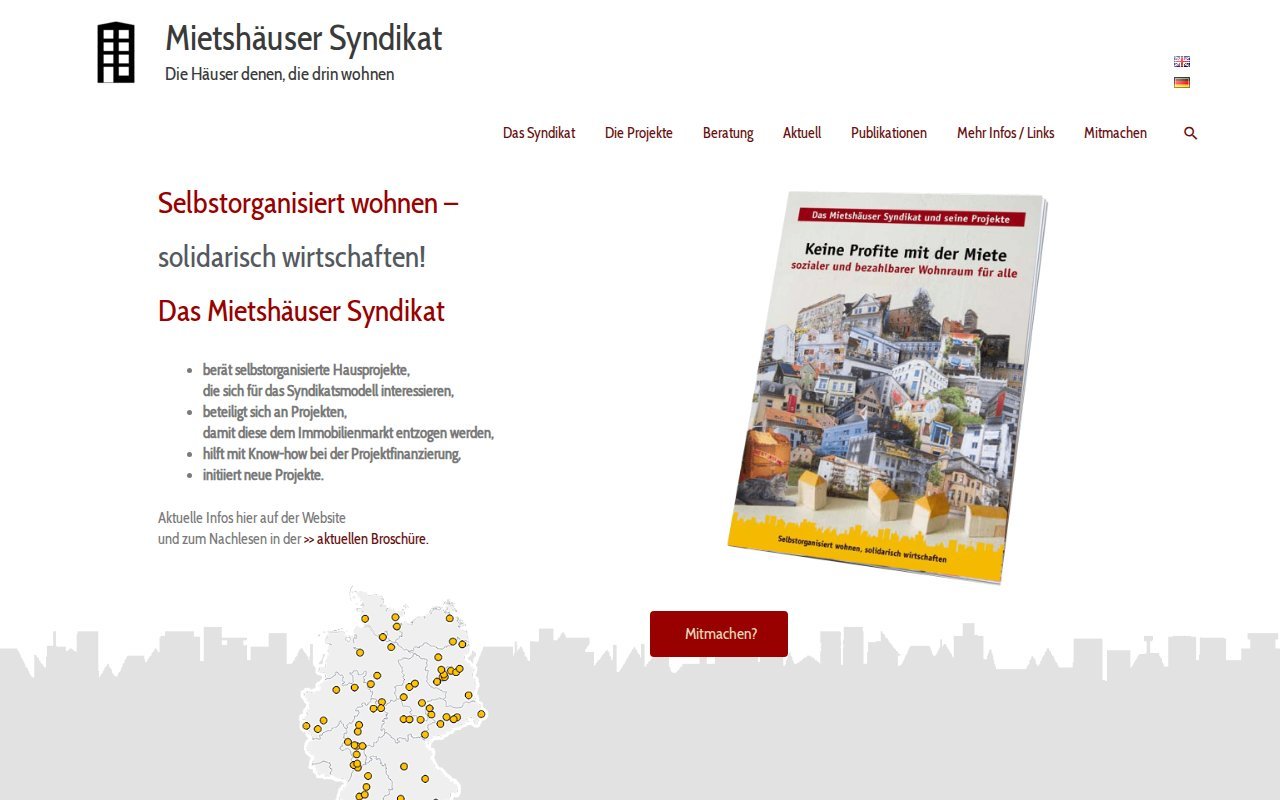
The Mietshäuser Syndikat is a German network of self-organised housing projects that buys buildings and takes them off the property market for good. It is an alternative to renting from investors and real-estate companies: the residents run their house themselves, and the rents only have to cover the loans and running costs.
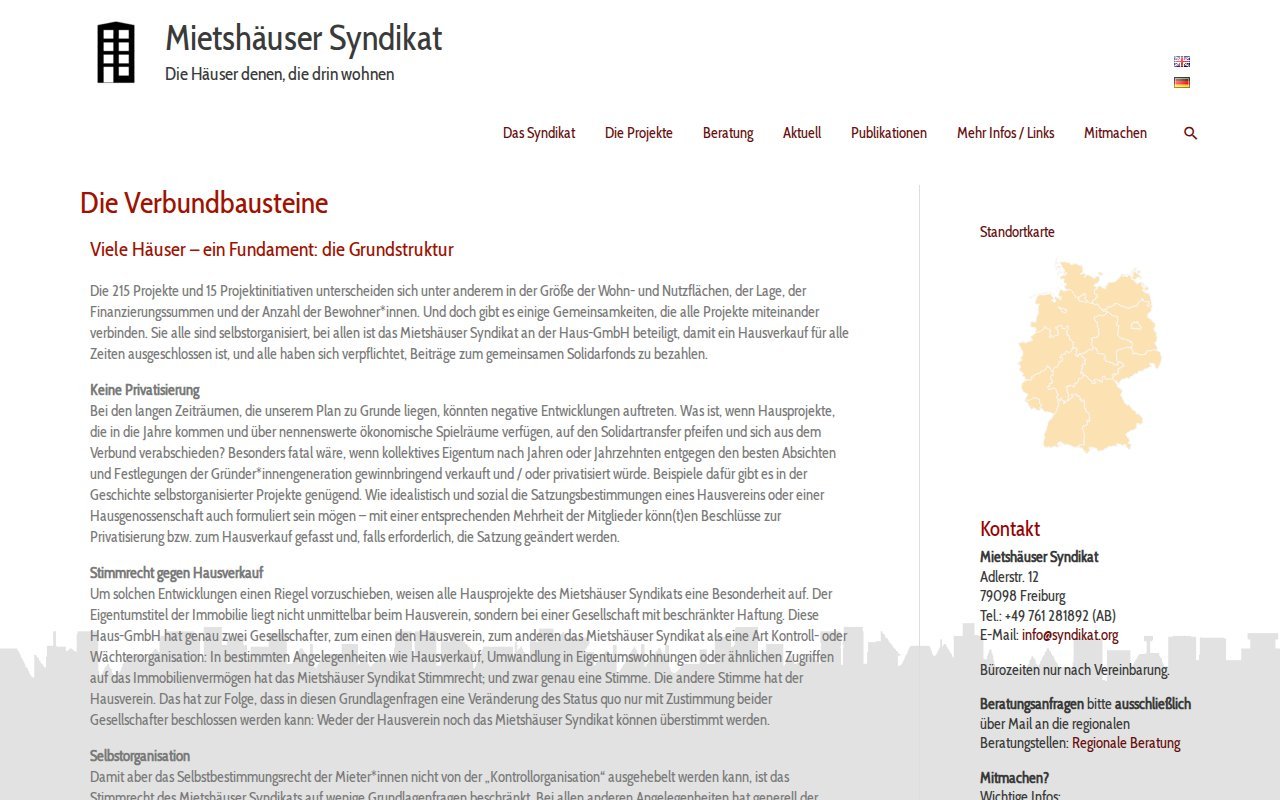
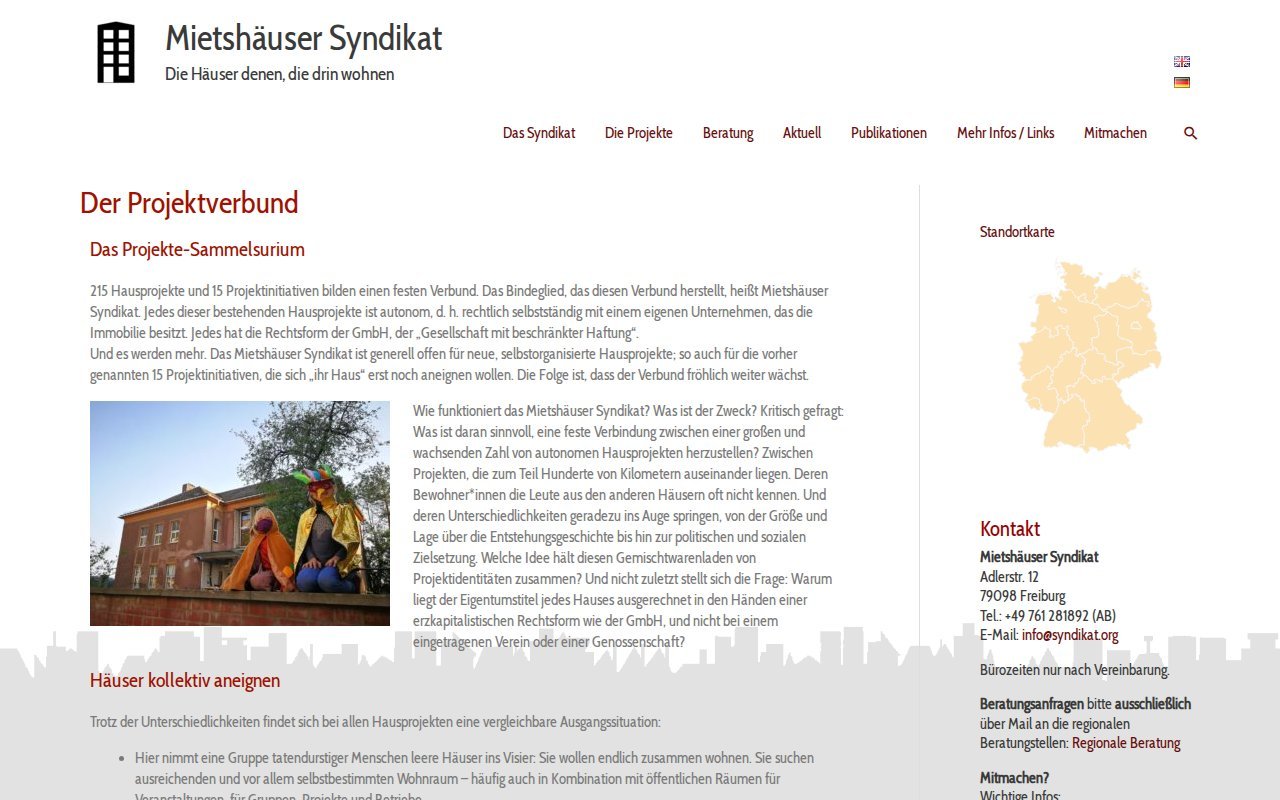
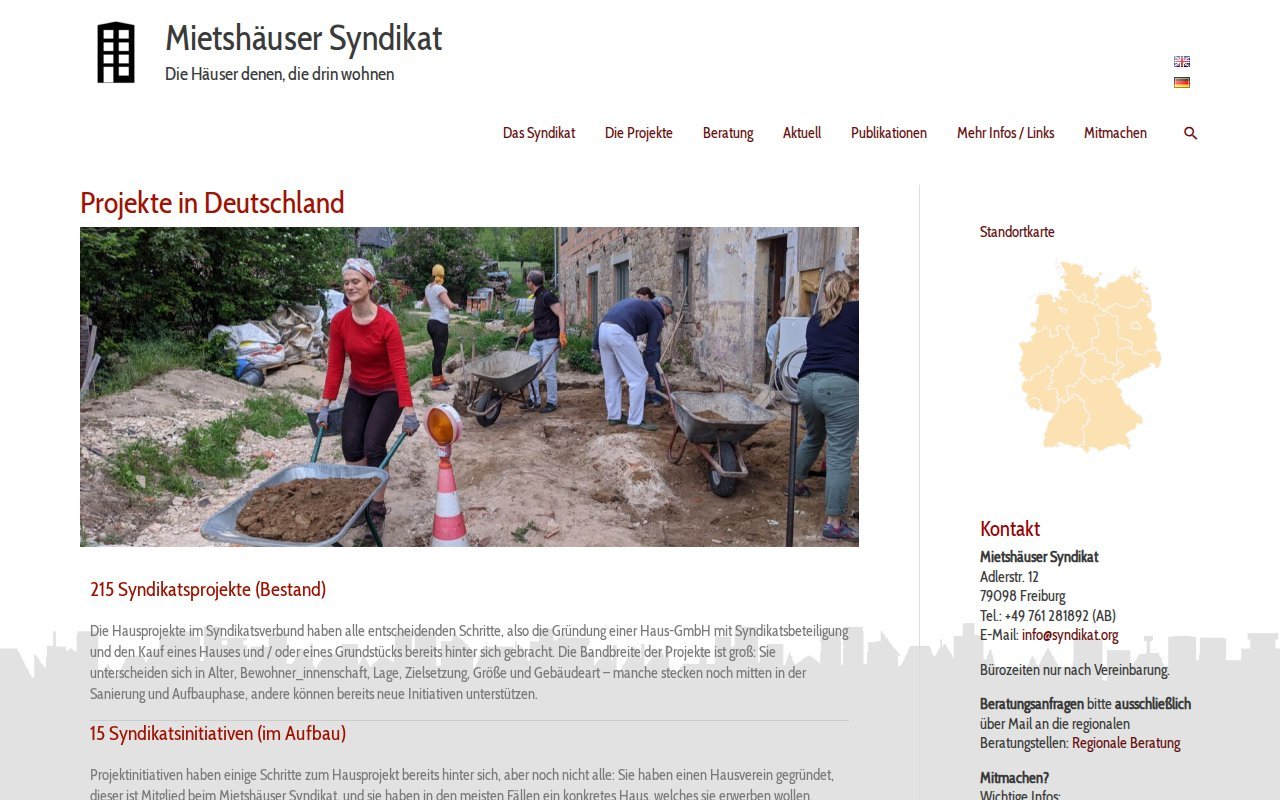
Former squatters founded it in Freiburg in 1992. Each house belongs to a limited company, the Haus-GmbH, with two partners: the residents’ association and the Syndikat. The residents decide everything, rents included; the Syndikat has one vote, which it uses to block a sale or a conversion into owner-occupied flats. In 2026 the network listed 215 projects and 15 initiatives. Each project pays a solidarity contribution, often about €0.10 per m² a month, into a fund that helps new groups get started.
Banks usually want about a third of the cost as equity. Projects raise it through direct loans (Direktkredite) from friends and supporters: subordinated loans, often from €1,000, at low interest. The Syndikat’s own direct loans paid at most 1.1 % in 2018. If a project fails, lenders can lose their money, and Stiftung Warentest called them unsuitable as a pure investment. In March 2025, €260 million was tied up in the network. Similar networks exist in Austria (habiTAT, since 2014), France, the Netherlands and the Czech Republic.
Strengths
- A house in the network cannot be sold or turned into owner-occupied flats, because the Syndikat holds a veto in every house company.
- Residents set their own rents, which only have to cover loans, repairs and the solidarity contribution.
- More than 200 existing projects advise new groups, and the solidarity fund helps pay their start-up costs.
Weaknesses
- A project takes years of meetings, fundraising and talks with banks before anyone moves in.
- Direct loans are subordinated and not guaranteed: lenders can lose their money if a project fails, as one did in 2010.
- Interest and repayments often take more than three quarters of the rent, which leaves little margin in the first years.
Who it is for
Groups in Germany ready to buy and run a house together for the long term, and supporters who would rather lend money to a housing project than to a bank. It is not a way to find a flat to rent.
Sources
- Mietshäuser Syndikat: Verbundbausteine, Projektverbund, Projekte, Direktkredite, Finanzierung, checked November 2026
- Wikipedia: Mietshäuser Syndikat
- Correctiv: Bezahlbare Miete garantiert (2018)
- Tagesspiegel: Vom Hausbesetzer zum Hausbesitzer