
Description
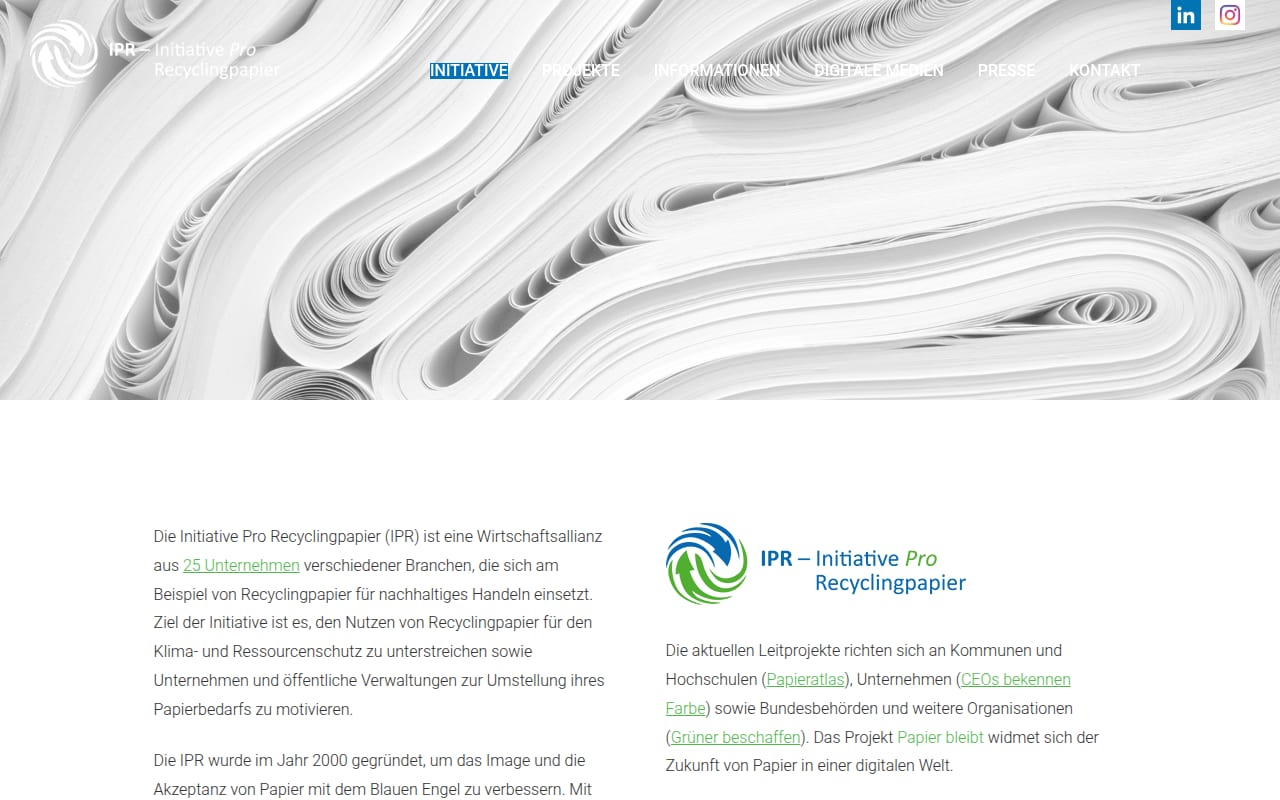
The Initiative Pro Recyclingpapier is a German alliance of companies that promotes office and printing paper with the Blauer Engel, made from 100 % waste paper, and runs the Papieratlas, a yearly competition in which cities, districts and universities compare their recycled-paper use.
It was founded in 2000 to improve the image and acceptance of Blauer Engel paper, and has about 25 member companies from different sectors, among them DATEV, Deutsche Post DHL, Lidl, Lufthansa, Otto, Siemens, Tchibo, Telekom and Xerox. Its partners include the federal environment ministry, the Umweltbundesamt and the associations of German cities, municipalities, districts and universities. Its website gives the arguments for recycled paper: on average 78 % less water, 68 % less energy and 15 % less CO₂ than virgin-fibre paper, and 100 % waste paper for Blauer Engel paper; the page doesn’t name a source for these averages, but cites an updated life-cycle assessment by the Umweltbundesamt from 2022.
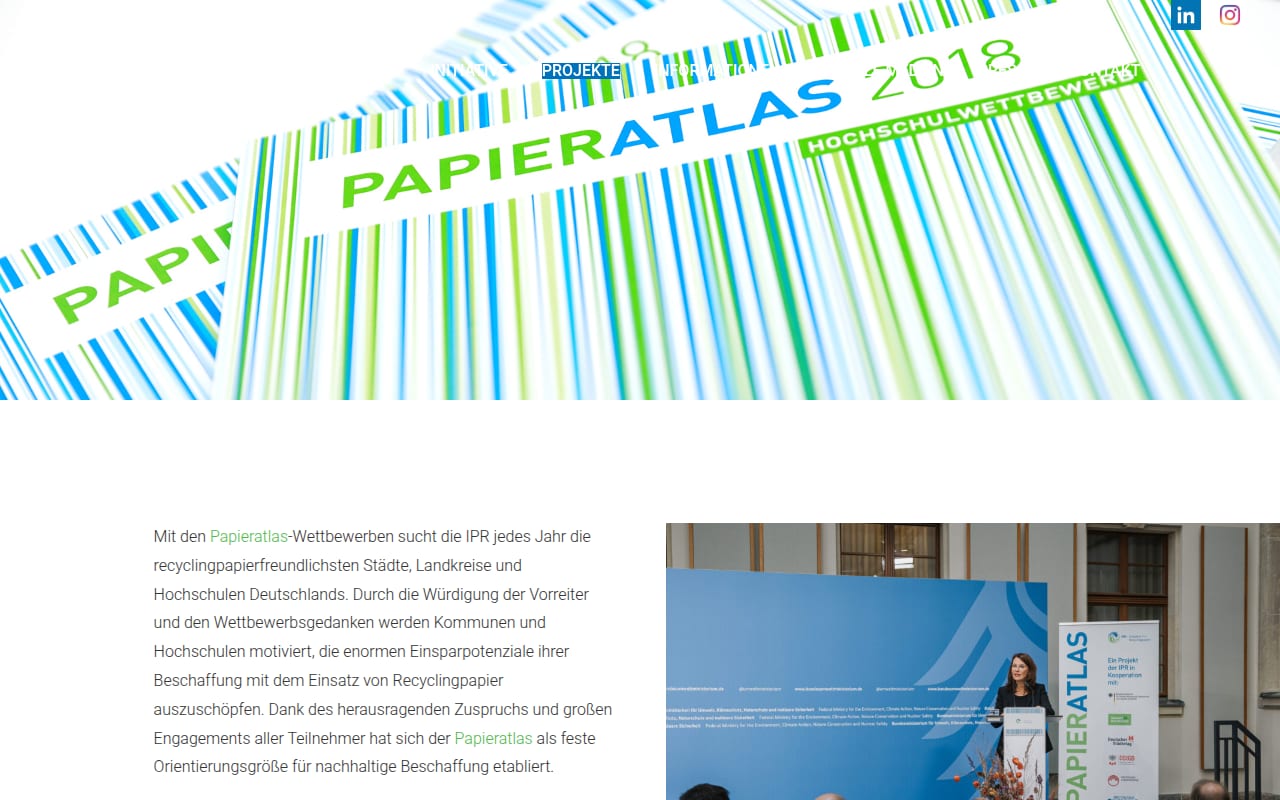
The Papieratlas competitions are open to cities of more than 20,000 inhabitants, districts and universities, which report their paper use and Blauer Engel share; results are presented each autumn under the patronage of the federal environment minister. The site is free to read and was active in 2026.
Strengths
- It gives clear, comparable figures for why recycled paper saves water, energy and CO₂.
- The Papieratlas makes public bodies compare their paper use each year, under the environment minister’s patronage.
- It points to a single, recognised label, the Blauer Engel, which requires 100 % waste paper.
Weaknesses
- It is an alliance of companies, not an independent consumer body, and some members are large paper users.
- The 78 %, 68 % and 15 % averages aren’t sourced on the page.
- The competitions are for public bodies; for households it is mainly a source of arguments, not a service.
Who it is for
Offices, schools, universities and local authorities in Germany that buy paper in bulk and want arguments and benchmarks for switching to Blauer Engel recycled paper.
Sources
- Initiative Pro Recyclingpapier: home, about us, members, Papieratlas, arguments for recycled paper (checked November 2026)