
Description
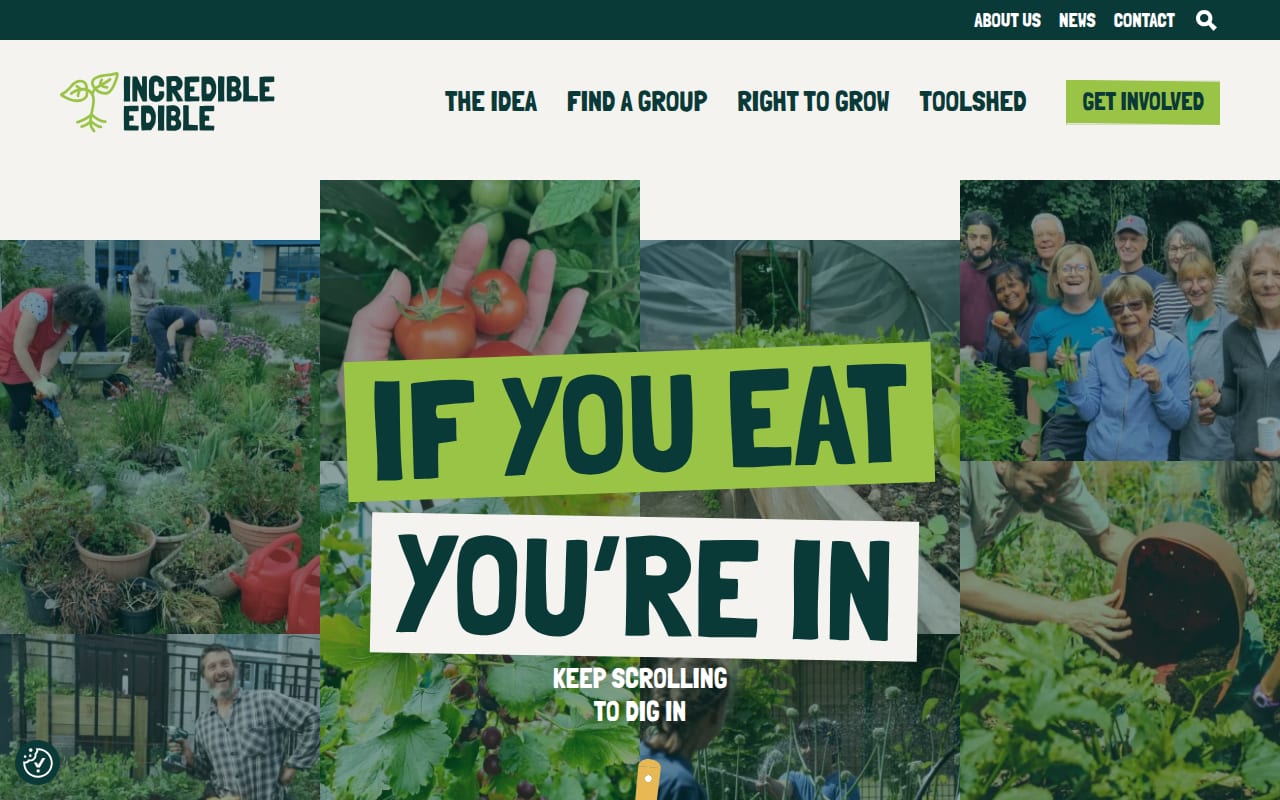
Incredible Edible is a movement of local groups that grow vegetables, fruit and herbs in public places, for anyone to pick for free. It started in Todmorden, in northern England, in 2008.
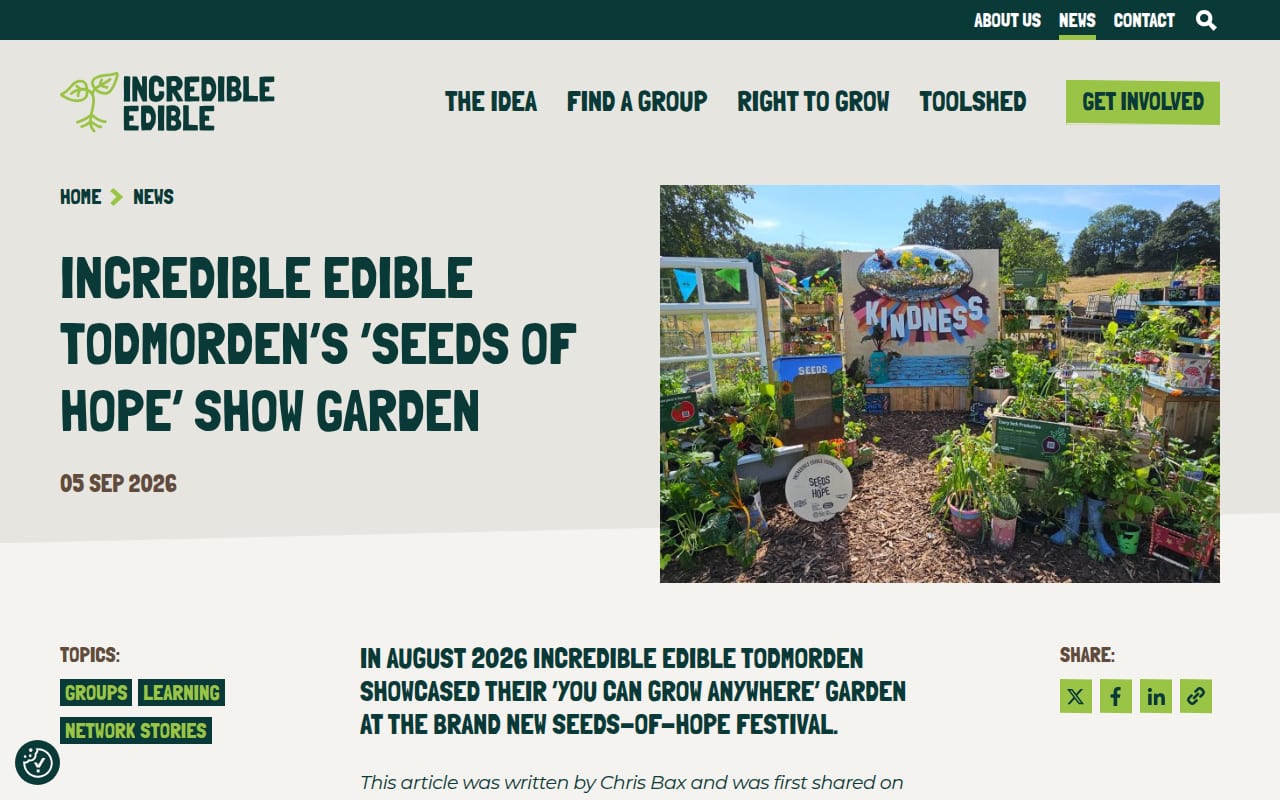
Pam Warhurst, Mary Clear and other residents began planting there, and the idea spread. The UK network counts more than 120 groups and more than 700 worldwide. It is run as a federation of independent groups, with a small central team, a community interest company, that supports and connects them. In France the movement started in Alsace in 2010 as Incroyables Comestibles, and a national non-profit association, set up in 2013, supports the local groups and looks after the name and charter.
Anyone can start a group: there is no membership fee and no permission is needed, and registering with the network is optional. The network’s advice is to find a few people, start growing something visible, connect with local groups, and share the harvest with whoever passes. A 2019 study of Todmorden in Landscape and Urban Planning found that the project had improved the town’s wellbeing, while noting some cynicism and resistance among residents.
Strengths
- Starting a group costs nothing and needs only a few neighbours and a visible patch of ground.
- Public beds bring people together around food and show children where vegetables come from.
- A study of Todmorden found social, environmental and economic benefits for the town.
Weaknesses
- The beds produce only a small share of a town’s food, as critics of the Todmorden project point out.
- Studies note maintenance problems and a sense in parts of the town that the project isn’t for everyone.
- There are no figures on harvests, and the French association gives no count of its local groups.
Who it is for
Residents, schools and associations who want to grow food in their street or village with neighbours, and towns open to edible public planting.
Sources
- Incredible Edible: about us, start a group (checked November 2026)
- Incroyables Comestibles: l’association (checked November 2026)
- Farrier, Dooris and Morley (2019): Catalysing change? A critical exploration of the impacts of a community food initiative
- Salford: Food for all, critically evaluating the role of the Incredible Edible movement in the UK
- libcom: Fields ripe with calamity, a critique of Incredible Edible Todmorden