
Description
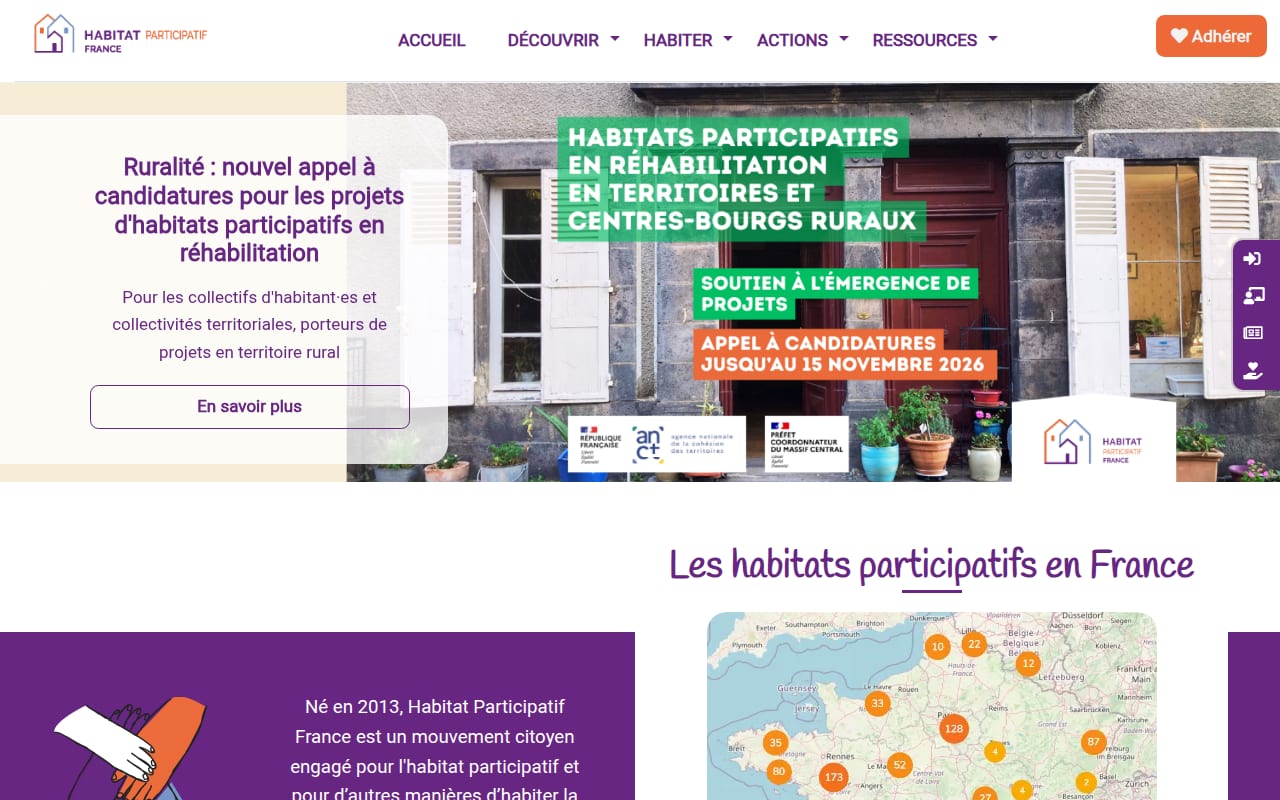
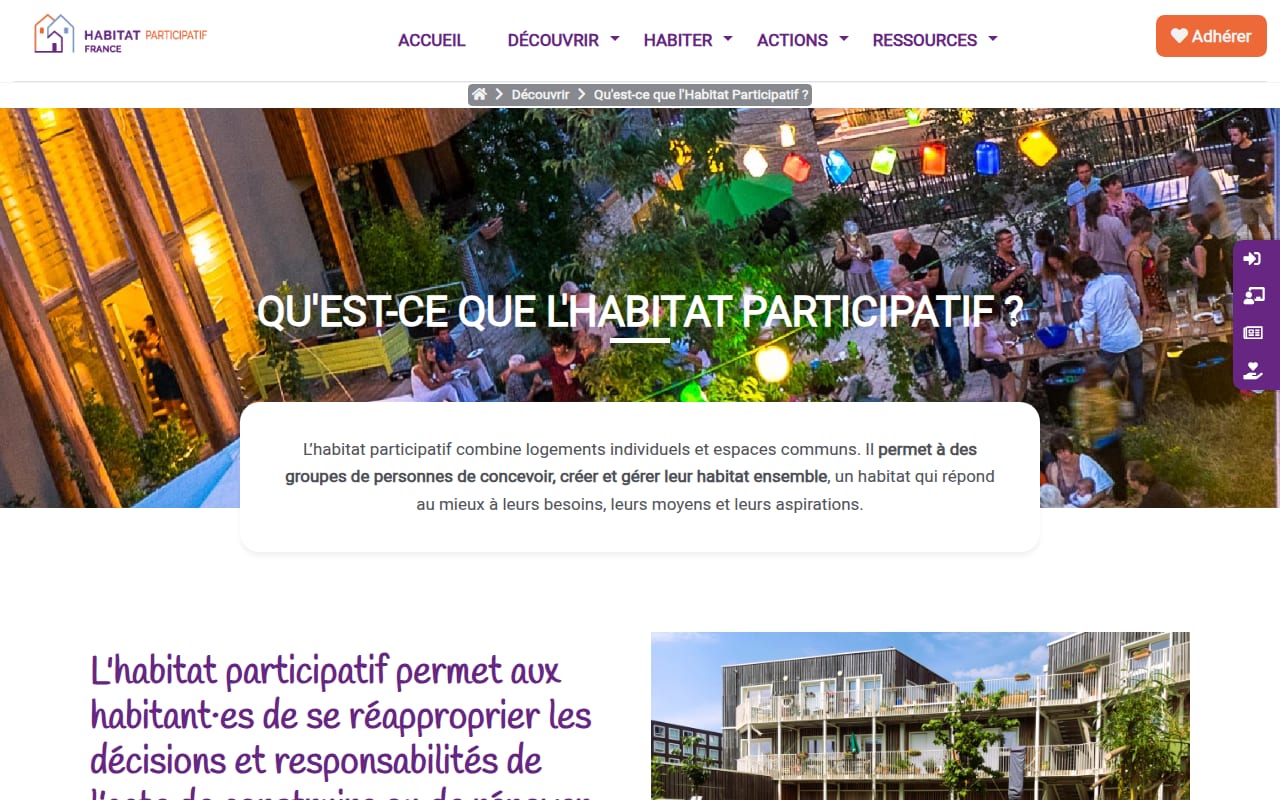
Habitat Participatif France is the national association of co-housing in France: groups of households who design, build or renovate their homes together and share some spaces, and it helps them find each other, land and advice.
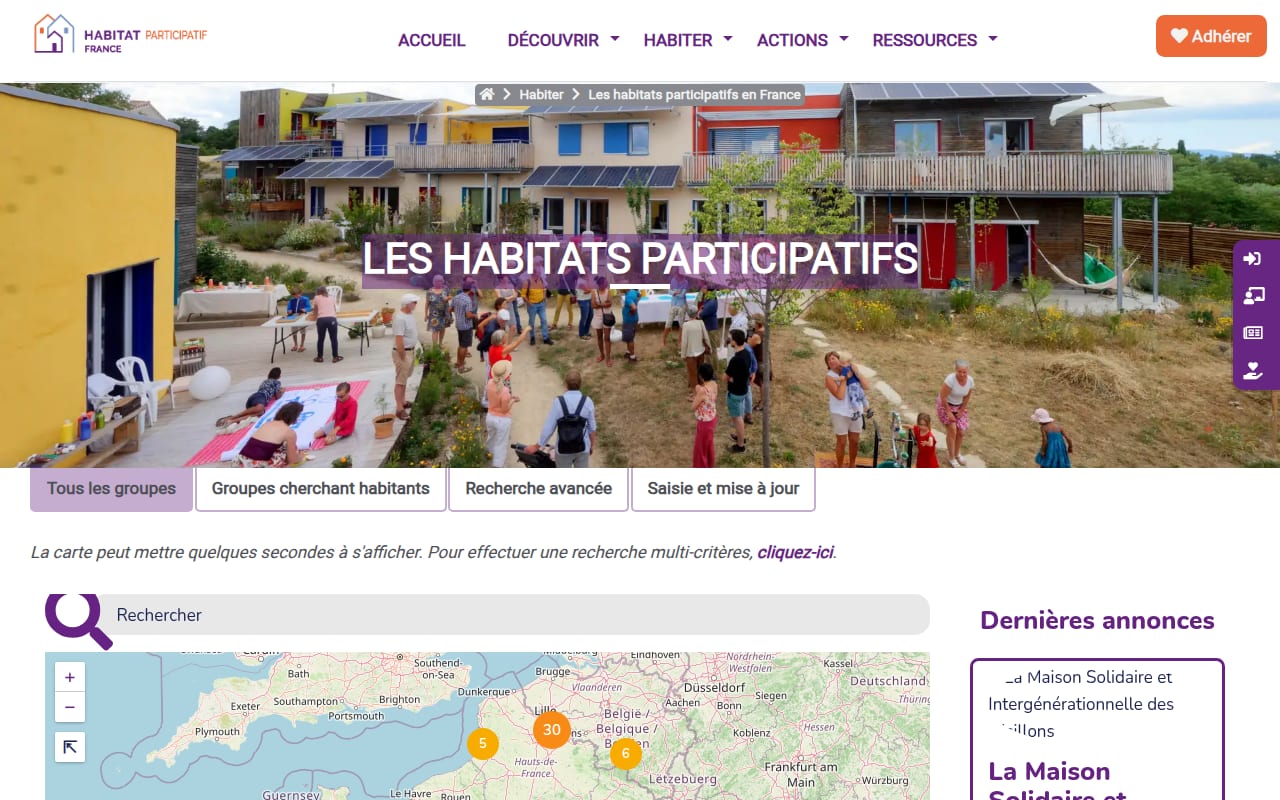
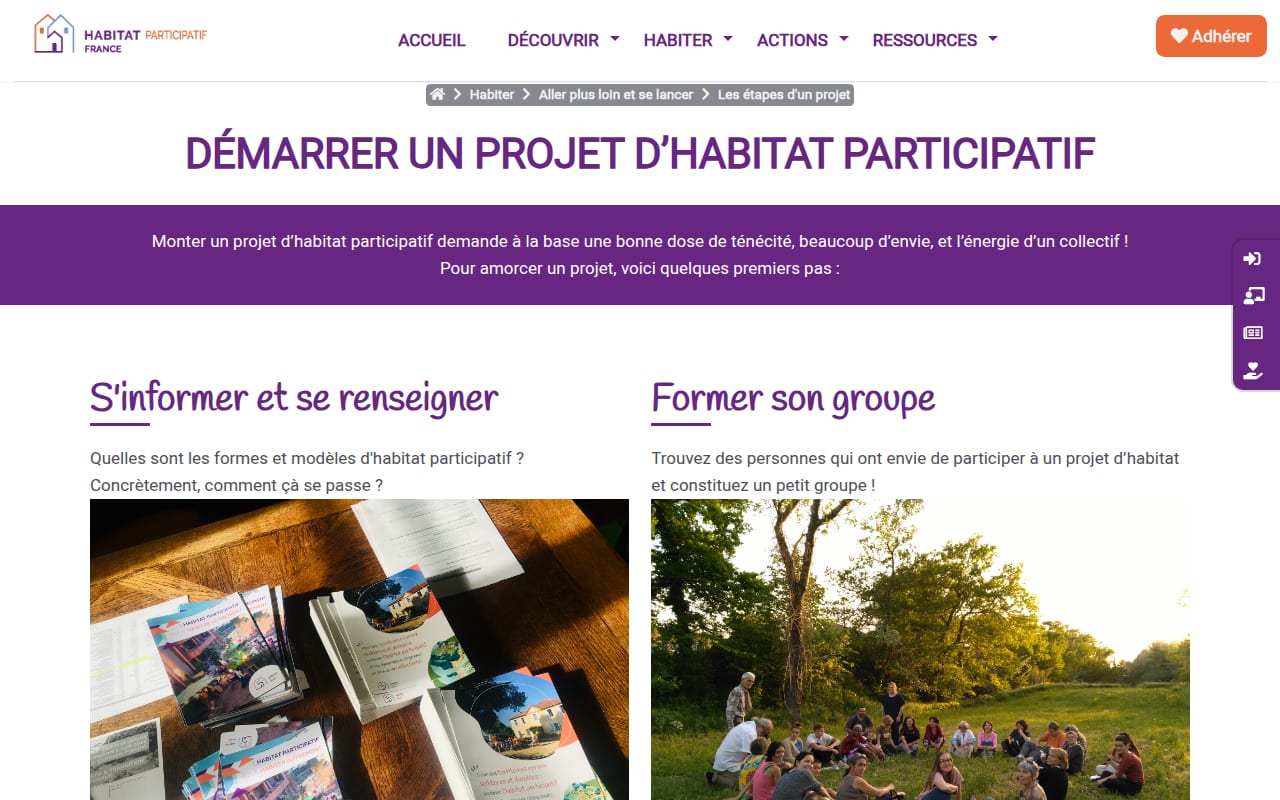
The movement has held national gatherings since 2010; the association took its present form in 2013 and its present name in 2018. It has five staff in Marseille and an elected volunteer steering committee. Its site has a map of projects and classified ads for future neighbours, a section on finding land, a guide to the steps of a project, training and a MOOC, and programmes for working-class neighbourhoods, older people and rural areas. It also lobbies public authorities. The ALUR law of March 2014 recognised habitat participatif and created legal forms for it, such as housing cooperatives.
Its count published in January 2025 listed 488 completed projects, 214 under construction, 251 at the study stage and 219 at the idea stage, about 1,170 in all, up 10 to 15 % a year since 2021. It estimates that a third of projects aren’t listed. A project takes four years on average and has about ten homes. Membership is open to individuals, groups and organisations, and regional networks run local events, such as the Nantes gathering on 21 November 2026.
Strengths
- The map and ads let a household find an existing group or future neighbours in its region, instead of starting alone.
- It publishes dated counts of projects by stage, which show that co-housing in France has grown since 2021.
- Regional networks and training cover the hard parts, such as legal forms, land and working with a town hall.
Weaknesses
- A project takes four years on average, from forming a group to moving in, which suits few people in a hurry.
- The site gives no figures on costs, and the membership fees aren’t shown on the pages read.
- The legal forms created by the ALUR law are described in other documents as hard to apply in practice.
Who it is for
Households in France ready to spend several years on a shared housing project, for example families or older people who want to live with neighbours they have chosen.
Sources
- Habitat Participatif France: home, the association, definition, map, project steps, membership (checked November 2026)
- Habitat Participatif France: chiffres 2024 (via base.socioeco.org)
- L’Info Durable: L’habitat participatif, un mode de vie alternatif
- Banque des Territoires: L’habitat participatif et son réseau de collectivités
- INC: L’habitat participatif, comment ça marche ?