
Description
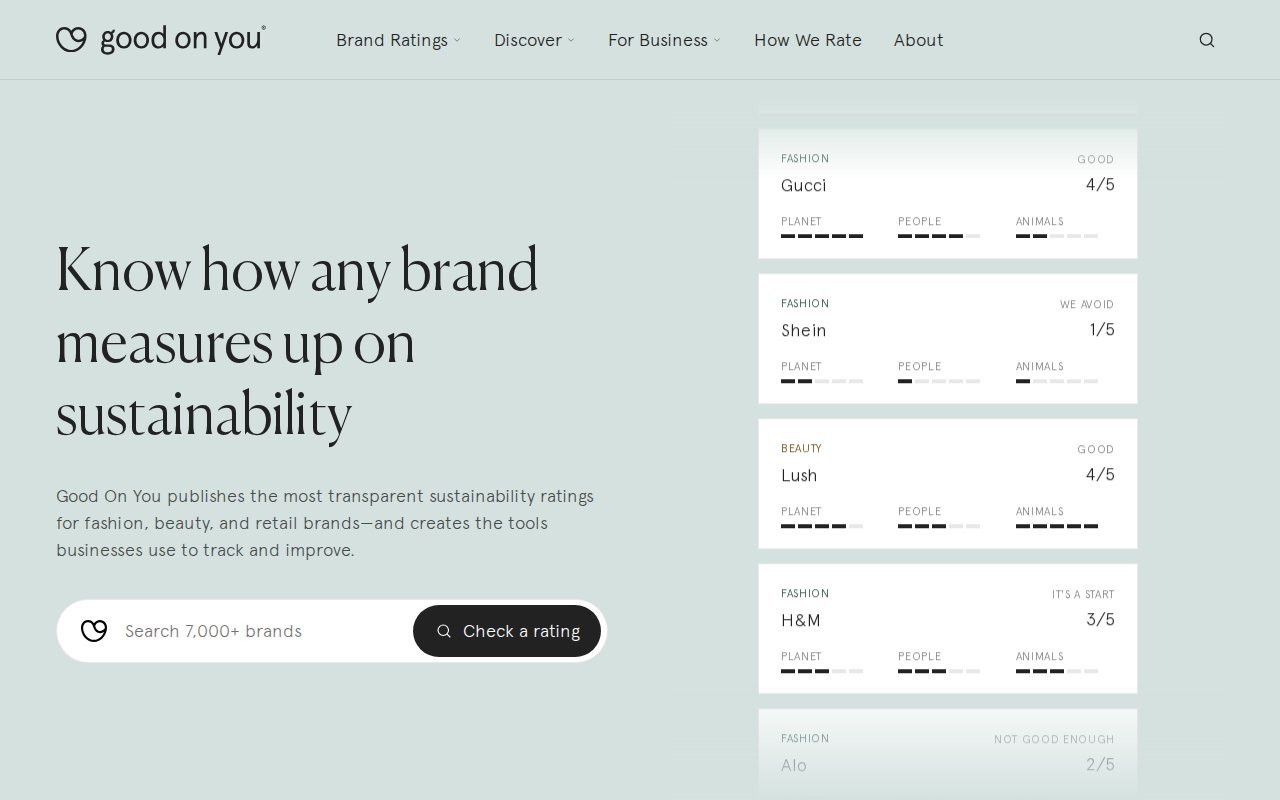
Good On You rates fashion brands on their impact on people, the planet and animals, on a five-step scale from “We avoid” to “Great”. Its website and free app for iOS and Android cover more than 7,000 brands and suggest better-rated brands similar to the one you looked up.
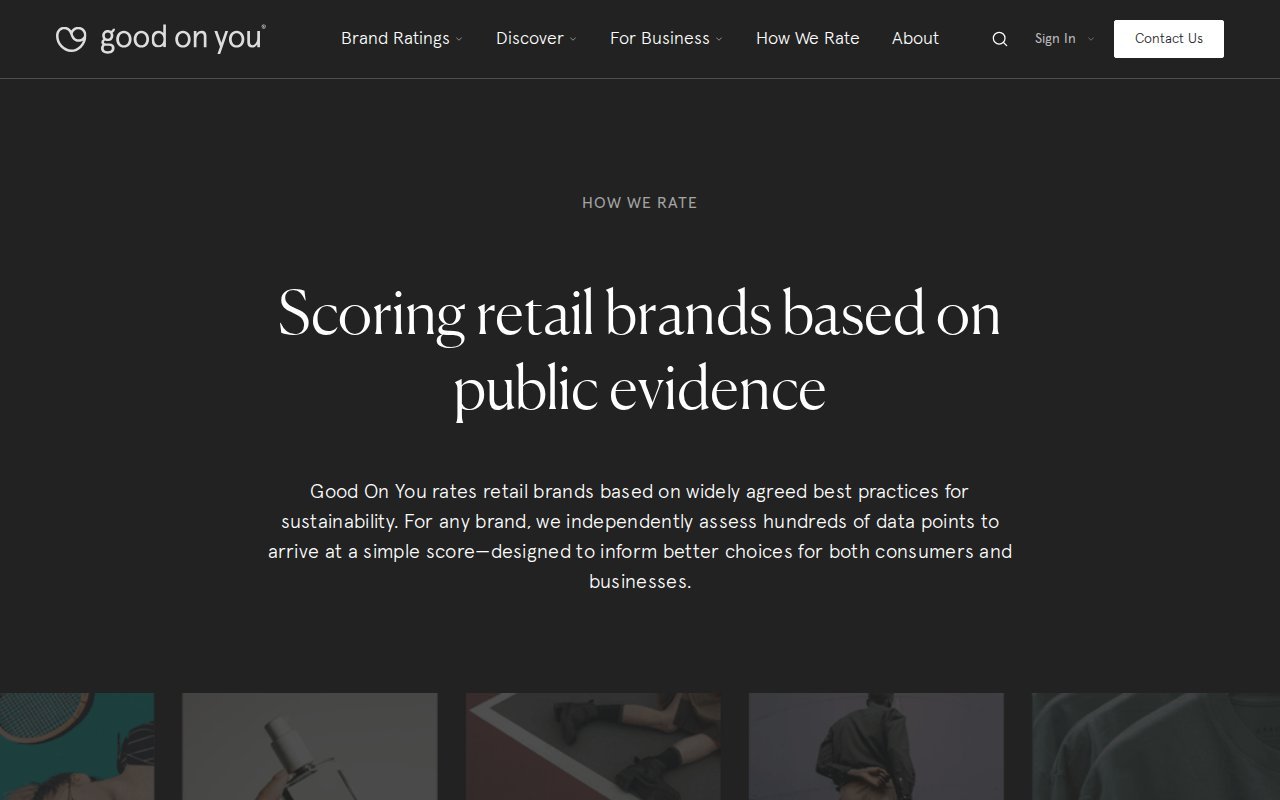
Consumer advocate Gordon Renouf and Sandra Capponi founded it in Australia in 2015, after the Rana Plaza factory collapse. Its analysts look at up to 1,000 data points on about 100 issues, such as living wages, freedom of association, climate, chemicals, waste, durability and the use of animal materials, and weigh the three areas equally. They use only public information: the brands’ own reports, certifications such as Fairtrade or Cradle to Cradle, climate data from CDP and investigations by NGOs. Anything a brand does not disclose scores zero. Large brands are reviewed every year, smaller ones every 18 months.
Good On You calls itself a social impact business. It earns money by selling its ratings data to retailers and tech companies such as Klarna, Farfetch and YOOX Net-a-Porter, from sponsored content, which it labels, and from affiliate links, which it says it uses only for brands rated “Good” or “Great”.
Strengths
- A quick, free check before buying, with a short explanation of each rating.
- A published method, with the sources it uses.
- Suggestions of better-rated alternatives.
Weaknesses
- Based only on what brands publish, so a small brand that says little is rated low.
- Earns money from affiliate links, sponsored content and selling its data to retailers.
- Fast-fashion brands can get the middle rating, “It’s a start”, on the strength of public commitments.
Who it is for
Anyone who buys new clothes and wants to avoid the worst brands.
Sources
- Good On You: Home, How we rate, About, FAQs, Rating process, Data sources, checked November 2026