
Description
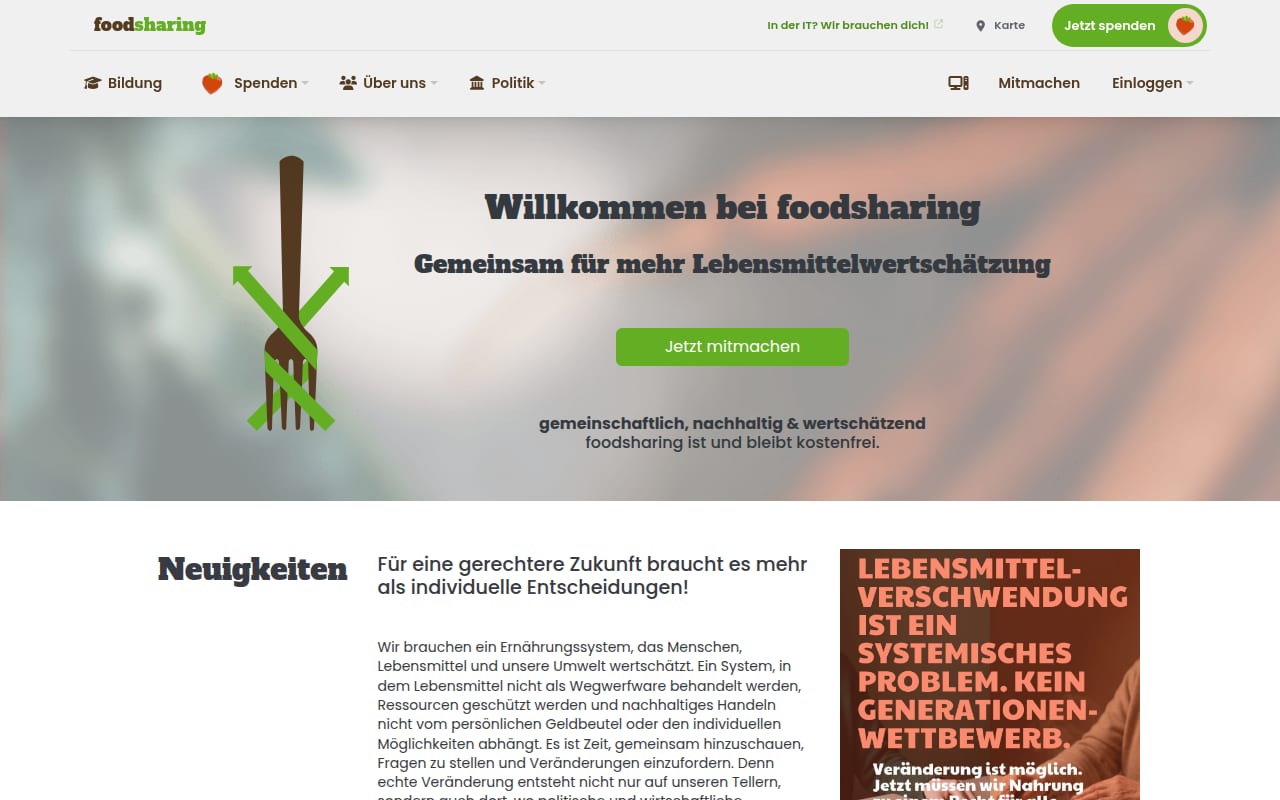
foodsharing.de is a free, ad-free platform run by volunteers in Germany who collect surplus food from shops, bakeries and restaurants and share it, without money, with anyone who wants it, after charities have taken what they need.
The platform went online on 12 December 2012, after a book and a film about food waste and the first pick-ups from supermarkets. It is run by foodsharing e.V., a registered association in Cologne, and the whole organisation rests on voluntary, non-profit work; the site says it will stay free, non-commercial and without advertising. Volunteer food savers cooperate with businesses through local groups, follow hygiene guidelines and a set of principles, and private people can also share food through the platform. foodsharing gives charitable organisations priority and calls itself the “last bastion before the bin”.
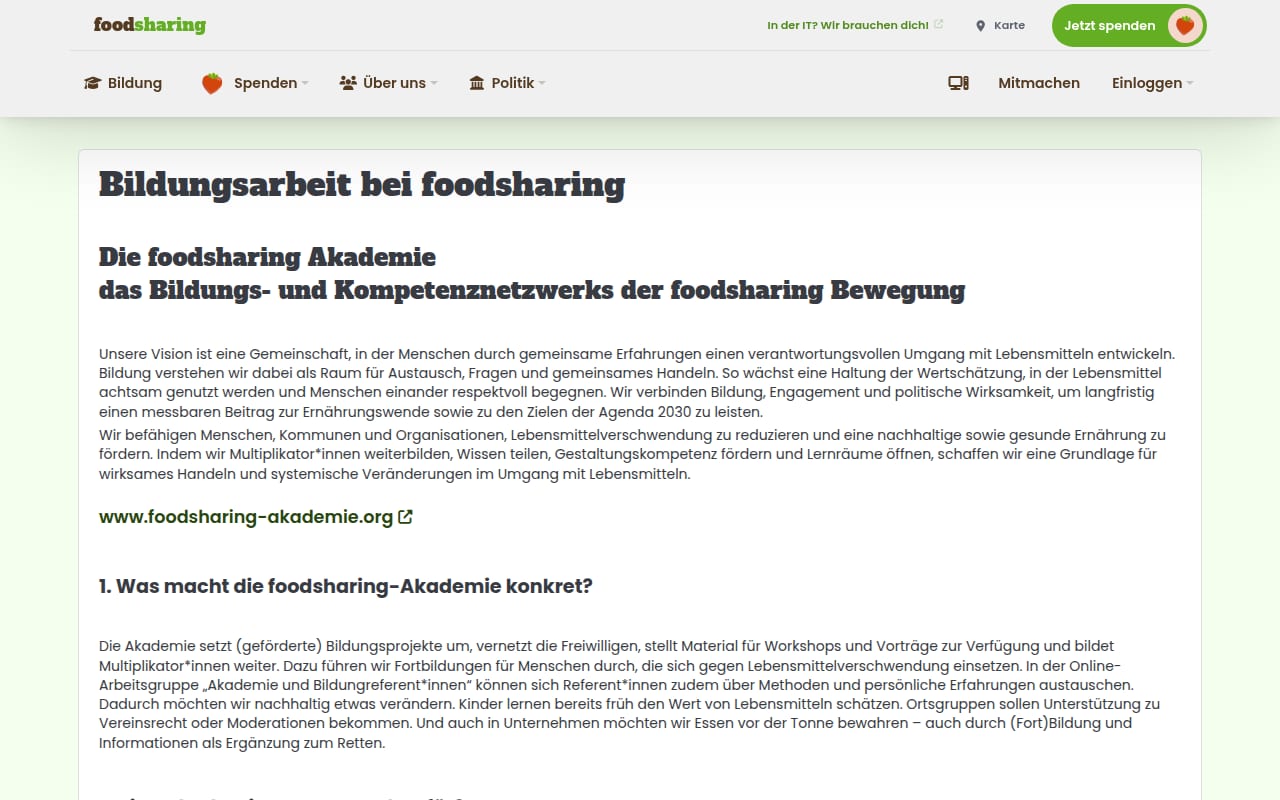
Beyond rescuing food, the association campaigns politically: it demands a legal ban on supermarkets throwing food away, as exists in other EU countries, legal certainty for food savers and a revised best-before date. It runs workshops, cooking events and talks, and works with repair cafés, swap shops and urban gardening groups. Signing up is free; becoming a food saver involves learning the rules first.
Strengths
- Food is shared for free and without money changing hands, and charities get first choice.
- It is run entirely by volunteers in a registered association, with no ads and no commercial interest.
- Local groups collect directly from bakeries, shops and restaurants, so food that would be binned the same day gets eaten.
Weaknesses
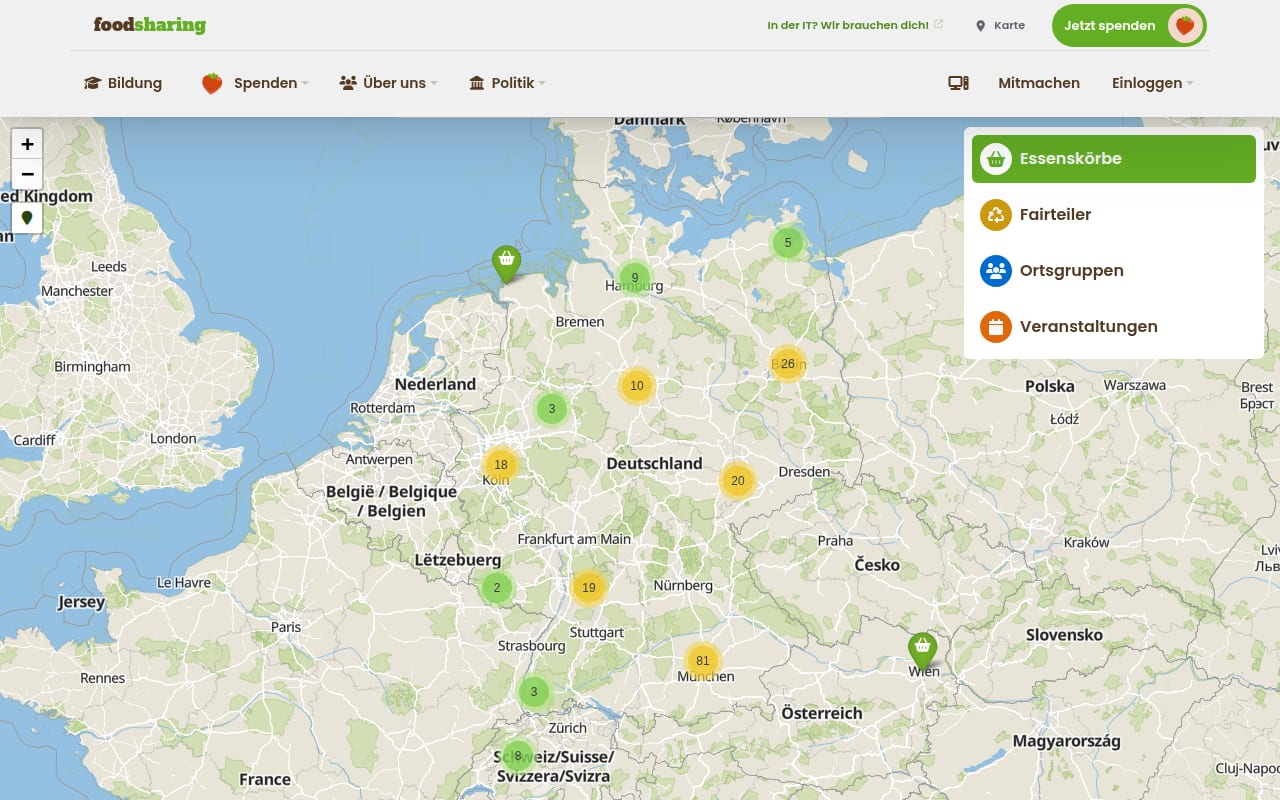
- Collections depend on volunteers and on businesses willing to cooperate, so coverage varies a lot from town to town.
- Becoming a food saver takes time: the rules and hygiene guidelines have to be learned first.
- The association says itself that food waste in Germany hasn’t fallen much in ten years, and its political demands aren’t law.
Who it is for
People in Germany who want to rescue food in their town, as volunteers or by picking up shared food, and businesses that would rather give away surplus than bin it.
Sources
- foodsharing: home, about us: vision and mission, legal notice (checked November 2026)