
Description
The EU Ecolabel is the European Union’s official environmental label, with a flower logo, for products and services that meet published criteria; for cleaning products it limits hazardous substances, requires recyclable packaging and tests that the product actually cleans.
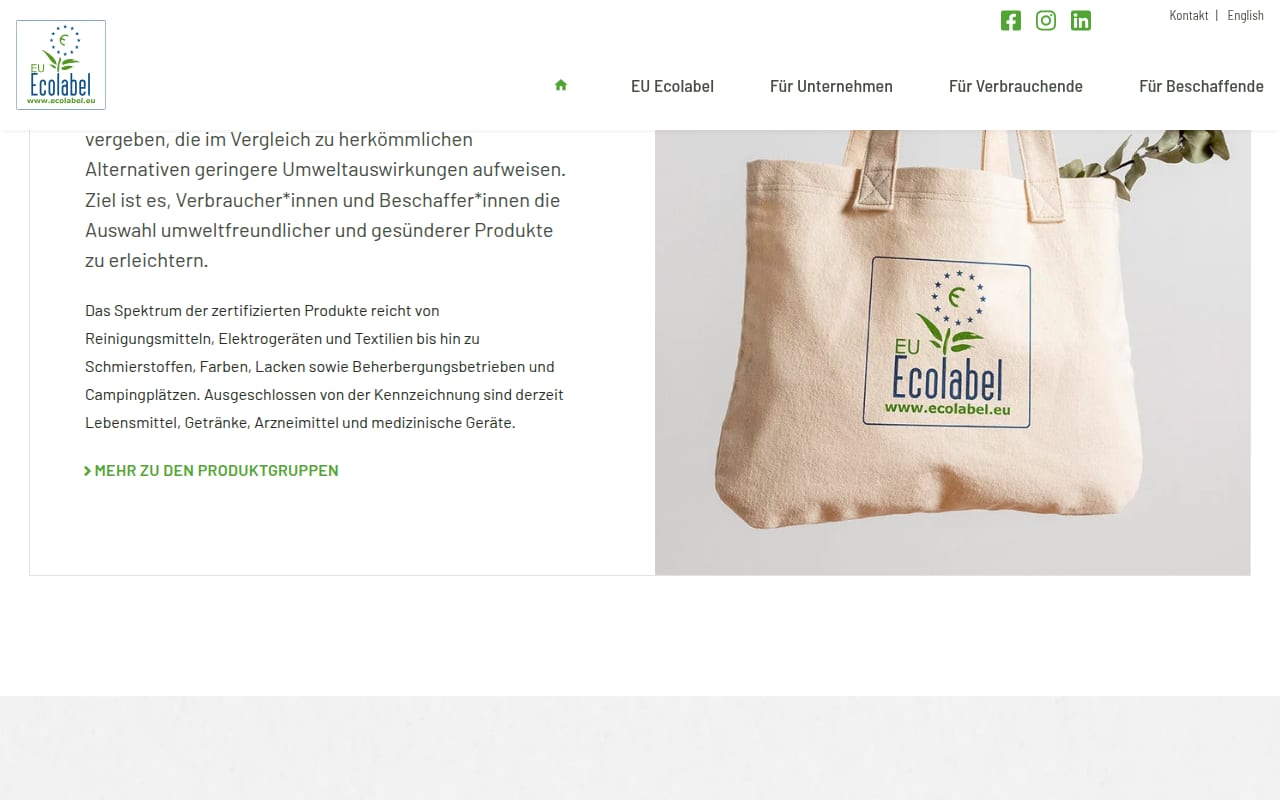
It was created in 1992 by an EU regulation and is recognised in every member state plus Norway, Liechtenstein and Iceland. A single application to one national body covers the whole EU: in Germany that body is RAL gGmbH, and the label’s German website, eu-ecolabel.de, also shows the federal environment ministry and the Umweltbundesamt. Food, drinks and medicines are excluded.
For household products there are separate criteria for hand dishwashing detergents, dishwasher detergents, hard-surface cleaners and laundry detergents, each set by an EU decision and currently valid until 31 December 2026. They restrict hazardous substances, require recyclable packaging and include a performance test. According to a press release of October 2026, 121,083 products and services held the label on 1 September 2026, under 3,665 licences, with 10,915 products in Germany. The site lists certified products by licence number, name, company and product group, and the EU’s ECAT catalogue covers the whole Union.
Strengths
- The criteria are published, set at EU level, and checked by a national body such as RAL before a licence is granted.
- It includes a performance test, so a certified detergent has to clean as well as an ordinary one.
- One logo is valid across the EU, and certified products can be looked up by product group or licence number.
Weaknesses
- It sets minimum standards for a product group, so a certified product can still come in single-use plastic.
- The detailed thresholds are only in the legal decisions, which are hard reading for consumers.
- The cleaning criteria expire at the end of 2026, and the product lists are spread between the national sites and ECAT.
Who it is for
Shoppers in Germany, France and the rest of the EU who want to tell a genuinely checked cleaning product from one that only looks green, in any supermarket.
Sources
- EU Ecolabel Germany: home, award criteria, products and providers, record number of certified products (October 2026) (checked November 2026)
- European Commission: EU Ecolabel