
Description
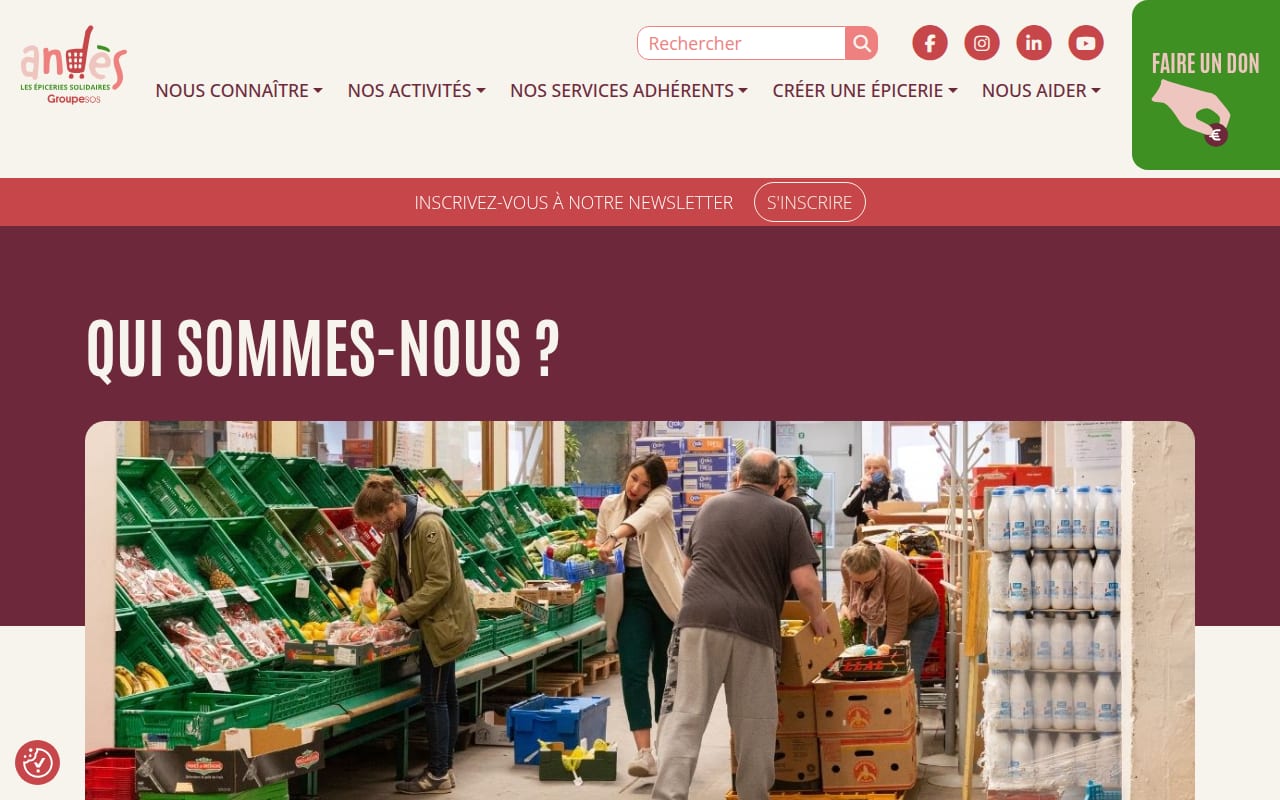
Social grocery shops (épiceries solidaires) sell food, fresh produce and hygiene products to households on low incomes at 10 to 30 % of the usual price. Customers choose on the shelves and pay at the till, as in any shop, instead of receiving a food parcel.
ANDES, the national network founded in 2000 and part of Groupe SOS, brings together more than 630 of them, 70 % run by associations and 30 % by local councils. They serve about 250,000 people a year, nearly half of them under 25, with more than 11,000 volunteers and 1,500 staff. Subsidies cover about 69 % of their budgets, and donated food makes up about a third of what they sell. ANDES also runs six work-integration sites, such as the one at the Rungis market, that supply fresh fruit and vegetables.
Access goes through a social worker, often with a monthly committee that looks at income and expenses, usually for 3 to 9 months, renewable. The shops also help with budgeting and run cooking and other workshops. Some are itinerant or reserved for students, and “mixed” shops are open to everyone, with customers who are not referred paying the full price.
Strengths
- Shopping at a fraction of the price, fresh food included.
- Customers choose their products themselves.
- Help with the budget and workshops, not just food.
Weaknesses
- Nobody can just walk in: a social worker has to refer them.
- Access is limited in time, usually 3 to 9 months.
- Criteria differ from shop to shop.
Who it is for
Households in France with a small income whose food budget no longer stretches once rent and bills are paid.