
Description
einhorn is a Berlin company that sells vegan condoms made from traceable natural rubber, and period products such as tampons and a menstrual cup, with no outside investors and in steward ownership.
It was founded in Berlin in 2015 and is run as einhorn products GmbH. The company says it has no investors and uses the term “Verantwortungseigentum”, steward ownership, though its site doesn’t explain the legal structure in detail. The latex is single-origin natural rubber from mixed plantations in southern Thailand, made into condoms by a manufacturer in Malaysia; einhorn co-founded the Regenerative Rubber Initiative. The condoms are tested to ISO 4074 and certified as medical devices by SGS Belgium. einhorn says it pays above-market prices, with 15 % on top for cotton growers and 12 % for rubber farmers.
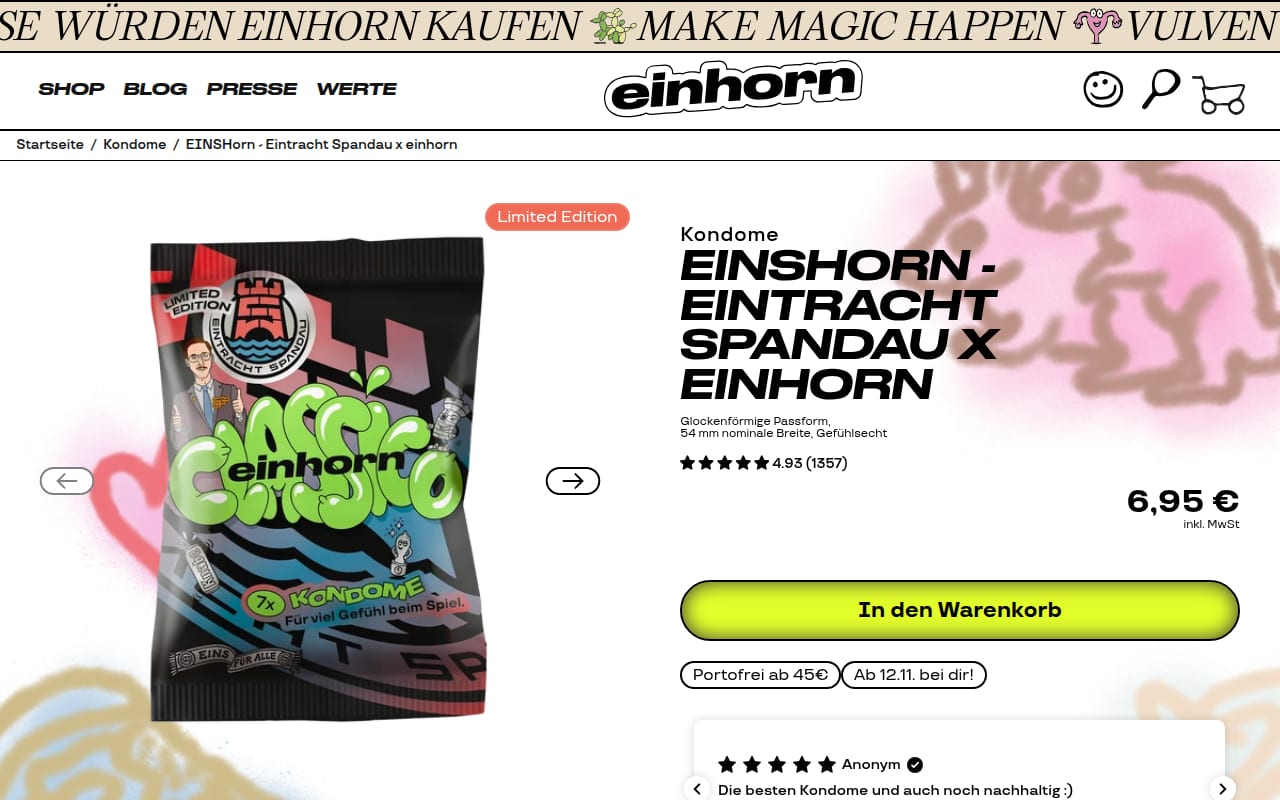
In November 2026 the online shop sold seven Classico, BIG or Magic condoms for €6.95 (€0.99 each), a year’s supply for €42.69 (€0.82 each), the Papperlacup menstrual cup for €13.99 and TamTampon tampons from €2.95. The products are also sold in many German drugstores and supermarkets. In France, where the brand is only sold in a few places online, einhorn recalled some batches of its Magic condoms in autumn 2026 and published updates on its blog.
Strengths
- The rubber comes from one region in southern Thailand that einhorn names, and the company co-founded an initiative for regenerative rubber farming.
- It has no investors to pay out, and states how much more it pays cotton and rubber growers.
- The condoms are vegan, tested to the ISO standard and sold in ordinary drugstores at about a euro each.
Weaknesses
- The surcharges for growers and the steward ownership are described by einhorn itself, and no independent label such as Fair Rubber was found on its pages.
- Stiftung Warentest and Öko-Test have not tested its condoms, according to the comparison sites searched.
- Some batches of Magic condoms were recalled in France in autumn 2026.
Who it is for
People in Germany who buy condoms or tampons in the drugstore and want a brand that names where its rubber comes from and isn’t owned by investors.
Sources
- einhorn: home, why einhorn, recall in France, legal notice (checked November 2026)
- Regenerative Rubber Initiative
- vergleich.org: einhorn Kondome