
Description
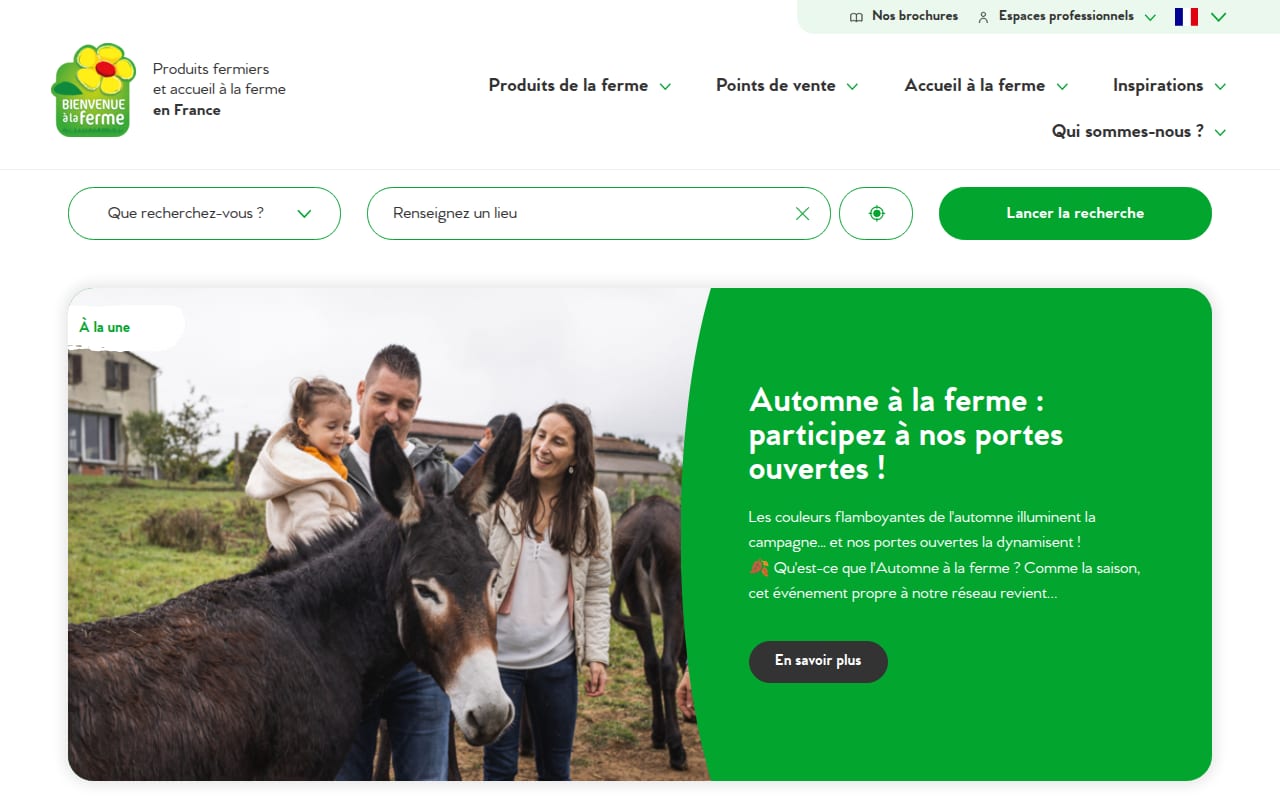
Bienvenue à la ferme is the network of French farmers who sell their produce directly or welcome visitors, and its free website maps them: farm shops, farmers’ markets, producers’ shops, “drives fermiers” (order online, collect at a set time), farm stays and activities.
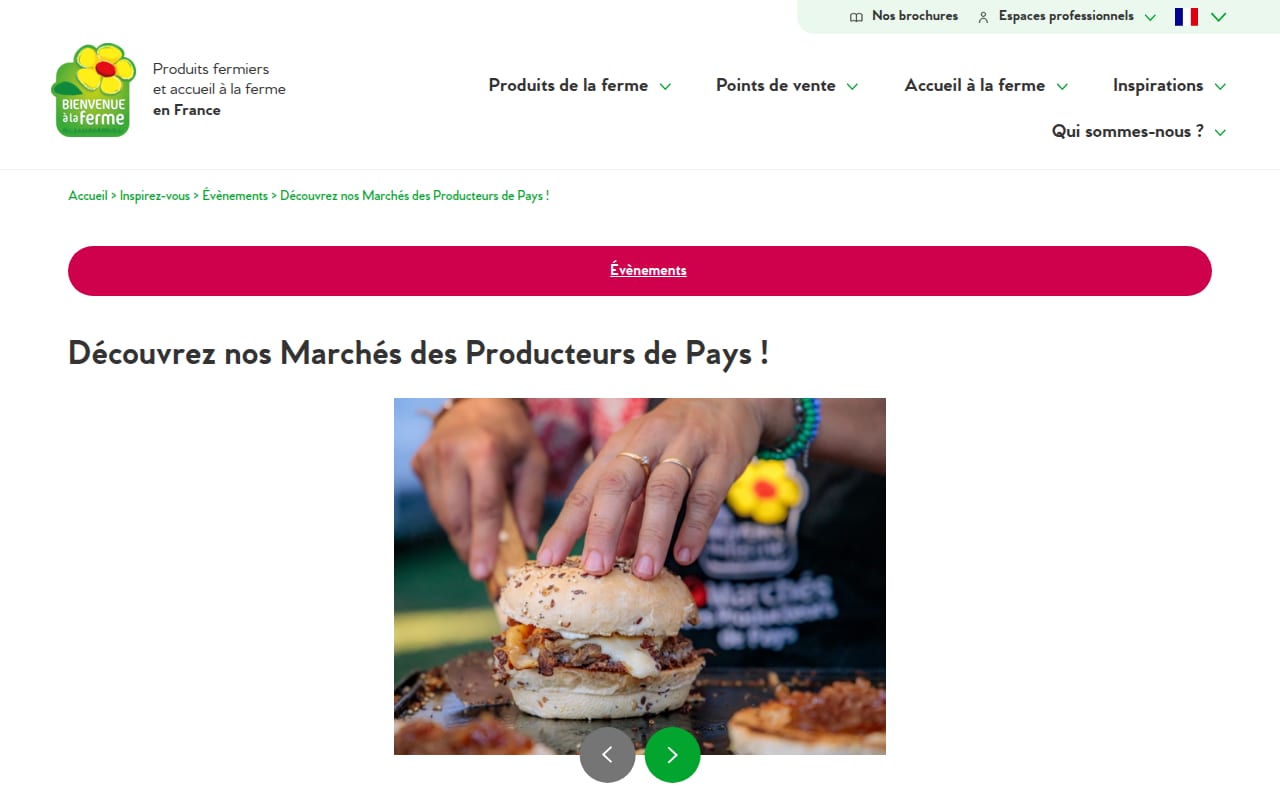
The Chambers of Agriculture, the public bodies that represent and advise farmers, created the brand in 1988 and still run it. In February 2025 the network counted nearly 10,000 farmers and 4,400 points of sale on farms. Regional and departmental advisers approve each farmer against national and regional rules, and farmers sign a charter on product quality and on showing visitors how they farm. At the Marchés des Producteurs de Pays, farmers may only sell what comes from their own farm. The franchised Bienvenue à la ferme shops (Fermes and Co) follow a looser rule: at least half of their products from the network’s farmers.
Organic farming is not a condition, and the site shows no prices. A UFC-Que Choisir survey from December 2022 gives an idea: 17 seasonal fruits and vegetables cost €38 on average in short-supply-chain shops, the same as in supermarkets, and €42 against €48 when organic.
Strengths
- One map for farm shops, markets, drives and producers’ shops, searchable by product, with no account needed.
- Chamber of Agriculture advisers approve each farmer, and the markets only allow produce from the seller’s own farm.
- In UFC-Que Choisir’s survey, seasonal produce cost no more in short-supply-chain shops than in supermarkets, and organic cost less.
Weaknesses
- Organic is not required, and farming methods differ from one farm to the next.
- No prices online, and buying means going to a farm, a market or a pick-up point at set times.
- The franchised shops may take up to half of their products from outside the network.
Who it is for
Households living near farms who want to buy part of their fruit, vegetables, meat or cheese from the people who produced them, and holidaymakers looking for a farm stay.
Sources
- Bienvenue à la ferme: Home, Notre réseau, Nos valeurs, Marchés des Producteurs de Pays, press release, February 2025, checked November 2026
- Réussir: Bienvenue à la ferme veut ouvrir 100 magasins d’ici 2025 (October 2021)
- UFC-Que Choisir: Enquête circuits courts, prix en magasin vs. supermarché (February 2023)