
Description
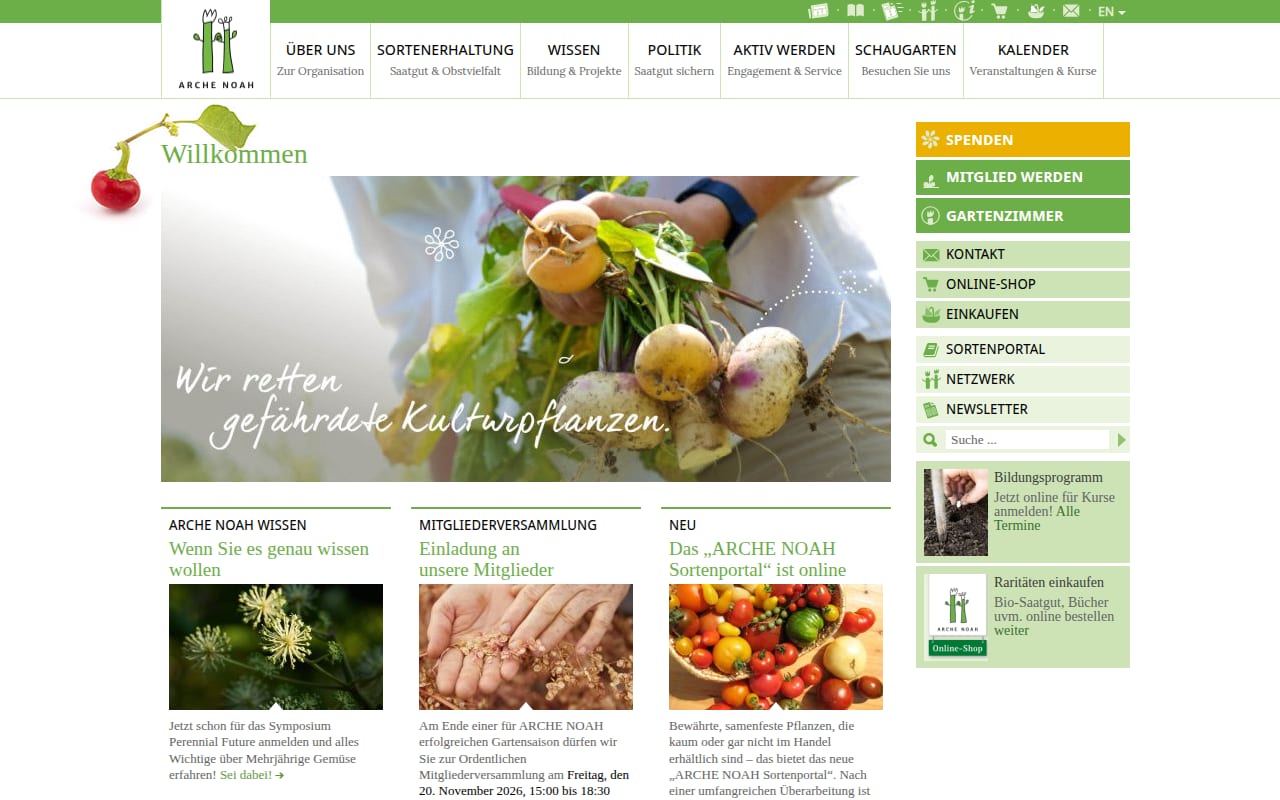
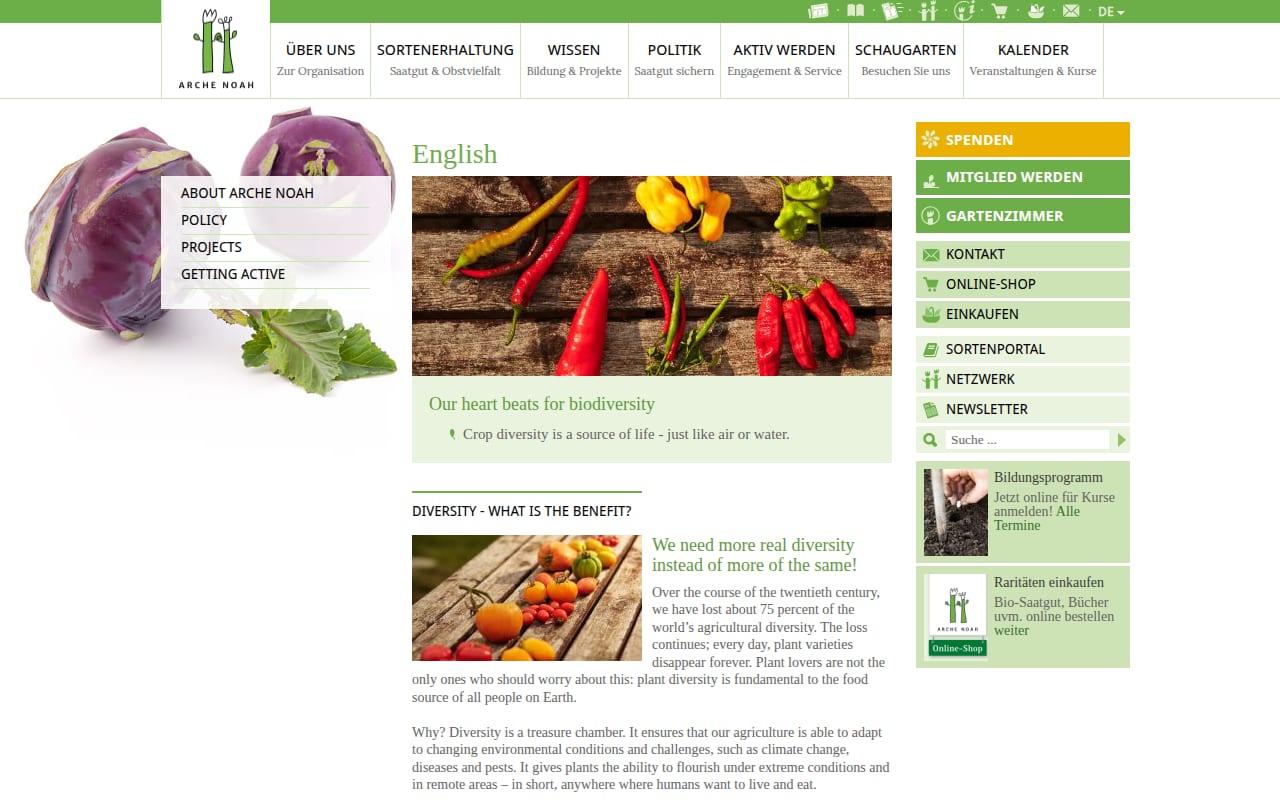
ARCHE NOAH is an Austrian association that preserves old and rare varieties of vegetables, fruit and grain, and sells organic seeds and plants of them so that gardeners can grow them and save their own seed.
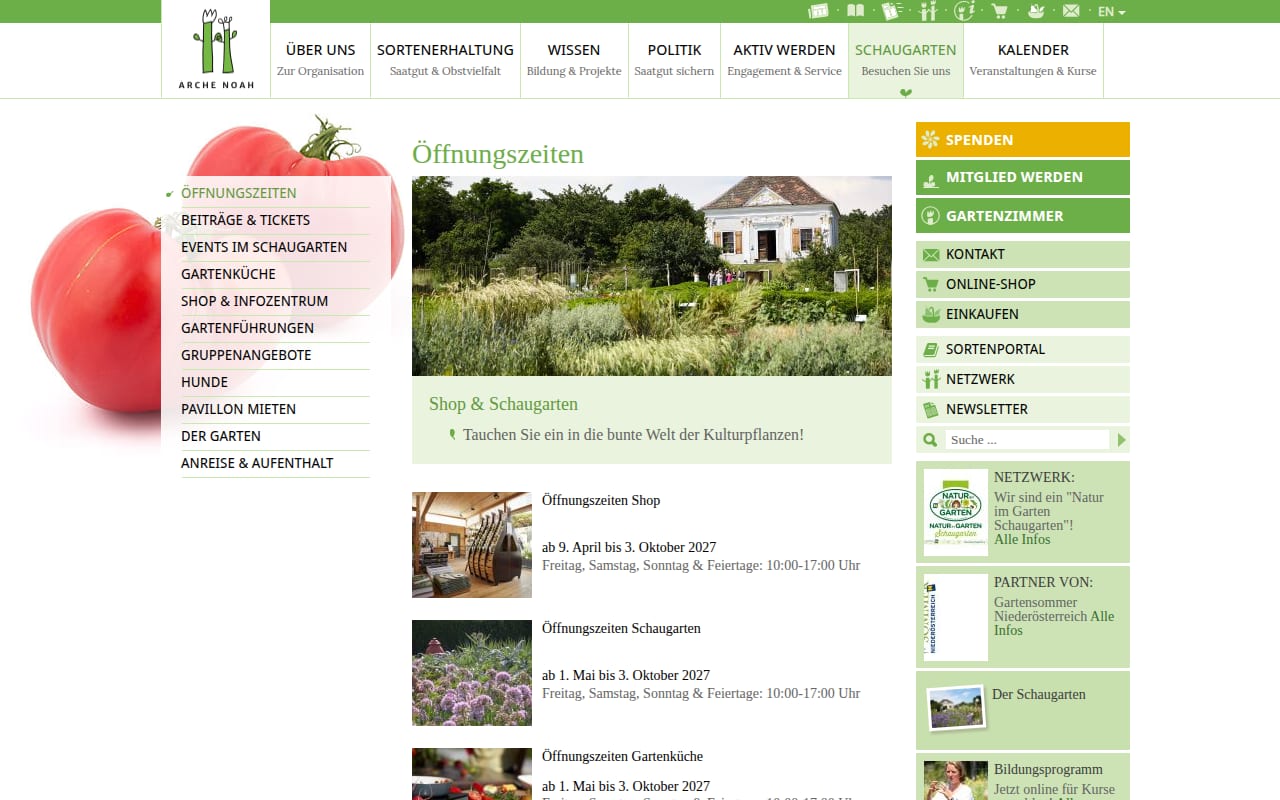
It was founded in 1989 and has more than 17,000 members and supporters. Its seed archive holds around 5,500 varieties, among them more than 170 potato varieties, kept alive by growing them out on its own organic farm and by a network of members who save seed at home. The shop is run by a fully owned subsidiary, Vielfalt erleben GmbH. At Schiltern in Lower Austria it has a show garden, open from May to early October on Fridays, weekends and public holidays.
ARCHE NOAH also campaigns on European seed law. In the negotiations on the new EU regulation, which go into talks between the Parliament and member states in 2026, it asks that farmers and gardeners keep the right to swap and sell their own seed, and that small seed producers be spared the paperwork. The seed industry association Euroseeds takes the opposite view, and the fact-checker Correctiv has pointed out that the proposal does not ban anyone from growing vegetables.
Strengths
- The varieties are open-pollinated, so seed saved from the harvest grows true the next year.
- The archive of about 5,500 varieties is kept alive in gardens and fields, not only in a freezer.
- Members can take part in seed saving, and the association defends small producers in the EU seed law talks.
Weaknesses
- The membership fee, seed prices and shipping costs to Germany were not shown on the pages checked.
- The show garden is in Lower Austria and open only from Friday to Sunday in summer.
- The pages checked call the seed organic but don’t name the body that certifies it.
Who it is for
Gardeners in Austria and Germany who want to grow rare or local vegetable varieties and save their own seed, and people who want to support seed diversity as members.
Sources
- ARCHE NOAH: home, about us, seed conservation, show garden opening hours (checked November 2026)
- ORF: Arche Noah will mehr Artenvielfalt bei EU-Saatgutregeln
- Correctiv: Saatgutverordnung der EU, nein, der Anbau von Obst und Gemüse wird nicht verboten
- top agrar: EU-Saatgutverordnung, umstrittene Gesetzesnovelle