
Description
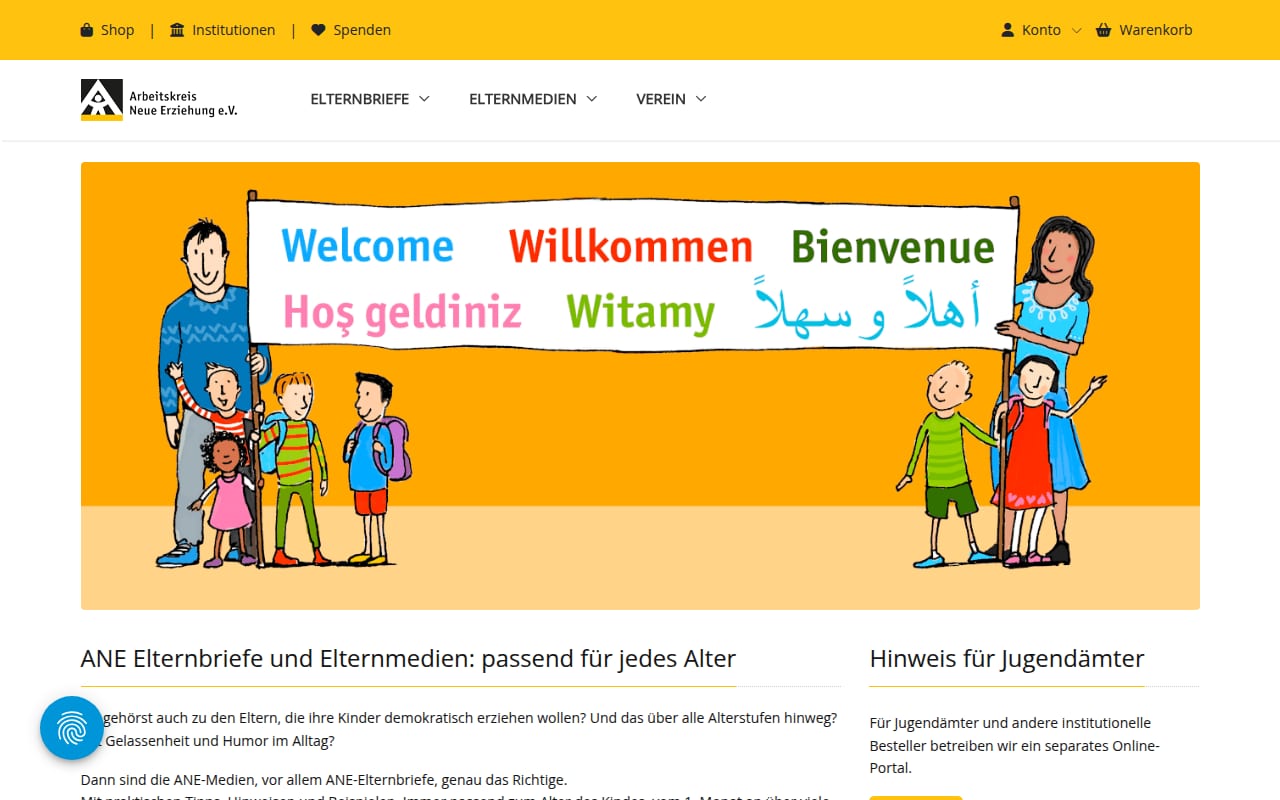
The ANE Elternbriefe are 46 parent letters from the Berlin association Arbeitskreis Neue Erziehung, sent by post from a child’s birth until its eighth birthday, each explaining what parents can expect at that age.
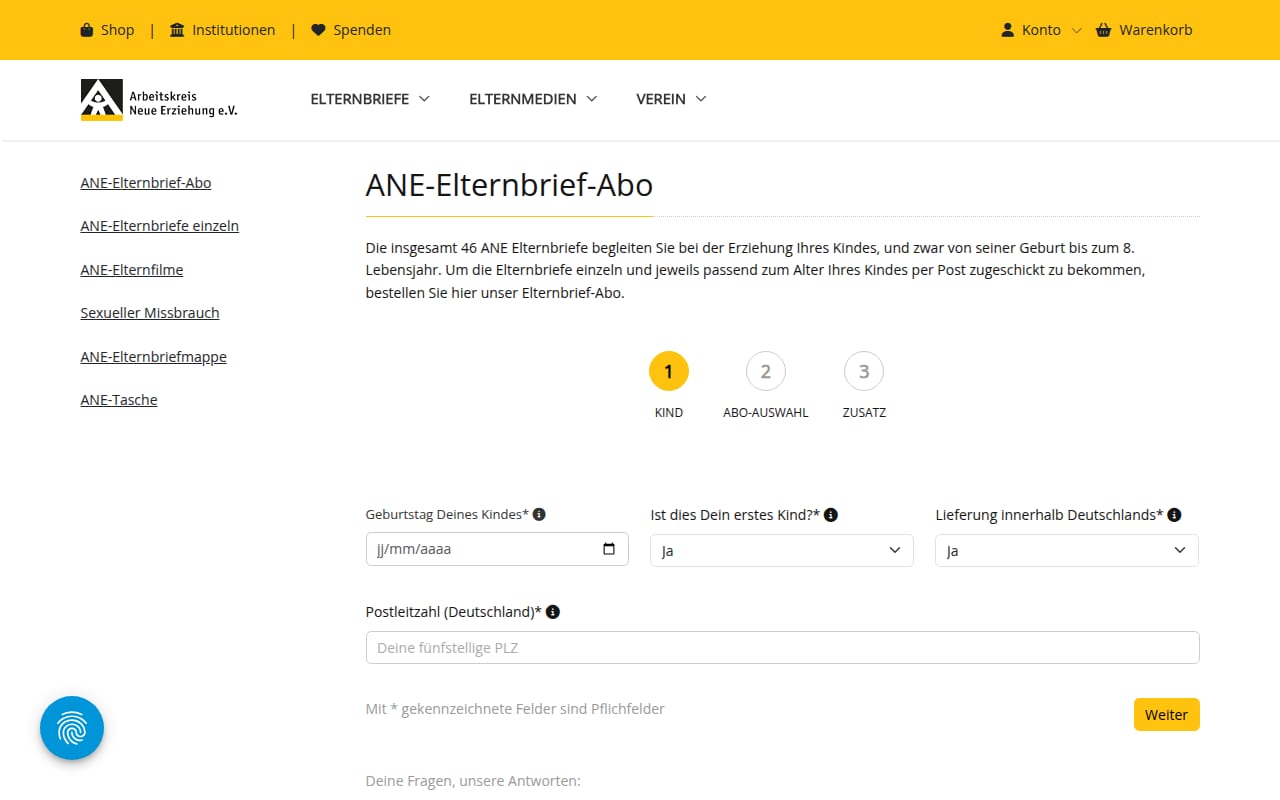
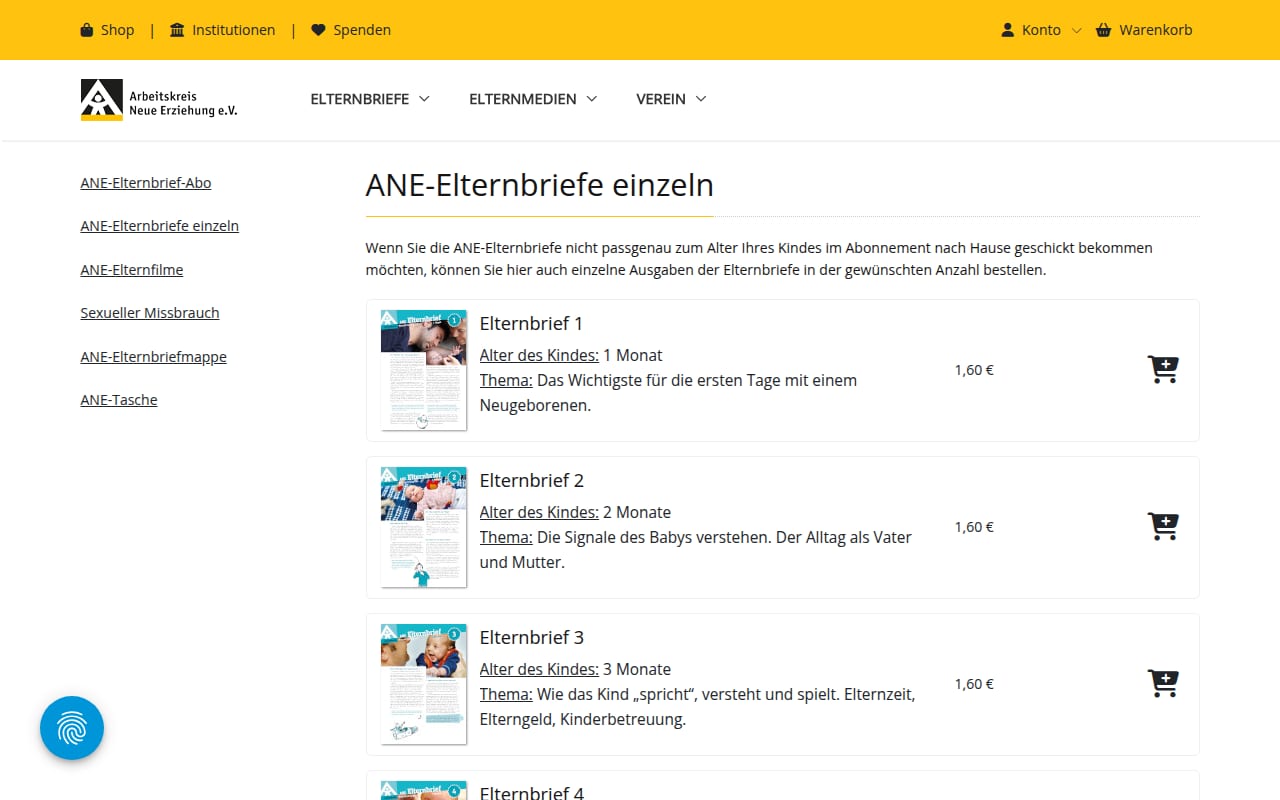
The association was founded in 1946 and is registered in Berlin. The letters arrive monthly in the first year, then every two to three months. Many Länder, cities and municipalities pay for them, so parents there can order them for free; the order form checks whether the family’s place of residence is covered. Elsewhere single letters cost €1.60 each. According to the subscription FAQ the letters are print only for now, though the download page also lists a Turkish-German edition.
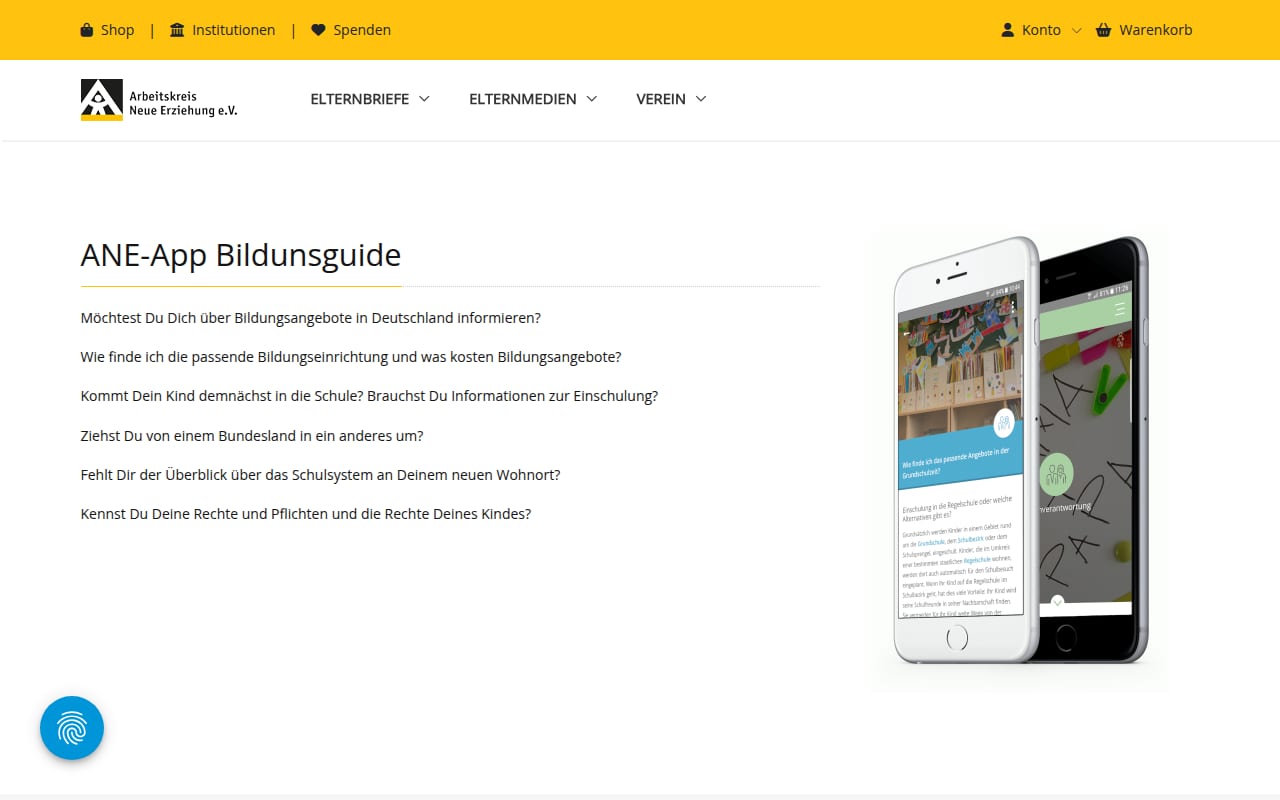
The association also offers the ANE Elternapp Bildungsguide, an Android app in Arabic, German, English, French, Spanish and Turkish that explains the German education system; an iOS version isn’t available yet. The letters contain no advertising, unlike many commercial baby magazines and apps, and they follow the child’s age rather than a product calendar.
Strengths
- The letters arrive at the right moment for the child’s age, from birth to eight, and are written by a non-profit association, not a brand.
- In many Länder and towns they are free, paid for by the public authorities.
- They come on paper by post, without an app, an account or advertising.
Weaknesses
- Where no public body pays, single letters cost €1.60 each, and the subscription price isn’t shown on the page read.
- They are mostly in German only, and the app explaining schools exists only for Android.
- The website shows no dated news, and the newest activity report linked is from 2018.
Who it is for
New parents in Germany who want calm, ad-free advice for each stage of their child’s first eight years, arriving by post without searching online.
Sources
- ANE: home, Elternbrief subscription, single letters, the association, app Bildungsguide, legal notice (checked November 2026)