
Description
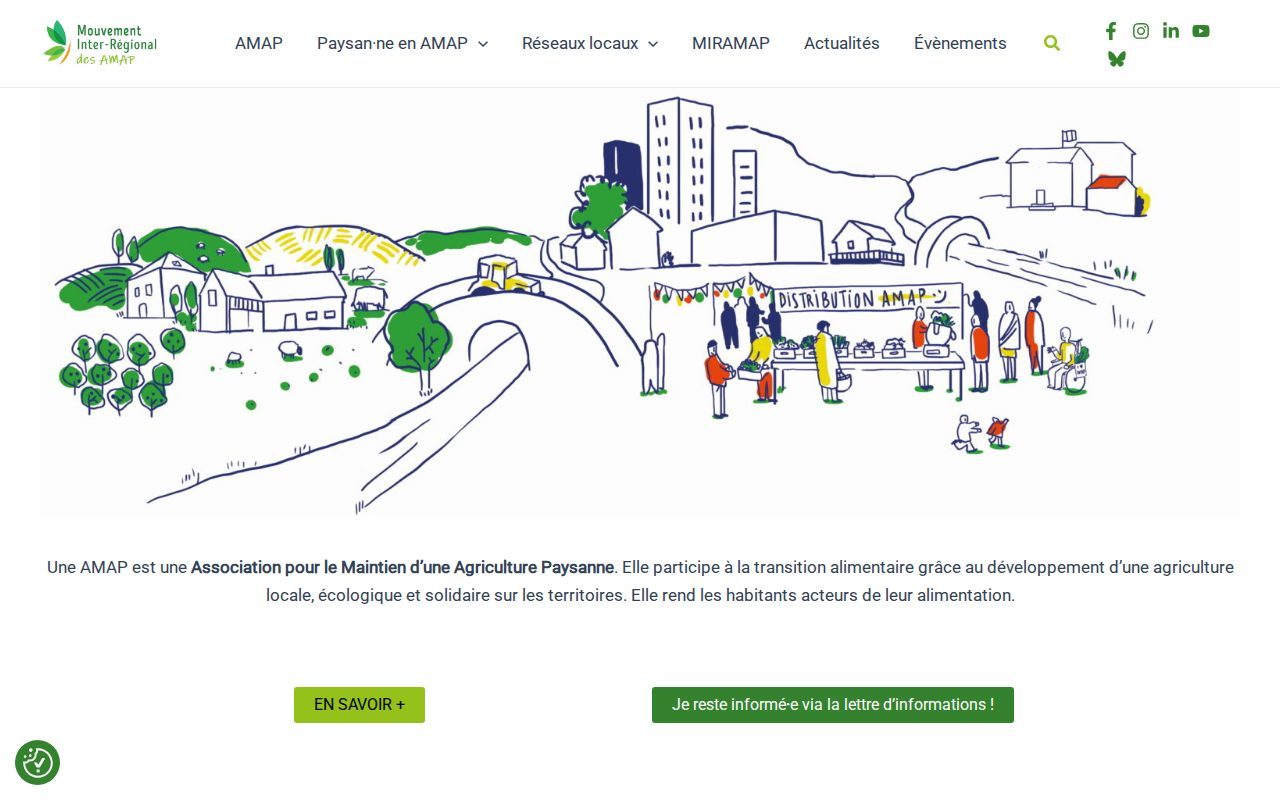
An AMAP (association pour le maintien d’une agriculture paysanne) is a group of households that buys part of a nearby farm’s harvest in advance, for a season, and collects a basket each week at a fixed place. Most baskets are vegetables; many AMAP also have contracts for eggs, bread, cheese, fruit or meat.
The first baskets were handed out in April 2001 in Aubagne, by market gardeners from Ollioules who had seen community-supported agriculture in New York. MIRAMAP, the national network, counts more than 2,300 AMAP and 4,800 farmers in France, and its map lists the groups region by region.
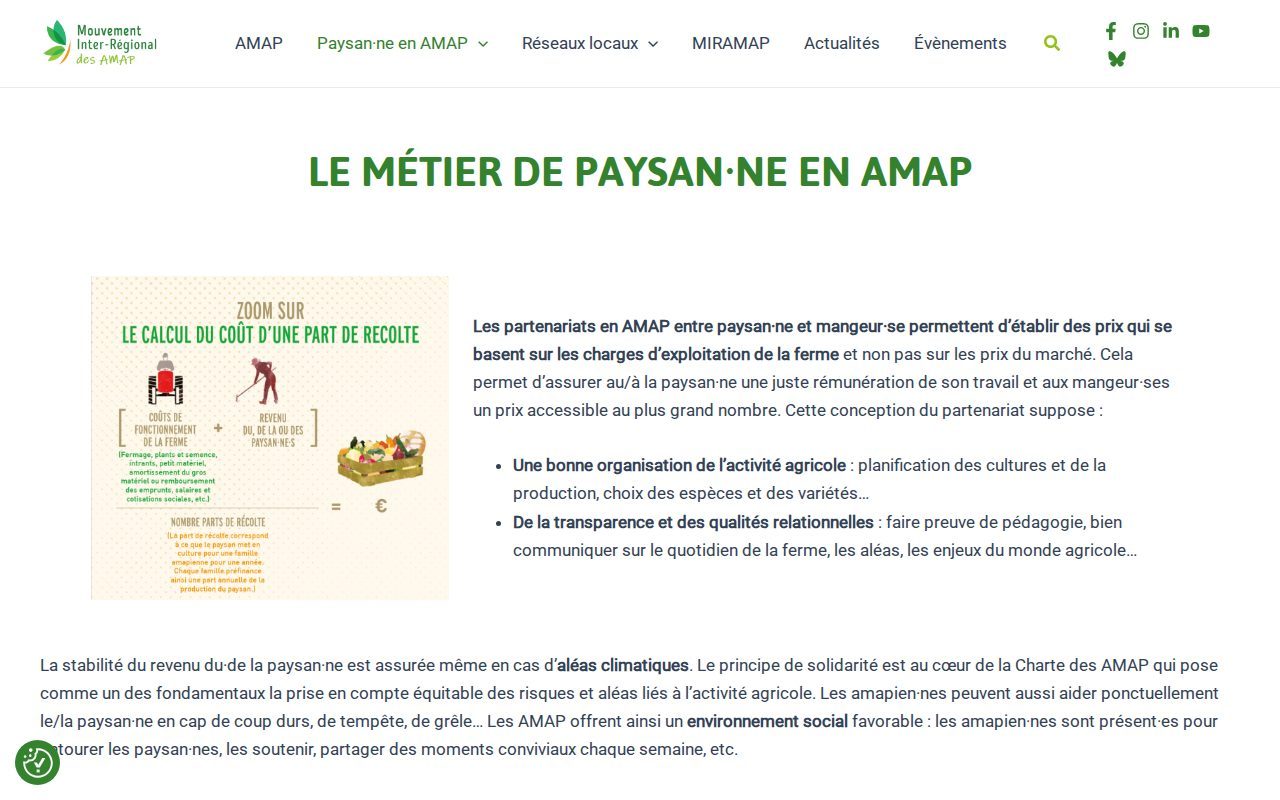
Members sign a contract with the farmer, usually for a year, and pay in advance, often in instalments over several months. The basket price is agreed with the farmer from the farm’s costs and a fair income, not by weight, and members share the risk of a poor harvest. They also take turns running the distributions. The AMAP charter of 2014 draws on small-scale and organic farming, but organic certification is not required, so practices vary from farm to farm.
There is no national basket price. As a rough guide, though it covered shops and not AMAP, a UFC-Que Choisir survey in December 2022 found that 17 seasonal organic fruits and vegetables cost €42 in short-supply-chain shops and €48 in supermarkets.
Strengths
- The farmer is paid in advance, without middlemen, at a price discussed openly with the members.
- The price is fixed for the whole season before it starts, whatever happens to prices in the shops.
- Produce comes from one known farm, harvested for the week’s distribution.
Weaknesses
- The season is paid upfront, which is hard on a tight budget even with instalments.
- Members don’t choose what is in the basket, and after a poor harvest it is smaller.
- Collection is at a fixed time each week, and each member does a few volunteer shifts a year.
Who it is for
Households that cook vegetables several times a week, have a distribution point near home or work, and can commit to one farm for a year. Less suited to people who travel often or want to choose every item.