
Description
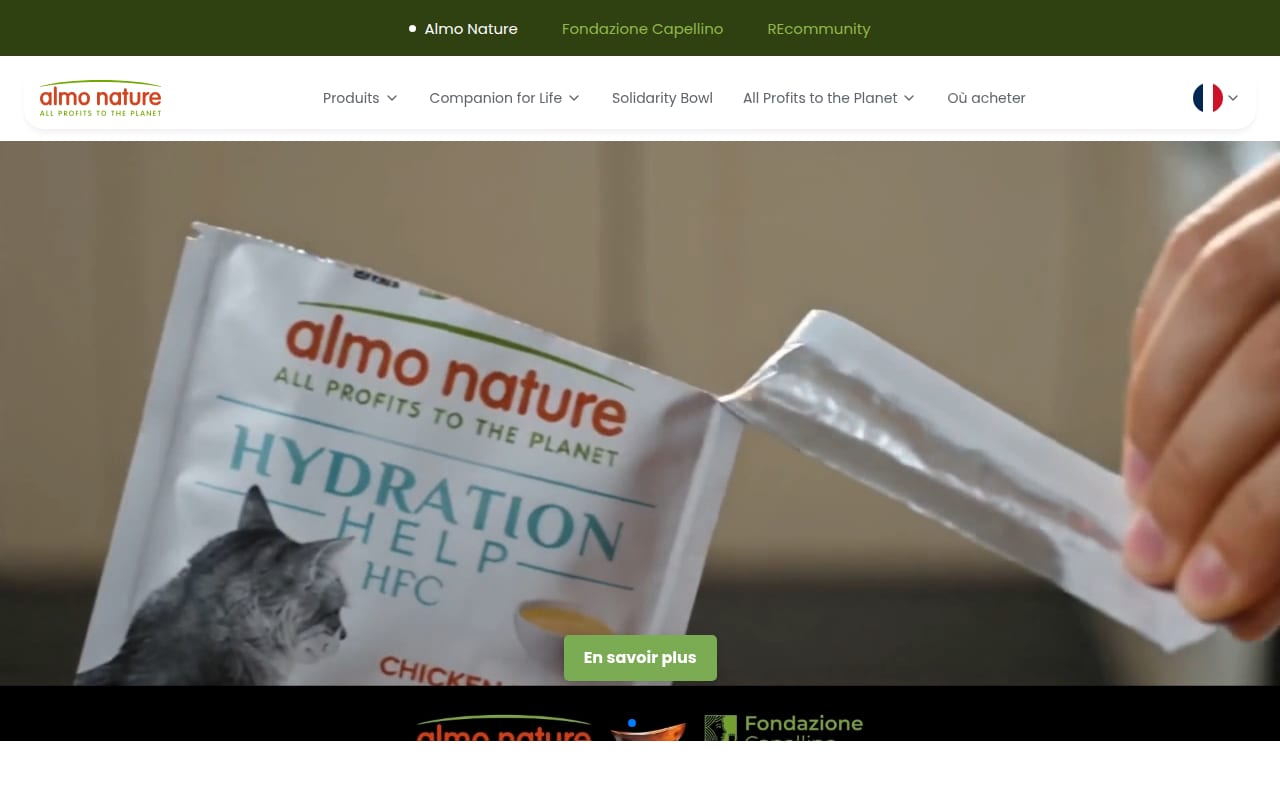
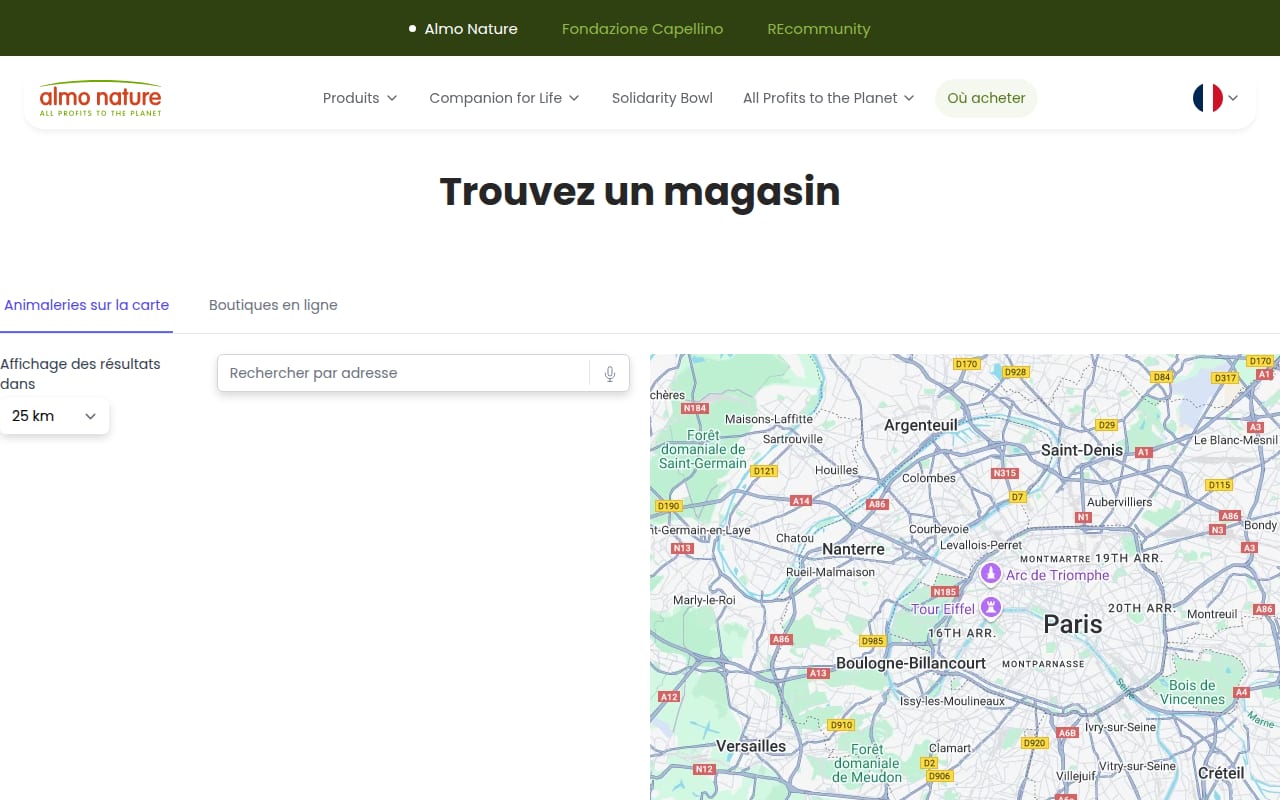
Almo Nature is an Italian brand of wet and dry food for cats and dogs whose company is wholly owned by a non-profit foundation, the Fondazione Capellino, which spends the profits on wildlife and animal welfare projects. It is sold in France online and in pet shops.
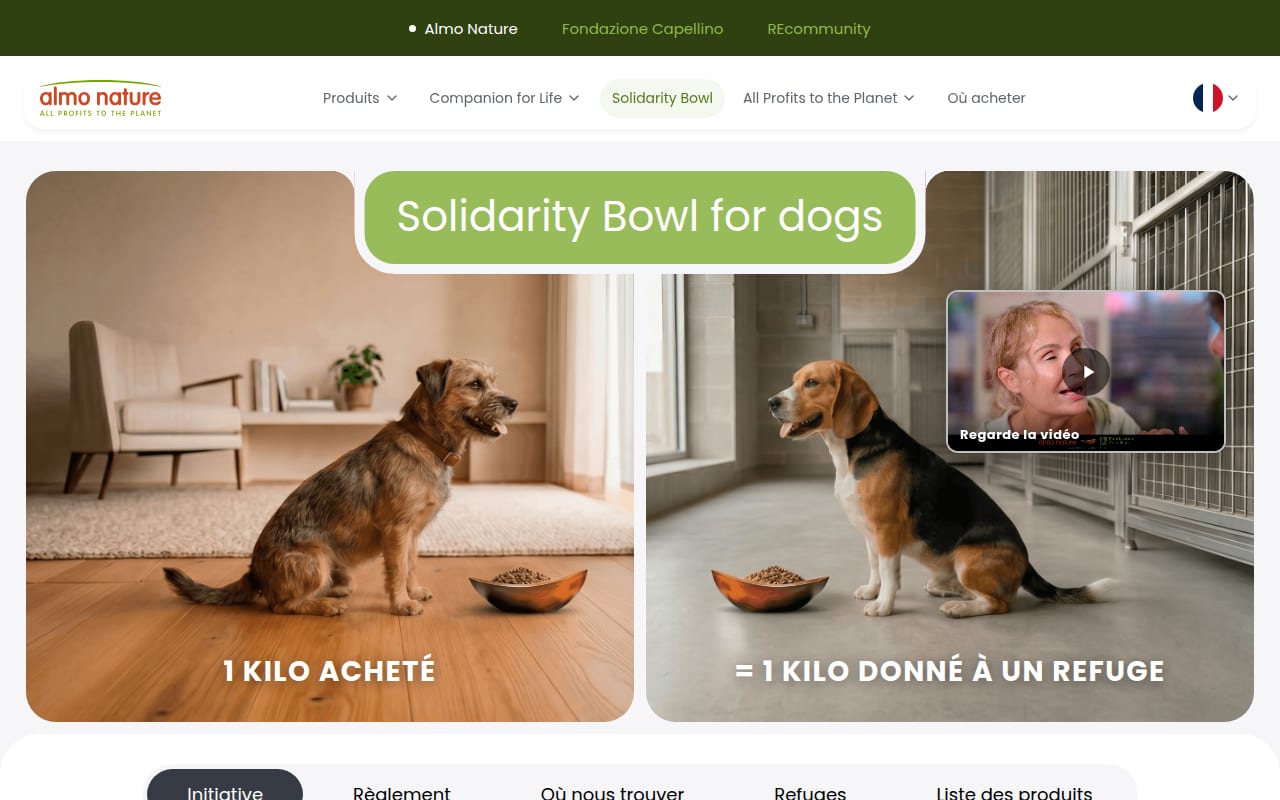
The founder Pier Giovanni Capellino and his son Lorenzo gave all the shares and voting rights to the foundation in 2019. The company, Almo Nature Benefit S.p.A. in Genoa, is a società benefit, the Italian legal form for companies with a public-interest purpose. It had a turnover of 132 M€ in 2025 and says it has paid more than 48 M€ to the foundation since 2018. The money funds the coexistence of farmers with wolves and lynx, including livestock guard dogs, a campaign for an EU-wide dog and cat register, and the restoration of farmland in Piedmont.
Prices found in November 2026: about 1.79 € for a 70 g tin of HFC Natural at Zoomalia, and 8.49 to 8.99 € for six tins on zooplus.fr, around 20 € a kilo. Many HFC Natural tins are labelled as complementary food, so they can’t be a cat’s only meal.
Strengths
- The whole company belongs to a foundation, so the profits fund biodiversity and animal projects instead of shareholders.
- It publishes yearly impact reports with its turnover, the money paid to the foundation and the projects funded.
- It is easy to buy in France, online and in pet shops.
Weaknesses
- The impact figures and the results of the projects are self-reported, with no independent assessment found.
- Many tins are complementary food only, which customers complain is not clear enough on the label.
- At about 20 € a kilo for wet food, it costs much more than supermarket brands.
Who it is for
Cat and dog owners who buy branded pet food anyway and want their money to fund wildlife and animal welfare projects, and who check whether a tin is complete or complementary food.